|
Departmental Requirements
The communication and media studies department provides its majors with a disciplined understanding of the media, their relationship to culture and society and the process of communication. The program blends theory and practice to prepare students for advanced study or careers in communications. This is accomplished within the context of a rigorous liberal arts education, supplemented by New York City's resources as the media capital of the world.
To become a communication and media studies major, a student must demonstrate an earned cumulative GPA of 2.5 or better, or receive written permission from the associate chair or chair of the department. In addition, no D grade work will be credited toward the major or minor. Majors take 11 required courses, including the two introductory courses (to be completed by the end of the first semester of the junior year); two media, culture and society courses; one ethics, law and policy course (to be taken during the senior year); three courses in a chosen concentration, one of which serves as the introduction to the concentration; and three free electives. Minors take six required courses, including one introductory course; one media, culture and society course; one ethics, law and policy course; and three free electives.
Required Minor
All communication and media studies majors must complete a minor in another discipline. The specific minor will be determined in consultation with the student’s academic advisor, and will usually be chosen in the student’s junior year. Recommended minors include African and African American Studies, American Studies, Art History, Music, Computer Science, Information Science, Economics (includes Business Administration), English, History, Latin American and Latino Studies, Literary Studies, Political Science, Psychology, Sociology, Urban Studies, Visual Arts, and Women’s Studies (but any minor is acceptable). Students are encouraged to complete a minor that contains a research methods course.
Students who are completing a double major are not required to complete an additional minor. (This requirement will be modified, as appropriate, for students who have been admitted to the University with transfer credits from another institution, so that the completion of a minor would not necessitate completing more than the 124 credits normally required for graduation.)
Program Requirements
Introductory Courses
Majors are required to take both introductory courses by the end of the first semester of the junior year; preferably, CM*U 1010 should be taken prior to CM*U 1011. Minors are required to take at least one of the introductory courses (a second may count as one of the minor's free electives).
- A. CM*U 1010-Introduction to Communication and Media Studies
- B. CM*U 1011-Introduction to Media Industries
Media, Culture and Society Requirement
All majors are required to take two courses from the media, culture and society concentration (see below) to fulfill this requirement. Those majors who wish to concentrate in media, culture and society must take three additional courses from the media, culture and society concentration, for a total of five media, culture and society courses to fulfill this requirement. Minors are required to take at least one course from the media, culture and society concentration.
Ethics, Law and Policy Requirement
Both majors and minors are required to take one of the following ethics, law and policy courses:
CM*U 3103-Versions of Censorship and Freedom of Expression
CM*U 3106-International Communication
CM*U 3109-Critical Issues in Electronic Communication
CM*U 3110-Peace, Justice and the Media
CM*U 3112-Media Law
CM*U 3205-The Journalist and the Law
CM*U 3476-Ethical Issues in the Media
Concentration Requirement
Majors are required to specialize in one of the program's five concentrations by taking that concentration's introductory course and two additional courses in the same concentration. Students may choose from the following five concentrations:
A. Media, Culture and Society. CM*U 2000-Theories of Media, Culture and Society required, plus two additional courses from the concentration.
B. Journalism. CM*U 2082-Introduction to Journalism required, plus two additional courses from the concentration.
C. Film. CM*U 2471-Introduction to Film required, plus two additional courses from the concentration.
D. Television/Radio. CM*U 2330-Introduction to Electronic Media required, plus two additional courses from the concentration.
E. New and Digital Media. CM*U 2500-Introduction to New Media required, plus two additional courses from the concentration.
Free Electives Requirement
Majors are required to take three free electives in the program, or in appropriate related programs, in consultation with an adviser from the department. Students should consider taking electives that will complement their concentration.
Program Concentrations
|

|
Media, Culture and Society
Concentration
|

|
CM*U 2000-Theories of Media, Culture and Society
CM*U 2010-Communication andTechnology
CM*U 2011-Mass Communication: Theory and Research
CM*U 2504-History and Culture of Advertising
CM*U2525-Digital Media and Cyberculture
CM*P 2602-Myths and Symbols of the American Character
CM*U 2603-Media and the Arts
CM*P 2610-Mass Communication and Society
CM*U 2701-Persuasion and Attitude Change
CM*U 3102-Orality and Literacy
CM*U 3103-Versions of Censorship and Freedom of Expression
CM*U 3104-Mass Opinion: Its Measures and Meanings
CM*U 3106-International Communication
CM*P 3108-Movies and the American Experience
CM*U 3111-Gender Images in Media
CM*U 3112-Media Law
CM*U 3309-Children and the Media
CM*U 3310-Television Comedy and American Values
CM*U 3332-Understanding Television
CM*U 3401-Hollywood Genres
CM*U 3407-The Science Fiction Genre
CM*U 3566-Media Effects
CM*U 3570-Aesthetics and the Media
CM*U 3571-Popular Music as Communication
CM*P 3601-Class, Taste, and Mass Culture
CM*G 3681-Mass Media and National Identity
CM*V 4001-Films of Moral Struggle
CM*V 4002-Values in the News
CM*V 4003-Dissent and Disinformation
CM*V 4004-Social Ethics in Telecommunications
CM*V 4005-Digital Media and Public Responsibility
CM*U 4601-Television and Society
CM*U 4603-Media and Popular Culture
CM*P 4604-Multiculturalism: Diversity and Media
|

|
Journalism
Concentration
|
 |
CM*U 2082-Introduction to Journalism
CM*U 2202-Writing Workshop
CM*U 2204-Analytical and Critical Writing
CM*U 2206-Basic Feature Writing
CM*U 2211,2212,2213,2214-Journalism Workshop
CM*U 2221-Graphics for Publication
CM*U 3010-Writing Television and Radio News
CM*U 3080-First Person Journalism
CM*U 3081-Interviews and Profiles
CM*U 3082-Arts Journalism
CM*U 3084-Writing for Magazines
CM*U 3085-Science Journalism
CM*U 3099-Advanced Internet Reporting
CM*U 3101-Newsmaking: Interpreting and Reconstructing Reality
CM*U 3103-Versions of Censorship and Freedom of Expression
CM*U 3204-Profile and Biographical Writing
CM*U 3205-The Journalist and the Law
CM*U 3206-First Person Writing
CM*U 3302-Radio News Techniques
CM*U 3303-Television News Techniques
CM*U 3304-Broadcast News Operations
CM*U 3321-History of Television/Radio News
CM*U 3322-Television News Innovators
CM*U 3323-The Murrow Years: 1938-65
CM*U 3331-The Broadcast Newsroom
CM*U 3333-Television News and Today's World
CM*U 3334-Video Documentary
CM*U 3335-Television News
CM*U 3350-Sports Communication
CM*U 3405-Screenwriting I
CM*U 3408-The Documentary Idea
CM*U 3409-Screenwriting II
CM*U 3501-Public Relations
CM*U 3545-Topics in Writing and Journalism
CM*U 3650-Inside the New York Times
CM*U 3941-Writing for the Media
CM*U 3978-Online Journalism
CM*V 4002-Values in the News
CM*U 4201-Magazine Article Writing
|

|
Film
Concentration
|
 |
CM*U 2471-Introduction to Film
CM*U 2222-Digital Video Design
CM*P 3108-Movies and the American Experience
CM*U 3401-Hollywood Genres
CM*U 3403-American Film Comedy
CM*U 3405-Screenwriting I
CM*U 3407-The Science Fiction Genre
CM*U 3409-Screenwriting II
CM*U 3410-International Cinema
CM*U 3420-Contemporary Filmmakers
CM*U 3422-History of Film 1890-1950
CM*U 3425-History of Film 1950-Present
CM*U 3431-Contemporary Hollywood Film
CM*U 3432-French Film
CM*U 3451-The Films of Alfred Hitchcock
CM*U 3461-Fiction into Film
CM*U 3462-Shakespeare into Film
CM*U 3470-Film Theory
CM*U 3482-Women in Film
CM*U 3483-Women Filmmakers in Europe
CM*U 3492-Documentary Film
CM*U 3525-Topics in Film and Video Production
CM*U 3535-Topics in Film Studies
CM*V 4001-Films of Moral Struggle
 |
Television/Radio
Concentration
|
 |
CM*U 2330-Introduction to Electronic Media
CM*U 2222-Digital Video Design
CM*U 2301-The Broadcast Industry
CM*U 2302-Introduction to Radio
CM*U 2303-Audio Production
CM*U 2522-Multimedia Production
CM*U 3010-Writing Television and Radio News
CM*U 3222-Projects in Digital Video
CM*U 3301-Television Studio Production
CM*U 3302-Radio News Techniques
CM*U 3303-Television News Techniques
CM*U 3304-Broadcast News Operations
CM*U 3305-Writing Television Drama
CM*U 3310-Television Comedy and American Values
CM*U 3321-History of Television/Radio News
CM*U 3322-Television News Innovators
CM*U 3323-The Murrow Years: 1938-65
CM*U 3331-The Broadcast Newsroom
CM*U 3332-Understanding Television
CM*U 3333-Television News and Today's World
CM*U 3334-Video Documentary
CM*U 3335-Television News
CM*U 3342-Advanced Television Production
CM*U 3344-Audio: Concepts and Methods
CM*U 3343-Television: Concepts and Methods
CM*U 3350-Sports Communication
CM*U 3525-Topics in Video and Film Production
CM*U 3555-Topics in Television and Radio
CM*U 3941-Writing for the Media
CM*U 4601-Television and Society
 |
New Media Concentration
|
 |
CM*U 2500-Introduction to New Media
CM*U 2010-Communication and Technology
CM*U 2222-Digital Video Design
CM*U 2303-Audio Production
CM*U 2522-Multimedia Production
CM*U 2523-Digital Design for New Media
CM*U 2525-Digital Media and Cyberculture
CM*U 2527-Hypertext: Theory and Practice
CM*U 2528-Digital Media II
CM*U 3099-Advanced Internet Reporting
CM*U 3222-Projects in Digital Video
CM*U 3307-Interactive Media
CM*U 3978-Online Journalism
CM*V 4005-Digital Media and Public Responsibility
Free Electives
Any of the above courses not serving as an Ethics, Law, and Policy requirement; a Media, Culture, and Society requirement; or a Concentration requirement can serve as a free elective. In addition, the following courses are free electives:
CM*U 2101-Speech Improvement
CM*U 2501-Effective Speaking
CM*U 3500-Marketing and the Media
CM*U 3502-Principles of Advertising
CM*U 4701-Internship Seminar
Departmental Internship Program
A significant feature of the program are internships in which students work under the direct supervision of professionals in media organizations ranging from daily newspapers to television networks and from public relations and advertising agencies to corporate communication programs. Click here for more information
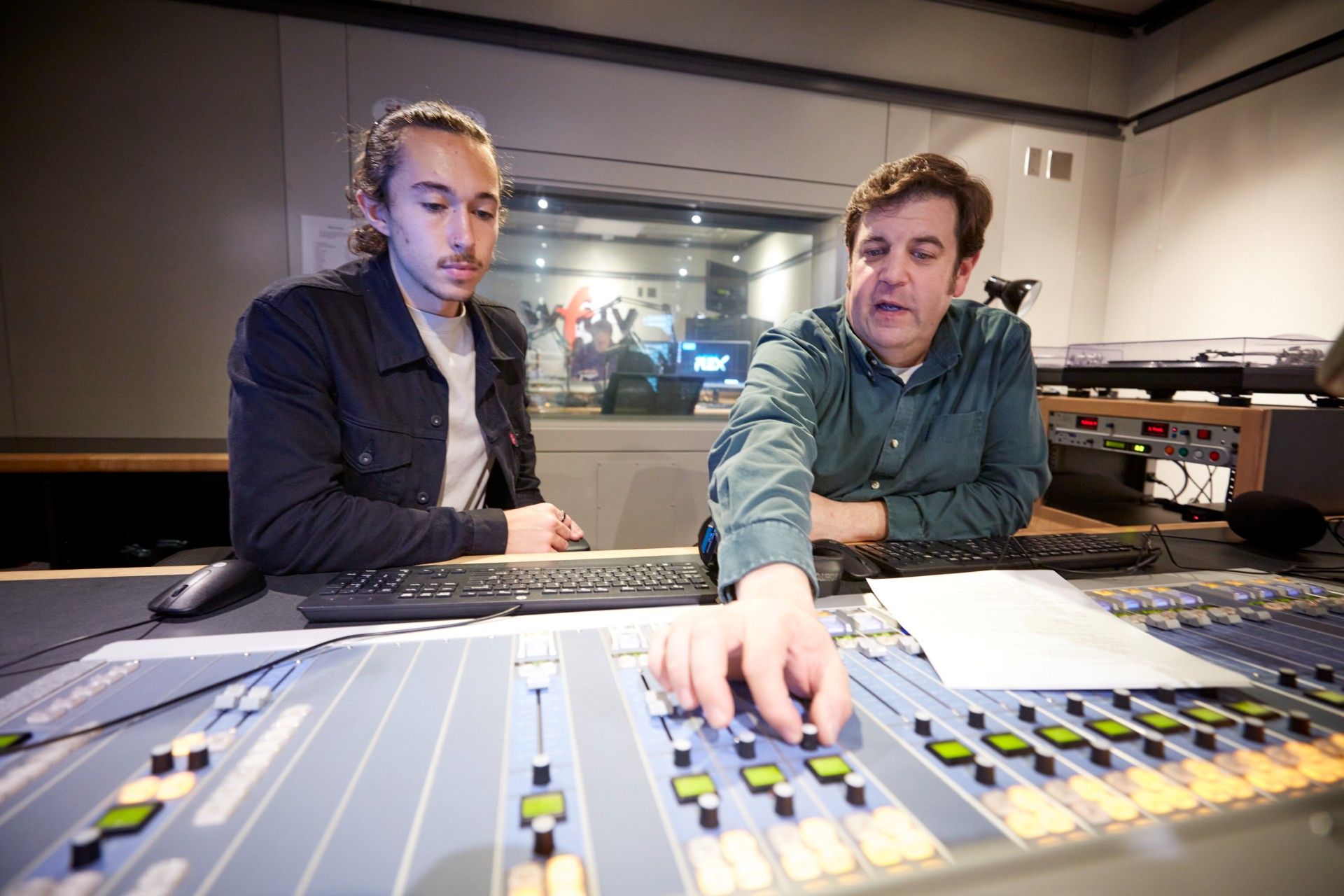
Majors belong to affiliated professional organizations such as Women in Communication and may be eligible to apply for membership in Lambda Pi Eta, the Communication Honors Society. They are also active at WFUV-FM, Fordham University's highly regarded National Public Radio station, and on a number of campus publications, including The Ram and the paper. Awards presented by the department include the Society of Professional Journalists/Sigma Delta Chi Award, the Herbert Robinson Award in Creative Writing, the Ralph W. Dengler, S.J. Award, the Ann M. Sperber Biography Award, the Kavanaugh Award and the Edward A. Walsh Scholarship for studies in communications. |