Internet Global History Sourcebook
Editor: Paul Halsall
The Internet Global History Sourcebook is dedicated to exploration of interaction
between world cultures. It does not, then, look "world history" as the
history of the various separate cultures (for that see the linked pages, which do take
that approach), but at ways in which the "world" has a history in its own right.
Specifically this means looking at:
- The ways in which cultures contact each other
- The ways they influence each other
- The ways new cultural forms emerge.
Trade
Societies interact through trade.
War
Movement of soldiers; occupation; admiration of conqueror's culture,
Religion
Religion is of special importance.
Migration
Migration can be due to nomadism, forced dispersal, attraction to a new land, or due to
enslavement. It can take the form of group movements, or be done by individuals and
families.
Empire
Since Sargon of Akkad, empires have been a repeated phenonemon in global history.
Art and Music
Art and music also circulate through world cultures, carried by wars, loot, religion, trade, and more recently broadcast technology
This page is a subset of texts derived from the online Sourcebooks listed
below. For more specific information about each world cultural area check out these
web sites.
| Notes: |
In addition to direct links to documents, links are made to a
number of other web resources. |
2ND
|
Link to a secondary article, review or discussion on a given
topic. |
WEB
|
Link to a website focused on a specific issue.. These are not
links to every site on a given topic, but to sites of serious educational value. |
Contents
General
General
- World History
- Global History
- Big History
World Systems Theories
Back to Index
Ancient Cultures: The World
Until c.100 CE
Travel in ancient societies was extremely difficult, and a result, interaction between
cultures occured slowly.
General
Comparative Development
Certain human social and cultural phenomena seem to have recurrent and distinct origins, without any direct influence or transmission, in different parts of the world
- Agriculture
- Northern Mesopotamia/Anatolia
- China/Yellow River
- West Africa
- New Guinea
- Central America
- South America
- Nomadism
- Kingship
- Towns/Cities
- Mesopotamia
- Egypt
- China
- India
- Americas
- Slavery
- Writing Systems
- Sumeria
- Egypt
- Phoenicia
- Harrapa
- China
- Mesosmerican
Trade
Religion
- Wikipedia: Axial Age 8th-3rd Centuries BCE
- Confucius
- Upanishads
- Buddha
- Zoroaster
- Hebrew Prophets
- Greek Philsoophers
Migration
- The Aryans: into India
- 2ND Richard Hooker: The Arayans [Was At WSU, now Internet Archive]
Much more reliable account that the nationalist arguments below.
- 2ND David Frawley: Myth of Aryan Invasion of India [Was At India Forum, now Internet Archive], a complete book, and Myth of Aryan Invasion of India [At Hindunet] [Internet Archive version here] an article-length discussion.
Frawley attacks 19th-century scholars such as Max Muller for bias, but seems unaware of his own problematic position.
- 2ND Siddhartha Jaiswal: Aryan Invasion Theory: Revising History to Change the Future [Was At Stanford, now Internet Archive]
A freshman college paper explaining why the theory is wrong. The full title and the text are worth considering, though. The author objected to the theory because it "undermined my belief in my culture". This sort of solipsistic "history" seems to motivate much of the discussion about the "Aryan Invasion".
- The Greek Migrations
- Wikipedia: Greek Colonisation
- Map: Greek Colonies 6th Cent BC
- Wikipedia: Pytheas of Massalia
born c. 350 BC, fl. c. 320–306 BC) was a Greek geographer, explorer and astronomer from the Greek colony of Massalia (modern-day Marseill. He made a voyage of exploration to northwestern Europe in about 325 BC, but his account of it, known widely in antiquity, has not survived and is now known only through the writings of others.
- The Jews: Between Mesopotamia and Egypt
Empire
- Sargon
- Assyria
- Persia
- Greek Expansion: Alexander the Great, 4th Cent BCE
- Carthage
- Rome
- Appian (c.95-c.165): The Syrian Wars 192-188BCE [At Livius] [Internet Archive version here]
History of the war that the Romans and the Seleucid king Antiochus III the Great fought in 192-188. Also discusses, as an appendix, the history of the Seleucid Empire.
- Plutarch (c.46-c.120 CE): Life of Pyrrhus [At MIT]
- Livy (59 BCE-17 CE): On Pyrrhus from History of Rome [At Livius] [Internet Archive version here]
- Polybius (c.200-after 118 BCE): The Destruction of Corinth 146 BCE The Histories, Book XXXVIII, Chapters 3-11; Book XXXIX, Chapters 7-17 [At this Site]
- Indian Integration: Asoka, 3rd Cent BCE
- Ashoka (c. 265-238 BCE; also given as c. 273-232 BCE): The Edicts of Ashoka
summary, [At Rough Guide]
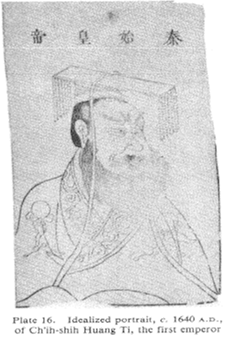
- Chinese Integration: Qin Shi Huangdi, 3rd Century BCE
Art and Music
Back to Index
Medieval World Systems: Trade and
Faith 100-1500 CE
Missionary religion brought an important new aspect to global interaction after circa.
100 CE. That is roughly the point when both Christianity and Buddhism began to spread
rapidly, both creating their own worlds - Christendom, and although the word is a
neologism, Buddhadom. A late entrant. circa 640 CE. was the religion of Islam which
created a Muslim world [called "Islamdom" by Marshall Hodges], which stretched
from Spain to India, and eventuall the Philippines. These three were the most successful
missonary religions, but were by no means the only ones: Manichaenism, a modified form of
Persian dualism also persued a missionary strategy.
General
- Ibn Khaldun: The Muqaddimah full text, trans. by Franz Rosenthal [At Muslim Philosophy] [interent Archive version here]
- International Peoples
- Greeks
- Jews
- Gypsies
- Armenians
Trade
Religion
- Buddhism
- Christianity
- Misionary Failure in Athens, Acts 17:16-34:
- Missionary Success in Corinth, Acts 18:1-11
- Ch'ing-Tsing: Nestorian Tablet: Eulogizing the Propagation of the Illustrious Religion in China with a Preface, composed by a priest of the Syriac Church, 781 A.D. [At this Site]
- The Conversion of Clovis: Two Accounts 496 [At this Site]
by The Chronicle of St. Denis, and Gregory of Tours.
- Gregory of Tours (539-594): The Conversion of Clovis from History of the Franks, Book II. [At this Site]
- Bede (673-735): Ecclesiastical History The Conversion of England. The selection in Geary is slightly longer. See also Catholic Encyclopedia: The Venerable Bede and Catholic Encyclopedia: Synod of Whitby.
- Gregory I (r.590-604): Letter to Abbot Mellitus 601 [At this Site]
- Pope Nicholas I: Responses to the Questions of the Bulgars A.D. 866 (Letter 99), trans. W. North, full text. [At this Site]
- Rimbert: The Life of Anskar, the Apostle of the North, 801-865 full text. See also Catholic Encyclopedia: St Anschar.
- Bruno of Querfurt: Letter to Henry II 1008/1009 trans William North. PDF [At Carleton] [Internet Archive version here]
Bruno writes of German missionary and diplomatic among Slavic pagans.
- Russian Primary Chronicle: The Christianisation of Russia 988. [Was At Univ.Durham, now at Internet Archive]
- Islam
Migration
Empire
- Byzantium: A Crucial Source of Cultures
- Islam
- WEB Transmediterrane Geschichte (Transmediterranean History) [Univ of Konstanz] [Internet Archive backup here]
"Transmediterranean History" is an anthology of sources, with comments, intended to facilitate access to transmediterranean topics and their source documentation for researchers, teachers and interested parties. The wiki-based database provides source excerpts in the original and in translation, structured epochally and arranged chronologically. The texts are in original language with side-by-side German translation. Although one cannot yet rely on AI translation, the results of Google translation are quite satisfactory on this site, partly because the German translations are in uncomplicated German. Periods covered are: Before Arab-Islamic Expansion; Aran-Islamic Expansion (7th-9th centuries); New Neighbours (9th-11th centuries); Latin Christian Expansion (11-13th centuries).
- 2ND The Battle of Badr 624 CE [At Internet Archive, from islaam.com]
- Al-Baladhuri: The Battle of The Yarmuk (636 CE) and After [At this Site]
The Byzantines lost control of Syria at Yarmuk.
- Accounts of the Arab Conquest of Egypt 642 CE
The Coptic account from The History of The Patriarchs of Alexandria and an Arab account - Al-Baladhuri: The Conquest of Alexandria
- Ibn Abd-el-Hakem: The Islamic Conquest of Spain [At this Site]
- Al Maggari: Tarik's Address to His Soldiers 711 CE, from The Breath of Perfumes [At this Site]
- Anonymous Arab Chronicler: The Battle of Poitiers 732 CE [At this Site]
- Arabs, Franks, and the Battle of Tours: Three Accounts 732 CE [At this Site]
- 2ND Fred Donner: The Early Islamic Conquests (Princeton: Princeton Univ Press, 1981), pp.251 ff - Chapter VI. "Conclusions: 1. Tribe and State in Arabia: Second Essay" [At this Site]
- 2ND Judith Herrin: The Formation of Christendom "Byzantium Confronted by Islam", (Princeton: Princeton Univ, Press. 1987), 183-213
- The Pact of Umar 7th Century [At this Site]
- Pact of Umar (another version), 9th century CE? [At this Site]
- Sarim al-Din Ibrahim b. Duqmaq (d. 1406): On Yazid b. Mu’awiya (d. 683) trans Mohammed Ballan [At Ballandalus] [Internet Archive version here]
- Shihab al-Din al-Alusi (d. 1854): On Yazid b. Mu’awiya (d. 683) trans Mohammed Ballan [At Ballandalus] [Internet Archive version here]
- Abu Hasan al-Tabari (d. 1110): On Yazid b. Mu’awiya (d. 683) trans Mohammed Ballan [At Ballandalus] [Internet Archive version here]
- An Arab Ambassador in Constantinople (late 10th Century)
- A Hispano-Muslim Embassy to the Vikings in 845: An Account of al-Ghazal’s Journey to the North 845, trans Mohammed Ballan [At Ballandalus] [Internet Archive version here]
- ‘Abd Allah bin Buluggin, Emir of Granada 1073-90: Warfare in Eleventh-Century Spain (Al-Andalus), according to The Tibyan trans translated by Amin T Tibi [At De Re Militari] [Internet Archive version here]
- Muslim accounts of warfare in al-Andalus [At De Re Militari] [Internet Archive version here]
- Ibn Said: Book of the Maghrib (13th Century)[At this Site]
- Abu al-Fida (d. 1331): On the Rise of the Almohad Dynasty trans Mohammed Ballan [At Ballandalus] [Internet Archive version here]
- Ismā‘īl ibn al-Aḥmar (d. 1407): Abu Hamid al-Ghazali (d. 1111) and the Rise of the Almohads translated from the Buyūtāt Fās al-Kubrā by the fourteenth-century Andalusī historian Ismā‘īl ibn al-Aḥmar (d. 1407), trans Mohammed Ballan [At Ballandalus] [Internet Archive version here]
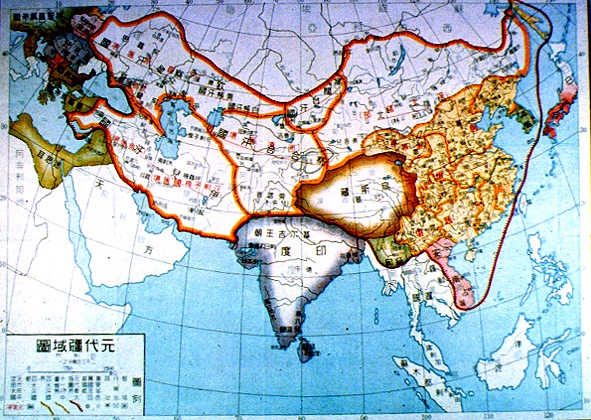
- Mongols
- Timur
- Ottomans
- 2ND Muhammad El-Halaby: The Liberation/Fall of Constantinople 1453 [At Internet Archive, from Islam.org.au] from a Muslim point of view.
- ‘Abd Allāh b. al-Sabbāḥ (14th Century): Travels in Constantinople from Nisbah al-Akhbār wa Taẓkirat al-Akhyār. An Andalusi Mudéjar in 14th-c. Constantinople: The Travels of Ibn al-Sabbah, trans Mohammed Ballan [At Ballandalus] [Internet Archive version here]
- Michael Kritovoulos of Imbros (d. 1470): On the Fall of Constantinople (1453), trans Mohammed Ballan [At Ballandalus] [Internet Archive version here]
- Eulogy of Istanbul from The Counsels of Nabi Efendi to his Son Aboul Khair [At WSU]
- Sultan Selim I (d. 1520) and Shah Ismail (d. 1524): Letter Exchange on the Battle of Chaldiran (Aug. 1514) trans Mohammed Ballan [At Ballandalus] [Internet Archive version here]
- Sidi Ali Reis (16th Century CE): Mirat ul Memalik (The Mirror of Countries), 1557 CE [At this Site]
A Turkish traveler's account of the world of India and the Middle East.
- The Status of Jews and Christians in Muslim Lands 1772
A question on the position of Jews in Islam, and the answer of the Shaikh Hasan Al Kafrawi, The Shafiite Professor of canon law in Cairo (d. 1788)
- Ogier Ghiselin de Busbecq (1522 - 1592): The Turkish Letters excerpts, 1555-1562 [At this Site]
- The Millet System: The Status of Jews and Christians in Muslim Lands 1772 CE [At this Site]
A question on the position of Jews in Islam, and the answer of the Shaikh Hasan Al Kafrawi, The Shafiite [Professor of canon law in Cairo, d. 1788 CE]
- Safavids
- Sahel empires
- Mexico - Olmecs, Maya, Aztecs
- Peru
Art and Music
- Syrian Music in Christianity
Back to Index
The Creation of a United World
System 1500-1800 CE
General
Trade
- 2ND Alfred W. Crosby: The Columbian Exchange: Plants, Animals, and Disease between the Old and New Worlds [At NHC] [Internet Archive version here]
- Wikipedia: Columbian Exchange
- Wikipedia: Early impact of Mesoamerican goods in Iberian society
- Wikipedia: Pre-Columbian trans-oceanic contact theories
- Wikipedia: Global silver trade from the 16th to 19th centuries
Much of world trade was structured by the massive amounts of silver available in the Americas and the comparatively high value of silver in China. Much of the silver simply went across the Pacific via Manila.
- England, India, and The East Indies 1617 [At this Site]
Various sources, including a letter from Great Moghul Jahangir to James I, King of England.
- The East India Trade [Was At Scholiast, now Internet Archive]
- Charles D'Avenant: An Essay on the East-India Trade 1697 [At Yale] [Internet Archive version here]
- Thomas Mun (1571-1641): England's Treasure By Forraign Trade excerpts, 1664 [At this Site]
- Thomas Mun (1571-1641): England's Treasure by Foreign Trade pub 1664, extracts, [Was At Then Again, now Internet Archive] and extracts [At Hanover]
- Trade Products in Early Modern History [At UMN]
-
The South Sea Bubble [Modern Report][At History House]
- Richard Eden: Decades of the New World 1555 [Was At WSU, now Internet Archive]
European traders at the royal court of Benin.
- WEB Trade Products in Early Modern History [Was At UMN, now Internet Archive]
- Charter of the Dutch West India Company 1621 [At Yale] [Internet Archive version here]
- Gustavus Adolphus, King of Sweden: Warrant for William Ussling to Establish a General Company for Trade to Asia, Africa, America and Magellanica; December 21, 1624 [At Yale] [Internet Archive version here]
- Tulip History [Was At bulb.com, now Internet Archive]
- Wikipedia: Tulip Mania
- Wikipedia: Mississippi Bubble: France 1716-1720
- Wikipedia: South Sea Bubble: Britain 1717-1720
- WEB Harvard Business School: South Sea Bubble, 1720: A Research Portal [Internet Archive version here]
- 2ND Helen Paul: The South Sea Company’s slaving activities [Was St Andrews, now Archived]
- Wikipedia: Mercantilism
- Wikipedia: Global silver trade from the 16th to 19th centuries
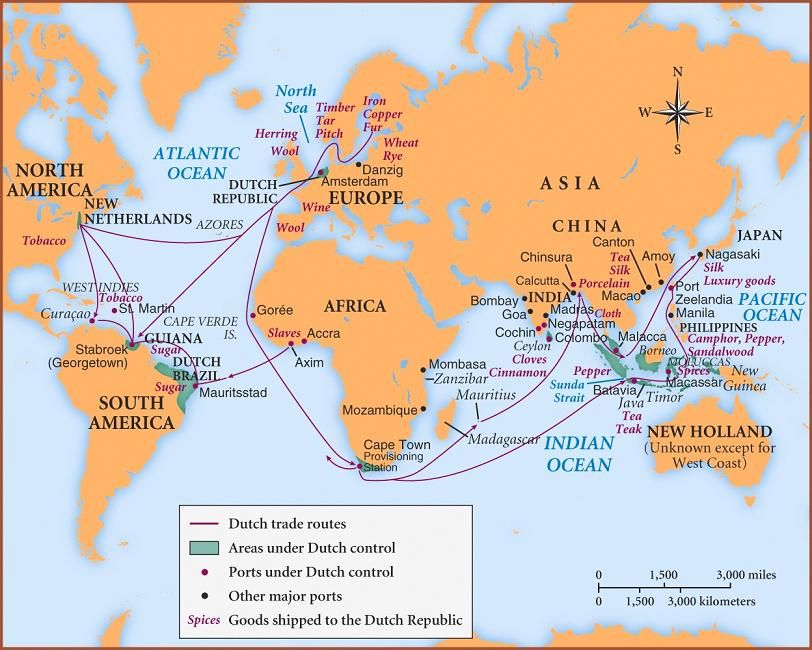
- Map: Dutch Trade Routes 17th Century [Internet Archive version here]
- Adam Smith (1723-1790): Of Colonies from The Wealth of Nations, 1776: [At The American Revolution Site] [Internet Archive version here]
- Adam Smith (1723-1790): The Cost of Empire from The Wealth of Nations, 1776: [At The American Revolution Site] [Internet Archive version here]
- Daniel Defoe (c. 1659-1731): Robinson Crusoe [At Project Gutenberg][Full text]
The classic colonialist novel.
War
Religion
- Christian Missions
- St. Francis Xavier: Letter from India, to the Society of Jesus at Rome 1543 [At this Site]
- St. Francis Xavier: Letter on the Missions, to St. Ignatius de Loyola 1549 [At this Site]
- St. Francis Xavier: Letter from Japan, to the Society of Jesus at Goa 1551 [At this Site]
- St. Francis Xavier: Letter from Japan, to the Society of Jesus in Europe 1552 [At this Site]
- Documents on the Chinese Rites Controversy 1692, 1715, 1721, excerpts [At this Site]
How the Catholic Church "lost" China.
- Will Adams: My Coming to Japan 1611 [At this Site]
- Hsu Kuang-chi: Memorial to Fra Matteo Ricci 1617 [At this Site]
- Mendez Pinto: The Woman with the Cross c. 1630 [At this Site]
A Chinese Christian woman.
- Père du Halde: Teaching Science to the Manchu Emperor c. 1680 [At this Site]
- Père du Halde: The Manchu Emperor and Chinese Music c. 1680 [At this Site]
- Père du Halde: Chinese Punishments c. 1680 [At this Site]
- Père Gerbillon: A Visit to a Lama c. 1690 [At this Site]
- WEB Missionaries in the Colonial Americas [At Loyola-Chicago] [Internet Archive version here]
- Wikipedia: Jesuit Missions among The Guarani
- Catholic Encyclopedia: Reductions of Paraguay
- Unesco: Jesuit Missions of the Guaranis: San Ignacio Mini, Santa Ana, Nuestra Señora de Loreto and Santa Maria Mayor (Argentina), Ruins of Sao Miguel das Missoes (Brazil)
- 2ND Èric Gómez-i-Aznar: Numeracy levels in the Guarani Jesuit missions [At Econ Hist Rev] [Internet Archive version here] + full text here
- Map: Jesuit Reducciones (Settlements)
- Wikipedia: Treaty of Madrid (13 January 1750)
- Wikipedia: Guaraní War 1756
- Charles III of Spain: Expulsion of the Jesuits 1767 [At this Site]
- Islam
- Islam in China
- Islam in the East Indies
- Sikhism
Sikhism is a monotheistic religion whose founders were familar with both Islam
and Indian religious traditions.
Migration
- Bantu-speaking peoples
- Polynesian expansion across Pacific
- Han Chinese to South China
- Muslim Expansion into India
- Europeans to South Africa
- Europeans to North America
- Europeans to Australia
- Europeans to Siberia
- Africans to the Americas (via Enslavement)
Empire
- Mughals
- The Spanish in the Americas
- France
- Samuel de Champlain, Voyages excerpts, 1604 [At American Revolution] [Internet Archive version here]
- Britain
Art and Music
Back to Index
The Western Hegemony
1800-1918
General
Trade
Religion
Migration
Empire
- European Imperialism: Analyses
- British India
- Conquest
- Government
- Clash of Cultures
- The Indian Revolt ["Mutiny"]
- France
- Germany
Art and Music
Back to Index
The Twentieth Century?
General
Trade
Religion
Migration
Urban Migrations
- Lisbon: Fado
- Athens: Remetika
- Buenas Aires: Tango
- Rio: Samba
- Dakar
- Kinshasha
- Algeria: Rai
- Israel: Mizrahi Music
Empire
- Interaction among Subaltern Groups
Art and Music
Back to Index
Globalization?
General
General
Trade
Religion
Migration
- US Immigration
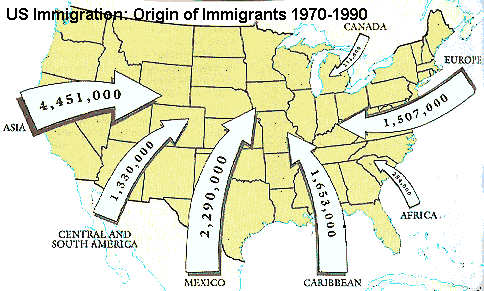
- Map: US: Origin of Immigrants 1970-1990 [At this Site]
- Wikipedia: 1965 Immigration Reform
- The Atlantic: Immigration: The Perpetual Controversy The Atlantic Monthly, April 1996 [Was At The Atlantic, now Internet Archive]
- James Fallows: Immigration: How It's Affecting Us The Atlantic Monthly, November 1983 [Was At The Atlantic, now Internet Archive]
"Immigration tends to select for those who are especially resilient, adaptable, and hardworking".
- Lowell Weiss: Timing is Everything The Atlantic Monthly, January1994 [Was At The Atlantic, now Internet Archive]
The fate of two groups of Vietnamese immigrants in America.
- Roy Beck: The Ordeal of Immigration in Wausau The Atlantic Monthly, April 1994 [At The Atlantic]
Effects of Southeast Asian refugees in Wausau.
- Jack Miles: A Bold Proposal on Immigration The Atlantic Monthly, June 1994 [Was At The Atlantic, now Internet Archive]
"The United States can and should clamp down on points of illegal entry into this country"
- Benjamin Schwarz: The Diversity Myth The Atlantic Monthly, May 1995 [Was At The Atlantic, now Internet Archive]
- Matthew Connelly and Paul Kennedy: Must It Be the Rest Against the West? The Atlantic Monthly, December 1994 [Was At The Atlantic, now Internet Archive]
Immigration issue as a problem of global inequalities. See critique by Virginia Abernethy: Optimism and Overpopulation [Was At The Atlantic, now Internet Archive]
- Germany
- France
- Britain
- South Africa
Empire
Art and Music
Back to Index
Further Resources on
Global History
- Web Guides
- Academic History/Culture Sites
- Nationalist History/Culture Sites
Other Resources
© This text is copyright. The specific electronic form, and any notes and questions
are copyright. Permission is granted to copy the text, and to print out copies for
personal and educational use. No permission is granted for commercial use.
If any copyright has been infringed, this was unintentional. The possibility of a site
such as this, as with other collections of electronic texts, depends on the large
availability of public domain material from texts translated before 1923. [In the US, all
texts issued before 1923 are now in the public domain. Texts published before 1964 may be
in the public domain if copyright was not renewed after 28 years. This site seeks to abide
by US copyright law: the copyright status of texts here outside the US may be different.]
Efforts have been made to ascertain the copyright status of all texts here, although,
occasionally, this has not been possible where older or non-US publishers seem to have
ceased existence. Some of the recently translated texts here are copyright to the
translators indicated in each document. These translators have in every case given
permission for non-commercial reproduction. No representation is made about the
copyright status of texts linked off-site. This site is intended for educational use.
Notification of copyright infringement will result in the immediate removal of a text
until its status is resolved.
NOTES:
The Global History Sourcebook is part of the Internet History Sourcebooks Project. The date of inception was
1998. Links to files at other site are indicated by [At some indication of the site
name or location]. WEB indicates a link to one of small
number of high quality web sites which provide either more texts or an especially valuable
overview.
The Internet History Sourcebooks Project is located at the History Department of Fordham University, New York. The Internet
Medieval Sourcebook, and other medieval components of the project, are located at
the Fordham University Center
for Medieval Studies.The IHSP recognizes the contribution of Fordham University, the
Fordham University History Department, and the Fordham Center for Medieval Studies in
providing web space and server support for the project. The IHSP is a project independent of Fordham University. Although the IHSP seeks to follow all applicable copyright law, Fordham University is not
the institutional owner, and is not liable as the result of any legal action.
© Site Concept and Design: Paul Halsall created 26 Jan 1996: latest revision 12 April 2024 [CV]
|