Meet the Palliative Care Fellows 2014–2015

Internship: Montefiore Medical Center, Palliative Care Service, New York, NY
I know what it’s like to ride sidecar on a journey only the driver can complete. My family’s experience with palliative and, subsequently, home hospice care has left an indelible mark on me. It is what infused me with passion and drive to begin my social work career NOW-- the catalyst lighting a fire beneath me, propelling me to embark on a life of substance with ardent immediacy.
My background prior to pursuing social work as a career blended elements of the profession’s mission. My undergraduate education consisted of a major in New Media arts practice and minors in psychology and sociology. The art that I made dealt with themes at the core of social work—such as the human rights of those living in concentrated communities of color struggling with socioeconomic burdens. When I began to exhibit as a working artist after my bachelor’s degree was completed, I often photographed the faces of those in my immediate Southeast Queens community and similar communities on the periphery. I liked the challenge of visually unpacking the industry and resilience of those facing these hardships yet living fully and joyfully. As much as I enjoyed this work, and talking to my neighbors, something felt a bit lacking in the exchange—as if I wasn’t giving back as much as I was taking. To me, social work as a profession allows me to revel in the stories of my community and beyond while providing a beneficial service. I have come to understand my personal mission as being deeply invested in total biopsychosocial-spiritual health and justice at all levels for all people-- especially those who are underrepresented and subject to myriad oppressions.
The population most in need of palliative care and/or chronic illness management services in New York is comprised of the city's most socioeconomically vulnerable citizens. Their pain at this juncture in their lives is manifold: they are subject to the intense feelings that emerge amidst degenerative disease compounded by environmental and systemic stressors. In my placement at Montefiore Hospital, I took immense pride in meeting the ever-changing needs of this Bronx community by delivering empathetic and quality care. To me, palliative care ranks high among the most crucial elements supporting the autonomy of a patient facing debilitating chronic illness or the end of their lives. I’ve come to truly know that helping a family and their ill loved to find strength and meaning through some of the most uncertainty- laden times of their lives is the most satisfying work in this world. There is still healing amidst a body giving way. The gift of witnessing their wisdom and resilience is utterly invaluable; it is an education not found in the pages of any text, an exchange the most human.
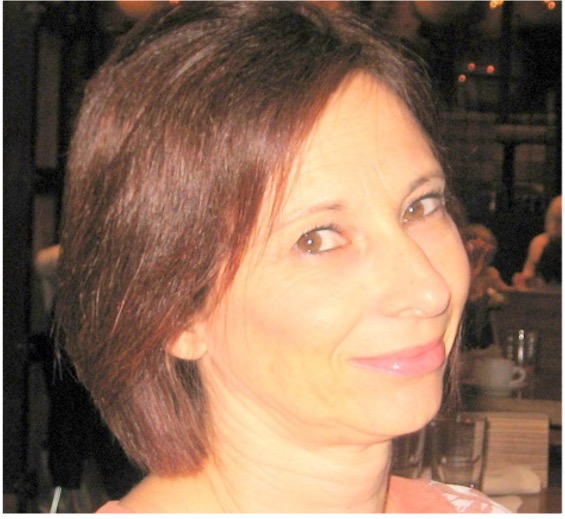
Internship: Calvary Hospital, New York, NY
The common thread throughout my life has been to make emotional and psychological connections with the people closest to me. Sometimes it requires just listening and other times people ask me for advice. The end result is that I see myself entering a profession where these abilities are valued and used to better the lives of others. I believe that I come into the field of social work with a wide and deep appreciation and understanding of people’s needs. I have lived on three continents, speak three languages, and have successfully transitioned through many changes in my life. I appreciate the diversity in people’s lives as well as their cultural diversity. I recognize that all people face challenges, and I hope to make a difference and empower people.
Over the years I have had a lot of interaction with clinical social workers in group and family settings as I dealt with issues in my family. As a volunteer in a battered women’s shelter, I again interacted with social workers who served the shelter residents. Before starting my MSW program, I was involved with the elder care provide to my mother-in-law through her progression from living in a building for older adult, to assisted living, to acute care, and finally to hospice. In all instances, I had a sense of appreciation for the social workers who performed their duties with skill, warmth, and compassion.
The experience with hospice gave me insight to the wonderful work the team was doing and that helping someone at the end of life can be a rewarding experience. My field placement in the Long Term Care Unit in Bergen Regional Medical Center in Paramus, NJ was a life-changing experience as I worked with diverse individuals who had serious mental and physical illnesses. I found that I was very comfortable working with very sick patients, and became aware of the strength and resilience in working with them. One experience that I recall vividly was taking a statement from a young man who is a paraplegic. He spelled out his words on a piece of paper with much effort. I cannot even express how inspired I was by this, and the joy I felt in helping him achieve this.
I am inspired to practice in palliative care, even as I recognize that it is a very challenging field. I believe that as a palliative care social worker, I believe that I will not only be able to help other people, but that I will work in a field that will give me a sense of fulfillment and purpose as well.
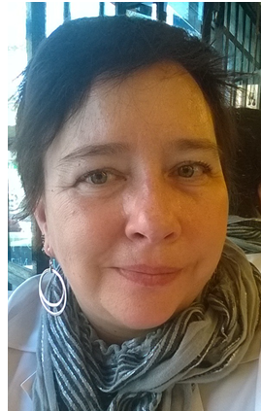
Internship: Calvary Hospital, New York, NY
After working for many years in television news and public relations, I wanted a career that engaged more deeply with people. Both journalism and PR demand attention to people’s stories, but the power, in both fields, lies with the story teller, not with the subject of the story. Social work, by contrast, focuses on the person and not just the story.
Even more directly, my own experiences of growing older and dealing with illness, life and death led me to social work. Every step I’ve taken in social work, starting with my application to Fordham in 2012, has convinced me that this is the right step for me to take, and that, in fact, I could not have undertaken this change at a younger age.
I knew, from the start of my interest in social work, that I wanted to work with older people. It is important to me that we all see older clients as more than a collection of maladies or losses, to see them as full, rich people. My interest in palliative care stems from the same values – to see people as more than patients or subjects for medical treatment.
Like many people my age, I’ve also spent time with a dying parent. That time was difficult, but it was also good; I feel lucky to have had those days and hours. I think patients and families dealing with serious illness sometimes experience a new intensity in their relationships, and that can be an overwhelming experience. I want to learn from and help patients and families who are grappling with tough decisions.
Reading about palliative care, I realized how well its values match those of social work – values like serving vulnerable people and empowering clients to make their own choices. Amidst the pain and confusion of serious illness, patients and families don’t always know what choices are available, or what the implications of a decision may be. I think that attitudes about palliative care and dying may be starting to shift in this country, but this is still new territory and social workers can help clients – and doctors – make sense of it. Social work in palliative care doesn’t mean that clients should choose to turn off machines or have a “natural” death, but that they should know about different possibilities. And it means listening. In stories about families struggling with illness, I’m struck by how much it means to them when someone actually takes the time to sit down, listen, and see people rather than patients. Palliative care, like good social work, doesn’t support a one-size-fits-all understanding of illness and death.
To sum up, much of what interests me in life and in social work come together in palliative care. It may sound paradoxical in describing work that often centers on illness, loss and death, but I think palliative care social work is a vital and profound area of practice.