Meet the Palliative Care Fellows 2015–2016
Florence Chiang
Internship: Cancercare, New York, NY
I graduated from Boston University with a Bachelors in Health Science in the hopes of becoming a physician assistant. Combining my passion for health and working with underserved populations, I felt obligated to share my knowledge with others. During the four years that I lived in Boston, I volunteered as a peer health educator for high school students attending underfunded public high schools, most of them without a health curriculum. I taught various health workshops in nutrition, sex education, rape and sexual assault, physical activity, and decision-making and communication skills.
After graduating from Boston University, I moved back to New York and began working at Callen-Lorde, a community health clinic located in the Chelsea neighborhood of Manhattan. Callen-Lorde provided medical and mental health services to the LGBTQ population and to those affected by HIV/AIDs. For three years, I observed how patients with HIV received excellent care, but this was not enough to help them cope and live with HIV. I realized that no matter how intelligent and compassionate the healthcare providers were, or whether patients had the proper medications, many were still declining in health. I began to appreciate the need to attend to our mental and emotional health in order to physically maintain a healthy body. This sparked a drive in me to pursue social work.
My Foundation Year field placement was at an outpatient HIV clinic at SUNY Downstate Medical Center, located in Brooklyn. Within the Department of Care Coordination and Medical Case Management, I worked with clients living with HIV who were experiencing difficulty in adhering to their HIV regimens. As a social work intern making home visits, I gained insight into how context can greatly influence one’s quality of life. I also learned that my clients were very often my best teachers, and I felt privileged to help them rediscover their inner strengths. After learning about a possible opportunity in pursuing a path to palliative care, I saw many similarities between the HIV population and individuals who could benefit from palliative care. In providing a supportive environment for my clients and collaborating with other health care professionals to improve diagnosis and treatment in the pursuit of improved quality of life, I knew that this field was right for me.
As a child, I was taught that sometimes in life you find yourself walking a path based on where the wind takes you. With my previous aspirations to become a medical provider, to working at the HIV/LGBTQ clinic, to pursuing a social work degree specializing in palliative care, I feel fortunate and humble to walk a path that embodies aspects of social work that feel innate to me. As a Palliative Care Fellow, my current field placement is at Cancercare located in Manhattan. While working with people with terminal cancer diagnosis, caregivers, and bereaved individuals, I am inspired by my clients every day, in their bravery, courage, and dignity to facing cancer. I look forward to graduating in May 2016, and am excited to pursue a career in palliative care.
Arden H. Church
Internship: Bennett Cancer Center at Stamford Hospital, Stamford, CT
Over the years I have worked at jobs that managed to pay the bills, but did not fuel my passion. Additionally, I have provided primary care for various loved ones which while quite fulfilling, did not pay the bills. At last came a period in my life when the time was right to replenish my soul and pursue my passion. I have always wanted to help people through counseling and learned along the way that the best way for me to do that was to become a Social Worker. With that decided, I graduated in spring 2015 with my BSW from SCSU and will complete the MSW Program at Fordham in May 2016.
Upon graduation from Fordham, it is my desire to provide grief counseling. This stems from my belief that our society does not treat bereavement with the respect and sensitivity it deserves. Most often, we are expected to “just get over it” when it comes to the losses we incur in life. That mentality does not promote a healthy environment for healing. I understand how difficult it can be to navigate the terrain of grief. Therefore, it is my intention to help empower people who are grieving to plot their own path through the grief process rather than caving in to the societal pressure to “just get over it.”
To my mind, palliative care and grief work go beautifully hand-in-hand. Palliative care is about empowering the patient to make their own decisions about treatment; grief work facilitates the processing of emotions around those decisions. Treatment should be a cooperative effort between patients and care providers rather than a dictatorship driven by physicians, which is often the case with a strictly medical model. Palliative care helps facilitate that cooperation, thereby putting the patient back in control of their own destiny.
When I first heard about the Palliative Care Fellowship, I was certain that it was God’s divine intervention because this work that truly speaks to me. I am passionate in my desire to help patients and their families through their end-of-life decisions. Our society is very uncomfortable with death and dying. We don’t often speak of it, and when we do, it is often with the superstitious belief that by speaking of it we may somehow bring it on sooner. Modern medicine has come so far and has allowed us to live longer than was ever dreamed possible. The question then becomes, just because we can extend a person’s life, often through extraordinary means, is it always the “right” thing to do?
During my internship at the Bennett Cancer Center, I have had the privilege of working with patients who have allowed me to help them through some of their issues associated with a cancer diagnosis. It has been an amazing experience to work with this population and I have witnessed how truly resilient human beings can be. My exposure to palliative care both in my personal life and in my field placement has shown me that indeed, this is the work that speaks to my soul, fuels my passion and is where I belong.
Jennifer Diviney
Internship: MJHS, New York, NY
Deciding to apply to graduate school in social work was a long journey for me. After receiving my undergraduate degree with a major in English, I lived abroad, working in theater. I moved to New York to continue working in that field and to have a new adventure. After many years of working on Broadway and settling in to life in New York, I knew something needed to change. I kept having the feeling that it was my work that needed the overhaul. A lot of soul searching and Internet searching coalesced into the realization that social work was the best combination of my skills, talents, and interests. I knew that I wanted to work in a health care setting. This was one of my priorities from the beginning.
After doing my year of generalist courses at Fordham and at my field placement on a Brooklyn Assertive Community Treatment (ACT) Team, I knew that I wanted my next placement to be even more immersive in a health care setting. The internship for my Palliative Care Fellowship is in a hospice inpatient unit. I work with patients and their families who are coping, usually in crisis, with the practical and existential aspects of the end of life. It’s a challenging environment and there isn’t a day that I am there that I don’t learn something new about being a social worker, or how better to be myself. I understand in a new way the impact that one’s health and the health care received has on individuals. I also learn how the many ways of providing good care has a huge impact on quality of life. Doing this work in this setting has reinforced my interest in focusing on health care. Palliative and hospice care is proving to me all the time that it is dynamic and powerful setting for learning what social work best practices are. I have no doubt that the remainder of this year will continue to be filled with personal and professional learning experiences, and that, if I make the right choices after graduation, this trend will continue. I look forward to fulfilling the personal and professional goal of working for and with others to provide better quality of life, and am grateful for the solid foundation the Palliative Care Fellowship has provided.
James Goldman
Internship: MJHS, New York, NY
For most of my life, I knew that I liked helping people, but I was not aware that the field of social work existed. After graduating from college, I worked in a public relations firm where I was more passionate about my work with nonprofit organizations, rather than with movie companies or celebrities. When I transitioned to working at an adoption agency, my passion for social work grew and my colleagues encouraged me to pursue this path.
At the beginning of my MSW program at Fordham, my interest was piqued when I first learned about hospice and palliative care. I heard it was an extremely challenging field although also very rewarding. While sitting one day at lunch with a colleague, we talked about the populations we wanted to work with. When I stated that I wanted to work with older adults and persons at the end of life, she stated: “They don’t have much time left, what can you really do with them? I wouldn’t see much potential in what I could accomplish working with them in that short period of time.” Unlike my colleague, I look forward to working with this population, because they are underestimated, undervalued and overlooked.
During my first field placement at the adoption agency where I worked, I was placed in a unique position to write life histories and provide support and counseling to individuals who had been adopted. In this way, I was helping them to not only learn about their life history, but also to help them come to terms with how they have lived their lives. The conversations we had were so extremely powerful and stay with me to this day. I feel that this type of work, helping others to make sense of and remember the lives they have lived, led me to my interest in hospice. I feel that this work is a privilege, especially being able to work at the MJHS Block residence in my current field placement.
I have already learned so much and benefitted from the wisdom and insight of the clients with whom I have worked. It is with all of my heart that I hope to give everything I have to help individuals who are at the end of their lives know that there are professionals who care about them and want to help them live their life to their absolute fullest potential possible.
Kaitlyn McKeon
Internship: Memorial Sloan Kettering Cancer Center, New York, NY
Receiving the Palliative Care Fellowship has afforded me the opportunity to work with some of the most dedicated and caring medical professionals in New York City. At Memorial Sloan Kettering Cancer Center, I have been able to work on an interdisciplinary team that is dedicated to furthering the integration of palliative care into the disease continuum for those individuals facing cancer. It is truly my honor to get to do this work each and every day and I look forward to continuing this work throughout my career.
Prior to being at Fordham University Graduate School of Social Service, my interests varied as evidenced by my undergraduate education at Fordham University in Middle East Studies and History and my post-graduate career in Institutional Giving at a large performing arts institution in Brooklyn. The through-line, however, was my interest in working with and for people and utilizing the interpersonal and culturally competent skills I have honed during my academic and professional life in the field of social work. My interest in palliative social work specifically, emerged from my own personal experience with the loss of my father from cancer. Social work factored heavily into my father’s ability to cope with not only his diagnosis and treatment but also with the end of his life. Palliative care, although introduced toward the end of my father’s illness trajectory, enabled a level of peace and comfort that had otherwise been missing.
Recognizing the need for palliative integration throughout the disease continuum and how effective social work can be within the scope of this practice has only heightened my desire to continue with this work following graduation. The Fellowship has provided me with the means to begin to do so by facilitating my training on the Bone Marrow Transplant team at Memorial Sloan Kettering Cancer Center and I feel so fortunate for the opportunity.
Margaret Meehan
Internship: Mount Sinai Queens, New York, NY
My passion for palliative social work developed while I was an undergraduate BSW student at Rutgers University. As a social work major, I was required to volunteer four hours a week with a social service agency. I became interested in medical social work when my sorority helped raise money for Embrace Kids Foundation that supports patients and family members diagnosed with childhood cancer and blood disorders receiving treatment at Robert Wood Johnson University Hospital. I spent a lot of time visiting patients who benefitted from our fundraising. I had a truly amazing experience as a volunteer and through witnessing the compassionate care the patients received from hospital staff members and Embrace Kids Foundation employees.
Spending time with the pediatric oncology patients and their families allowed me to have the amazing opportunity to get to know them on a professional as well as personal level. I developed an understanding of the psychological and physical toll a traumatic illness takes on the family unit, and I experienced how each day can be filled with complete joy or utter devastation, depending on a doctor’s prognosis or test results. I experienced the sorrow of losing a patient, the anxiety of waiting for test results, and the endless hope that the entire hospital community relies on for comfort and support.
After beginning my MSW journey at Fordham University, I was ecstatic to have the opportunity to participate in the Palliative Care Fellowship program. I was placed at Mt Sinai Hospital in Queens, NY, and my experience has been absolutely amazing. My graduate field placement has made me appreciate the importance of palliative care at a deeper level because in most cases, the social workers become a strong part of the family support system. I have seen firsthand what a difference palliative care can make in the lives of those who are suffering from a serious or life-threatening illness. This type of specialized care helps patients confront their fears, dreams, goals, as well as their final wishes if their illness progresses to the point that they became unable to speak for themselves. It also helps to give family members peace concerning advance directives and life-support decisions.
Helping to support patients and family members during the most challenging time of their lives is something I want to wake up and do every day for the rest of my career, and the Palliative Care Fellowship has made my dream become a reality. One of the most amazing things about palliative care is that it empowers the patient by giving them back the control that was taken from them by their illness. My fellowship at Mt Sinai Hospital has given me invaluable insight under some of the most experienced and qualified hospital staff and professionals in the field. The experience, support, and mentoring I have received from participating in the Palliative Care Fellowship program has been a truly life-changing opportunity. This program has provided me with the education, connections, and drive I need to become a professional in the palliative care field upon graduation, and I am extremely grateful for the unique opportunities and mentoring I have had throughout the year.
Samantha Muzzulin
Internship: Cobble Hill Health Center, Palliative Care Service, New York, NY
Death is inevitable. It will happen to each and every one of us, regardless of race, gender, and socioeconomic status. It is a universal occurrence, and yet, in this country, it is a taboo topic for many individuals and families. Planning for end of life is, without a doubt, a difficult and uncomfortable topic to approach, but it is extremely important as we age. I chose to pursue the Palliative Care Fellowship due to my interest in lessening the anxiety around death and dying with individuals and families, and encouraging open, honest communication about end-of-life care. Witnessing my grandmother's experience with hospice care gave me a better understanding of the benefits of this service. Not only does hospice promote a dignified and comfortable death, it provides emotional support for the patient's loved ones, in addition to easing the anxiety that surrounds the end of life. It influenced me to consider why more individuals and families do not choose hospice, and it occurred to me that many are simply unaware. This encouraged me to explore ways that I could learn more and perhaps educate and advocate for individuals and families. This strongly influenced my decision to apply for the Palliative Care Fellowship.
My field placement is at the Cobble Hill Health Center, a nursing home located in Brooklyn serving a diverse population of residents, many of whom have a palliative care plan. Much of my work at the nursing home is connected to a Comfort Matters project, implementing non-pharmacological interventions to promote quality of life among individuals with Alzheimer's and other forms of dementia. Being placed at Cobble Hill has exposed me to many different aspects of palliative care. This placement has sparked a deep interest and commitment to working with persons with dementia, and with their families. This experience has instilled a desire to educate communities about Alzheimer's and other forms of dementia, and about end-of-life planning, and the importance of comfort care approaches. Additionally, I draw upon my background and experience in yoga and meditation to support families with mindfulness techniques to reduce anxiety and stress.
The Palliative Care Fellowship has opened up many doors for my career in social work, and has encouraged me to reach beyond my comfort zone and explore the human experience of death and dying. Rather than backing away from an uncomfortable topic, I am inspired to discuss it and empower others to have similar conversations with their families. The promotion of comfort among individuals who are nearing the end of life is something that I am passionate about, and I look forward to a fulfilling social work career of comprised of education, advocacy, compassion, and humanity.
Ashley Nathasingh
Internship: Montefiore Medical Center, Palliative Care Service, New York, NY
The first time I ever heard the words “palliative care”, I was walking the halls of the pediatric oncology ward at Universitas Academic Hospital in Bloemfontein, South Africa in 2011. There I had met children who presented with cancers already in Stage III or Stage IV. I was witnessing families who, due to cultural differences, did not understand what cancer was and refrained from bringing their child into the hospital because they believed their own family rituals would cure the child. I sat across from families with doctors and the sole social worker as they described the disease, the impact it has on the child, and the percentage rate of survival. Even after an hour of conversation, parents walked away still confused; yet, as parents, they still sat by their child's bedside every day and every night as the doctors worked to save their child’s life. Looking back, I was witnessing first hand a patient and family’s life without palliative care. Now it is five years later, and I am immersed in the field and more passionate about it than I ever thought I would be.
I always knew I wanted to be in the medical field. I explored options of medical school, like my older brother, and nursing school as well, but eventually realized that that type of work was not “deep” enough for me. It did not touch my soul the way my parents said a career should impact me. Once I started social work school, however, my entire life shifted, and everything I had believed I was meant for was coming true before my eyes.
As a Palliative Care Fellow, the work began to test me as a person. Being on this journey with patients and their families, I began to see life in a way that is truly changing me and the way I live. I was questioning my own existence and what I truly wanted out of my life. There is a beauty in working within this field that gives one insight into the fragility and the complexity of life. My placement at Montefiore Medical Center has given me the ability to work with a Palliative Care team that teaches me every day how to be a better clinician and better human being in general. It is a beautiful opportunity to meet and work with people who are passionate about the same things as I am. My older brother once told me that he believed that working in palliative care is almost like being a firefighter; when everybody else is running out, we’re the ones running in to support patients and their families and be alongside them throughout their very difficult journey. I do not know a greater gift than to be a part of people’s lives at such a arduous stage of life. I look forward to dedicating my life to the field of palliative care upon my graduation.
Nancy J. Phillips
Internship: Calvary Hospital, New York, NY
Not long ago I was inspired to move from a successful career in business to one in social work. I was looking for work where age and experience are valued assets. I wanted my work to be about helping others, and to be filled everyday with meaningful connections to other people.
I began to pursue a career in social work at the time when I learned firsthand how difficult it is to help someone at the end of life if you lack guidance and experience. My father was dying and I was caring for him. Very quickly I learned how much families need support when grappling with end-of-life issues. Out of my own personal experience, combined with a desire to find meaning and purpose in my work, I pursued a Master’s degree in social work.
I love working with older adults. I have worked on the Fordham Centenarian research study. Interviewing people 95 to 100 years old has given me great satisfaction. Last year I worked at Dorot, an agency serving older adults, to help and inspire individuals who are socially isolated. As they experience declines of aging, older adults are often regarded as less valuable. People stop noticing their unique qualities, passionate ideas, and deep aspirations. In fact, as their sight dims, their insights penetrate with warmth. I listened to their stories and their perspectives on life. In helping them I grew and changed. I decided to focus my work in the field of aging and palliative care.
I am becoming a palliative social worker to help families who need support when encountering the demanding issues that surround a loved one who is at the end of life. This very often involves adult children caring for a parent. I want to help ease their way. Our society hides death. People do not want to talk about it. Consequently, families can feel lost as they sit alone enduring endless waiting, trying to make good decisions as they seek to find peace in this phase of life.
At Calvary Hospital, where I am doing my field placement, I spend time listening and learning, to understand what is important to families and patients. Often deep emotions of fear, anger, and regret surface. I give them a chance to express intense feelings that they often hold back around family and friends. I help educate them and help them to cope. I help them talk about their lives and what holds meaning for them. I seek to be a presence in their lives.
Why would a person who is in the prime of her life want to work with people who are dying? In palliative social work, I have become more aware of the deeper currents of life. I witness the courage of people who face their death, “staring at the sun,” as Irvin Yalom describes it. Some are at ease. For others this is very difficult. The people I work with face the end of life in many different ways – wanting to fold laundry, wanting to see another movie, wanting to see pictures of grandchildren, wanting to pray. I am learning what it means to count each separate day as a separate life. In this work, every day I am touched by how extraordinary life is, especially how the end of life is still filled with life.
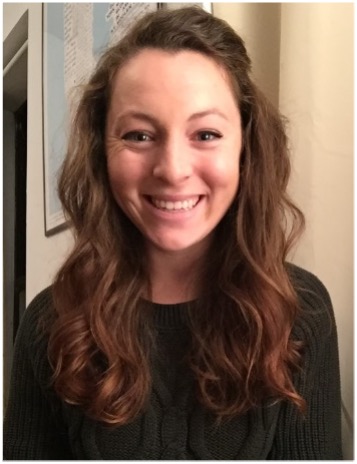
Internship: MJHS, New York, NY
Learning about and experiencing social work both in the classroom and in the field has been life changing. Entering this final year of graduate school as a Palliative Care Fellow and interning with a hospice agency has been impactful beyond measure. Working with individuals and families who are confronting and processing either their own humanity or that of their loved one has been a privilege that I could not have anticipated.
My personal interest in service and social work has been a part of my life long before my academic endeavors. As a person living with type 1 diabetes and having spent many years as a camp counselor at a camp for children with type 1 diabetes, my passion for service came from working to teach and empower children of all ages to understand and successfully manage their diabetes. Watching as children and young adults uncovered their own strengths and gained confidence to live full, healthy, uninhibited lives, I was moved to pursue a field in which I can affect and inspire change in many settings.
Being a camp counselor for others with diabetes inspired in me a lifelong desire for service. This led me to participate in the national service program AmeriCorps, in which I was able to assist communities with disaster relief and recovery efforts around the country, before ultimately applying for a Masters in Social Work program at Fordham University. Being one of the students who was awarded the Palliative Care Fellowship, I have been able to learn more about medical social work and what it means for others to live with chronic symptoms, not too unlike type 1 diabetes, as well as provide compassion and support to those nearing the end of their life journeys.
Working in hospice and palliative care has been both a challenging and rewarding experience. It is truly some of the most inspiring and humbling work I have ever done. I have seen minimally responsive patients smile and relax at the light squeeze of a hand and I have laughed with families while reminiscing about their loved one. I have been invited into homes to share in a patient’s last moments and provide the family with comfort and support. I am so grateful to have the opportunity to be a Palliative Care Fellow and look forward to further enhancing my skills as a social worker so that I may best serve the needs of others