Granting Permission: Toward Embracing Grief in Our Clients, Our Systems, Our Colleagues, and Ourselves
Date and Time
January 27, 2026
4:00 pm - 6:00 pm ET
Offered via live webinar.
Completion of this class will result in the receipt of two (2) continuing education hours.
-
In modern Western society, grief is not granted permission to exist, to be felt, without barriers. Grief of all types, including grief through death as well as grief engendered by serious illness, ambiguous losses, and other life challenges and transitions, is unavoidable within the human experience and is often excruciating. However, it is rarely sufficiently recognized or supported. By considering and evaluating grief experiences through the lens of their access to permission, clinicians can collectively imagine and promote inclusivity in grief. Permission will be presented as both a conceptual framework and a clinical tool. We will explore its micro- and macro-level applications across practice settings and populations, and its utility for both professional and layperson engagement. Building from this foundation, together we will imagine and set intentions toward building healthcare systems and social institutions that embrace healthier and more supportive narratives about grief.
-
Rennie Bimman, BSW, MSW, LICSW, RSW (i)
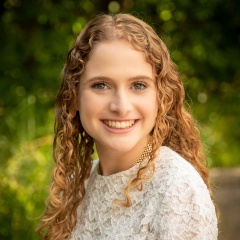
Rennie Bimman engages in clinical practice, research, and education to address grief, especially grief that has unmet needs. She holds a BSW from McGill University and an MSW from the University of Toronto, specializing in Gerontology with a Collaborative Specialization in Aging, Palliative, and Supportive Care Across the Life Course. In her clinical work throughout Canada and the U.S. she has supported individuals and families in their most vulnerable moments across the life course, including older adults with dementia and their caregivers, families experiencing the serious illness and death of a child, parents and grandparents enduring perinatal loss, adults and their families navigating terminal illnesses on a newly established palliative care unit, and pregnant and parenting young mothers grieving the nondeath losses of abortion or child removal. Her research includes investigating disenfranchised grief of caregivers and clinicians supporting patients with advanced liver disease, exploring the inclusion of persons with dementia in decision-making regarding their care and developing communication interventions to improve this, designing evidence-informed bereaved caregiver support programs and intervention approaches, and identifying the unique contributions of gerontological social workers. She is currently pursuing a PhD in Social Work at McGill University, investigating the needs of intergenerational family systems navigating pregnancy and infant loss.
-
Fee Category 2 CEHs Full Tuition $60 GSS alumni (must use fordham.edu email address to complete registration) $50 Current Online Adjunct faculty $50 3+ attendees from one agency registering at same time (must use agency email address to complete registration) $40 Current Military and Veterans $40 Current Field Instructor to GSS student $30 Non-Fordham current MSW or Social work doctoral student (must use school email address to complete registration) $30 Current Fordham MSW or PhD student (must use fordham.edu email address for registration) $20 Fordham Alumni Palliative Care Fellow $20 Current Fordham Palliative Care Fellow $0 Current Fordham faculty, staff, adjunct faculty, or Field Advisor (must use fordham.edu email address for registration) $0 Current Fordham Student Ambassador $0 Continuing Education Hours
Completion of this class will result in the receipt of two (2) continuing education hours. CEHs are not awarded for partial completion of the class.
-
You will receive the Zoom link for joining the class by the day before the class. IF YOU HAVE NOT RECEIVED THE LINK BY THIS TIME, PLEASE CHECK YOUR SPAM FOLDER.
You will need a computer and a reliable WiFi connection. The computer may be a desktop or a laptop. It may be an Apple or Windows computer.
If you have never used Zoom before, you will likely be prompted to download an applet, which is a small program that allows Zoom to communicate with your computer. This is safe and you will need to do this to join the class.
It is NOT advised that you participate using a table (e.g., an iPad) or a cellular phone. The software is not optimized for these devices.
Please plan to join the online class 15 minutes before the start time to be sure that you don’t have any problems connecting. We cannot provide technical support to you and refunds won’t be offered if you have technical problems. If you have any questions or concerns about this, please contact us at [email protected] at least a few days before the class.