Voluntarily Stopping Eating and Drinking: A Widely Available, Lesser-Known End-of-Life Option
Date and Time
December 11, 2025
5:00 pm - 7:00 pm ET
Offered via live webinar.
Completion of this class will result in the receipt of two (2) continuing education hours.
-
More patients are seeking to hasten their deaths by voluntarily stopping eating and drinking (VSED) than by medical aid in dying (MAID). There are two main reasons for this development. First, this end-of-life option has received significant media attention over the past few years (in books, journal articles, and obituaries). Second, MAID, which remains available in only twelve states, patients need not wait for their state legislature to authorize VSED. Patients in every U.S. jurisdiction have the right to refuse any bodily intervention, including oral nutrition and hydration.
While VSED is legal and totally within the control of the patient themselves, how should clinicians respond to requests to support the patient during this 8- to 14-day process? Which patients are eligible? Should clinicians apprise patients of this option without first being asked? And how exactly does VSED work?
This class addresses these issues as well as more complicated questions concerning VSED for incapacitated patients. Can patients request VSED in their advance directive? Can agents and surrogates request VSED for incapacitated patients without explicit direction from the patient herself? What if the incapacitated patient makes utterances or gestures indicating they now want water? How is VSED different from related approaches to nutrition and hydration such as Comfort Feed Only and Minimal Comfort Feeding?
-
Thaddeus Mason Pope, JD, PhD, HEC-C
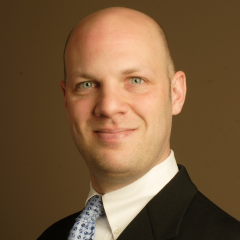
Thaddeus Mason Pope is a foremost expert on medical law and clinical ethics. He focuses on patient rights and healthcare decision making, especially at the end of life.
A fellow of the Hastings Center and previously both a Fulbright Canada Research Chair in Health Law, Policy, and Ethics, and a visiting scholar with the Brocher Foundation in Switzerland; Pope is now a Professor at Mitchell Hamline School of Law in Saint Paul, Minnesota.
While Professor Pope serves in a range of consulting capacities, he has been particularly influential through extensive high-impact scholarship. Ranked among the Top 20 most-cited health law scholars, Pope has over 300 publications in medical, law, and bioethics journals. His books include:
- The Right to Die: The Law of End-of-Life Decision Making
- Voluntarily Stopping Eating and Drinking: A Compassionate, Widely Available Option for Hastening Death
Professor Pope’s Medical Futility Blog has received over five million pageviews. And he writes for both UpToDate and The Merck Manual. Particularly notable among his publications are policy guidance statements on ethics in critical care for major professional medical societies, and clinical practice guidelines on topics such as brain death and medical aid in dying. Apart from scholarship, Pope has been a legal consultant and expert witness in court cases involving end-of-life treatment.
-
Fee Category 2 CEHs Full Tuition $60 GSS alumni (must use fordham.edu email address to complete registration) $50 Current Field Instructor to GSS student $50 Current Online Adjunct faculty $50 3+ attendees from one agency registering at same time (must use agency email address to complete registration) $40 Current Military and Veterans $40 Non-Fordham current MSW or Social work doctoral student (must use school email address to complete registration) $30 Current Fordham MSW or PhD student (must use fordham.edu email address for registration) $20 Fordham Alumni Palliative Care Fellow $20 Current Fordham Palliative Care Fellow $0 Current Fordham faculty, staff, adjunct faculty, or Field Advisor (must use fordham.edu email address for registration) $0 Current Fordham Student Ambassador $0 Continuing Education Hours
Completion of this class will result in the receipt of two (2) continuing education hours. CEHs are not awarded for partial completion of the class.
-
You will receive the Zoom link for joining the class by the day before the class. IF YOU HAVE NOT RECEIVED THE LINK BY THIS TIME, PLEASE CHECK YOUR SPAM FOLDER.
You will need a computer and a reliable WiFi connection. The computer may be a desktop or a laptop. It may be an Apple or Windows computer.
If you have never used Zoom before, you will likely be prompted to download an applet, which is a small program that allows Zoom to communicate with your computer. This is safe and you will need to do this to join the class.
It is NOT advised that you participate using a table (e.g., an iPad) or a cellular phone. The software is not optimized for these devices.
Please plan to join the online class 15 minutes before the start time to be sure that you don’t have any problems connecting. We cannot provide technical support to you and refunds won’t be offered if you have technical problems. If you have any questions or concerns about this, please contact us at [email protected] at least a few days before the class.