Joyce Chen on Community Collaboration and Public Anthropology in Practice
Gabelli School of Business Alum shares insights from recent Amsterdam Additions Archive Project.
This interview has been edited for clarity.
Jack: Could you tell us a little bit about what you're doing and provide a general summary of the project you're working on?
Joyce: I'm currently at Columbia doing my master's in anthropology. Right now, I'm working on the Amsterdam Additions Archive Project with Professor Diana Kamin in Fordham's communications and media studies department. I stumbled upon the project through volunteering at the development, doing some office cleanup work for them. While I was cleaning up their office, I found this huge box of 3,000 photos of life in the development from the '60s through the early 2000s. So this is through the Civil Rights Movement, so super, super cool. These photos were in big plastic bins stacked on top of each other, filled to the rim. There were 3,000 photos in there, and I thought, "Oh, we should probably archive these before they rot," because they're all sticking together and melting right now. So, I spoke with numerous professors and funders to see if I could find someone to support me in undertaking this project. And luckily, the Fordham Center for Community Engaged Learning came through with a lot of support, connected me with Professor Kamin, and now we're going through all 3,000 photos. I just finished today [October 10th, 2025], going through the photos, organizing, scanning, and digitizing them. Then we're hopefully gonna create a community exhibition out of this, and then also provide the community with tools so that they can use these photos for when they do Juneteenth celebrations or when they do Family Day celebrations.
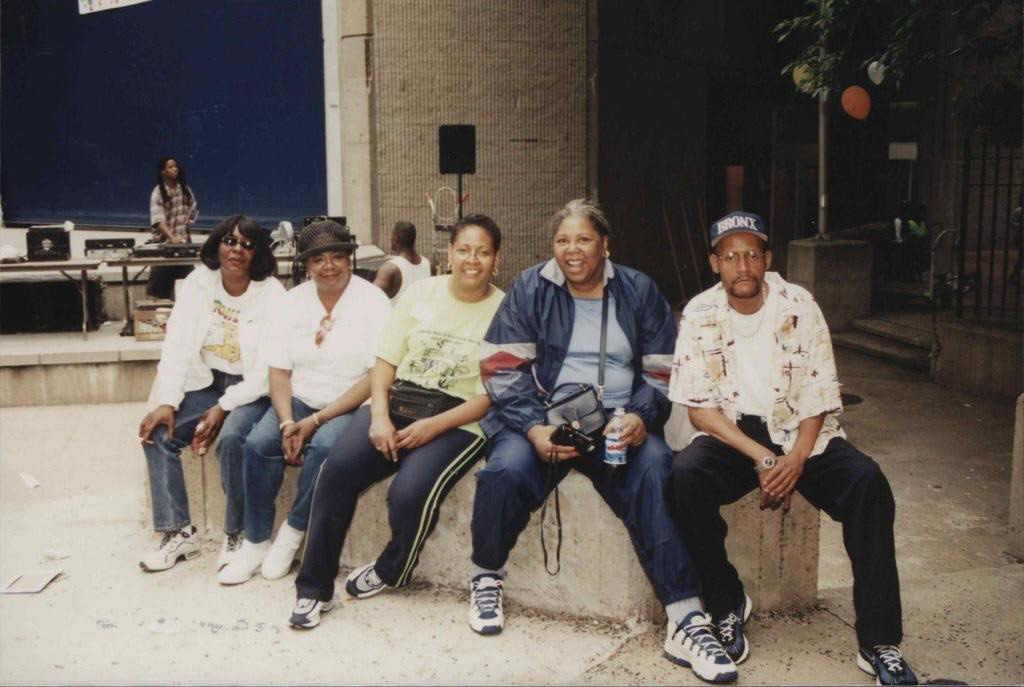
Caption: Group of residents resting together during the 2001 Family Day at the Additions.
Jack: For context, can you tell us a little bit about the development and its history?
Joyce: Amsterdam Additions is part of NYCHA-I'm not sure if you're familiar with it. It's the New York City Housing Authority that manages all the affordable housing and apartments in New York. It was built in 1974 as an expansion of the Amsterdam Houses, originally for WWII veterans. And then it has slowly been getting integrated by civilians, and it's very intergenerational within the development. So families have been living there since their grandparents or their great-grandparents. And that really shows in the photos there is so much history. I see someone's great-grandparents, and it's so ethnographically powerful and rich, in the sense of seeing the grandchildren's reactions and how they reminisce and remember the past. And there have been a lot of famous people who came out of this development, too. There's a jazz musician, Thelonious...
Jack: [laughs] Oh, Thelonious Monk?
Joyce: Yes! He came out of the Additions. They do a lot of their own organizing. Ms. Patricia Ryan, with whom I'm working, the tenant associate head, organizes Family Day every single year, where they gather everyone who moved away or down south to celebrate the development and keep the community connected. And they've actually made books of events that have happened in the Amsterdam Additions community, which are super cool.
Jack: How have you connected with residents in the Amsterdam Addition while working on this project? What has that experience been like for you?
Joyce: I'm doing this work in the development's lobby, next to the elevator bank. It's basically me on the lobby desk, sprawled out with old photos-Ms. Pat's sitting next to me, and we're talking about these photos. As residents come and go, they see these photos, and they will come and say, "Oh my god, that's my grandmother!" "Oh my god, that's my grandfather!" "Oh my god, this is when I used to have hair!" So it's a very natural progression of developing relationships and banter with the current residents. I mean, I didn't originally undertake this project to impose or force myself into the community. But because the narratives across these photos are so ingrained in the memories of all the residents, especially given how intergenerational it is, you naturally have a lot of conversations. Someone is partying in these photos, and the current residents will tell me who the party was for, who the people dancing are, how the development used to look, and how it's changed. For example, the center that's next to the development, the Goddard Lincoln Square Neighborhood Center, used to be a place where people were able to host parties for their weddings, their christenings, and their birthday parties or just dances, senior nights, things like that and I think they still do senior nights. I found some photos of super cool people having drag shows at the center in the '80s. But now NYCHA has put rules and regulations in place, prohibiting events or parties there because of incidents that happened way back in the '80s. And now the center is closed off, so people can't have events there anymore. But from these photos, they remember, "Oh, we used to be able to do this." For example, the development has undergone changes in infrastructure, such as the placement of benches, and many aspects of urban planning have also changed. These changes also affect the community's dynamics and its residents. These photos evoke memories for many residents, who tell me how the changes to the development affected them. These photos also provide a way for us to learn and for them to reminisce about how the development used to look, or what life in New York was like in the '80s. Professor-not Professor-Ms. Pat recommended that I watch this movie called Claudine to really understand how New York and the '80s were for the community back then. You guys should watch it. I think Earl... who plays Darth Vader again?
Jack: James Earl Jones?
Joyce: James Earl Jones is in that movie. But I think one of ethnography's primary focuses, and anthropology's primary focus, is to learn more about people, and that's the end of it. Asking "what type of developments have led these people, these communities, and friends to where they are today?" And this project is so, so anthropological because I'm literally in the shared space where monumental community events have occurred, and I have evidence in front of me to see how things have developed. With archiving and cataloging, they're telling me the stories, but they're not going through the photos themselves because nobody has time for that. But methodologically, it's critical when you're doing these projects to see what the community wants in the first place. For the next step, Professor Kamin and I are still discussing with the community what the imagined outcome of this project will look like. They already told us that they want these photos so that they can use them for family days and Juneteenth celebrations. It's very important to be able to keep in mind what the community wants in the first place, and I've talked to Professor Kamin's class about this project, too. I think one thing that a lot of students get really excited about is when they hear about this, they say, "Oh, you should put this out in public, put it on social media, make TikToks... let people know about these things because it's so cool and so important." Which is so true. But practically, and I guess in terms of method, you have to keep in mind these are older individuals who probably don't have social media and TikTok. They're not as technologically inclined. So, Professor Kamin and I really had to take a step back and understand if they even wanted a website or media presence. Because what's the point of having it up there if they're not the ones who can look at it? It's important to see if they even have the time to get involved, too. I'm not gonna ask them to do any work at this stage right now because I'm just doing all the nitty-gritty, organizational stuff. But with the exhibitions, we want to create a place where they can easily look back, duplicate photos if they want, enlarge them, and display them however they want.
Jack: And it's a difficult balance to walk, because you don't want to saddle the residents with the task of combing through and categorizing everything, but you also want to include the community in dialogue about what they want the finished product to look like.
Joyce: And I want to emphasize that I'm not the only person doing this. They are helping me with it. Because Ms. Pat's literally sitting there with me it's me and Ms. Pat's project together. She's sitting there with me, telling me who these people are, and she is going through a lot of these photos with me after I rummage through a good amount of them, too. So the community is very involved because I can't do this project without them. The photos capture their memories, not mine.
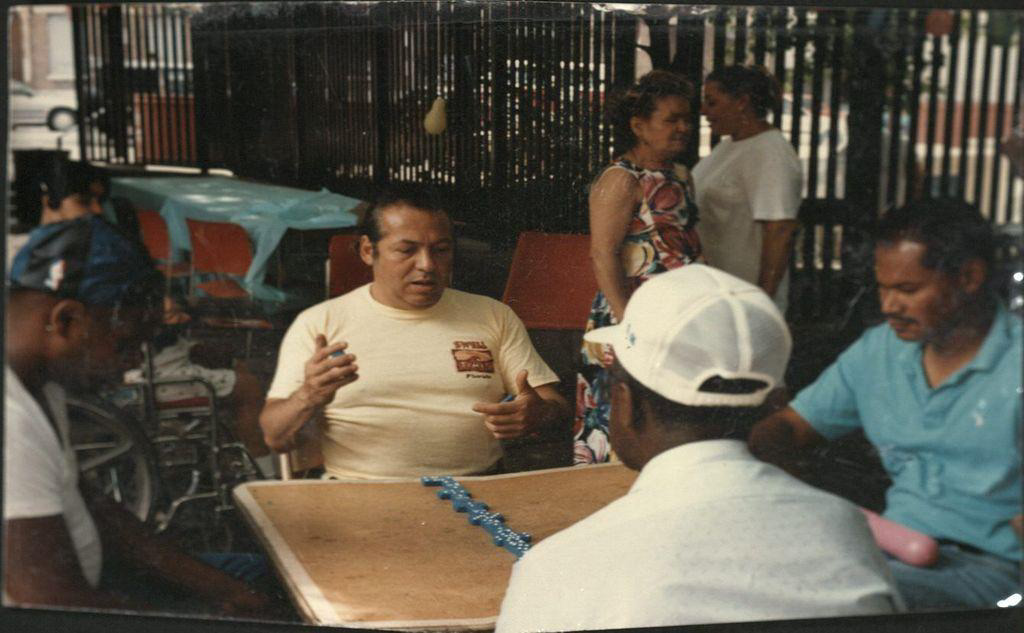
Caption: The late Mr. Torres (in the yellow) and Richie (In blue to the right) playing dominoes with fellow residents during an outdoor BBQ. The late Ms. Santiago is in the floral dress in the back.
Jack: I want to go back to that Freudian slip we had a few moments ago. You called Ms. Pat 'Professor Pat.' I think, from what you've been saying, it seems like she has really been a mentor for you in this project. And it seems to be a very collaborative experience for you, if I understand this correctly.
Joyce: It's super collaborative because the only way for me to truly understand or be able to catalog or chronologize these photos is through the stories that people are telling me. I literally can't archive without them informing me of the timeline or the location where these photos were taken. And especially with Ms. Pat, I learned a lot about just navigating life in general with her. Right now, I am in an ethnography class in my master's program, and I'm writing my ethnography about my experience with her by the elevator bank, in the sense of how Ms. Pat sits by the elevator bank five days a week. She says hi to everybody even people who don't say hi to her. But everyone says hi to her, and everyone knows her, asks her for favors, and updates her on their lives. It's examining how these brief, passing interactions at the elevator bank develop into larger networks of mutual aid within the community. Ms. Pat's consistent presence becomes almost like an internal marketplace because she initiates so many resource exchanges. If anyone is throwing out their recyclables, she always takes them and will give them to another resident who she knows collects bottles. So, I'm writing an ethnography on that: how one person's unrelenting and casual efforts to break down walls of unfamiliarity develop into whole channels of mutual aid networks, and it usually just starts with an amiable "hi." When she isn't there, it's very quiet by the elevator bank. But when she is there and engages with residents, it just makes such a difference. And yeah, she's kind of Professor Pat to me at this point because I'm just learning a lot about how to navigate myself even as I come into my adulthood. It was a Freudian slip, that's a great way to put it. I love that.
Jack: When we started the Anthropology Society here at Fordham Lincoln Center, I was talking to you about how I was doing a final project on the MoCA, the Museum of Chinese in America. It began as an oral history project by Columbia students [Charles Lai and John Kuo Wei Tchen]. What you're doing kinda echoes the work that they were doing, just in terms of going beyond the physical media with the photos, but also collecting some of the stories with it. I think the photos and the physical media are only one dimension of it. And it's the people, like Ms. Pat, that are there to give context and bring the stories to life.
Joyce: I think it also highlights how important it is to empower students to do these projects and to give them the funding, because at the end of the day, these projects are what inspire the development of institutions. These projects are what get the ball rolling. Public anthropology is very important because efforts to highlight stories and how these stories are shaped by larger socio-political-economic structures-bring people's attention to important issues. I mean, so much of Chinatown's history was shared through MoCA, because students were able to bring these projects to life and share them with the public.
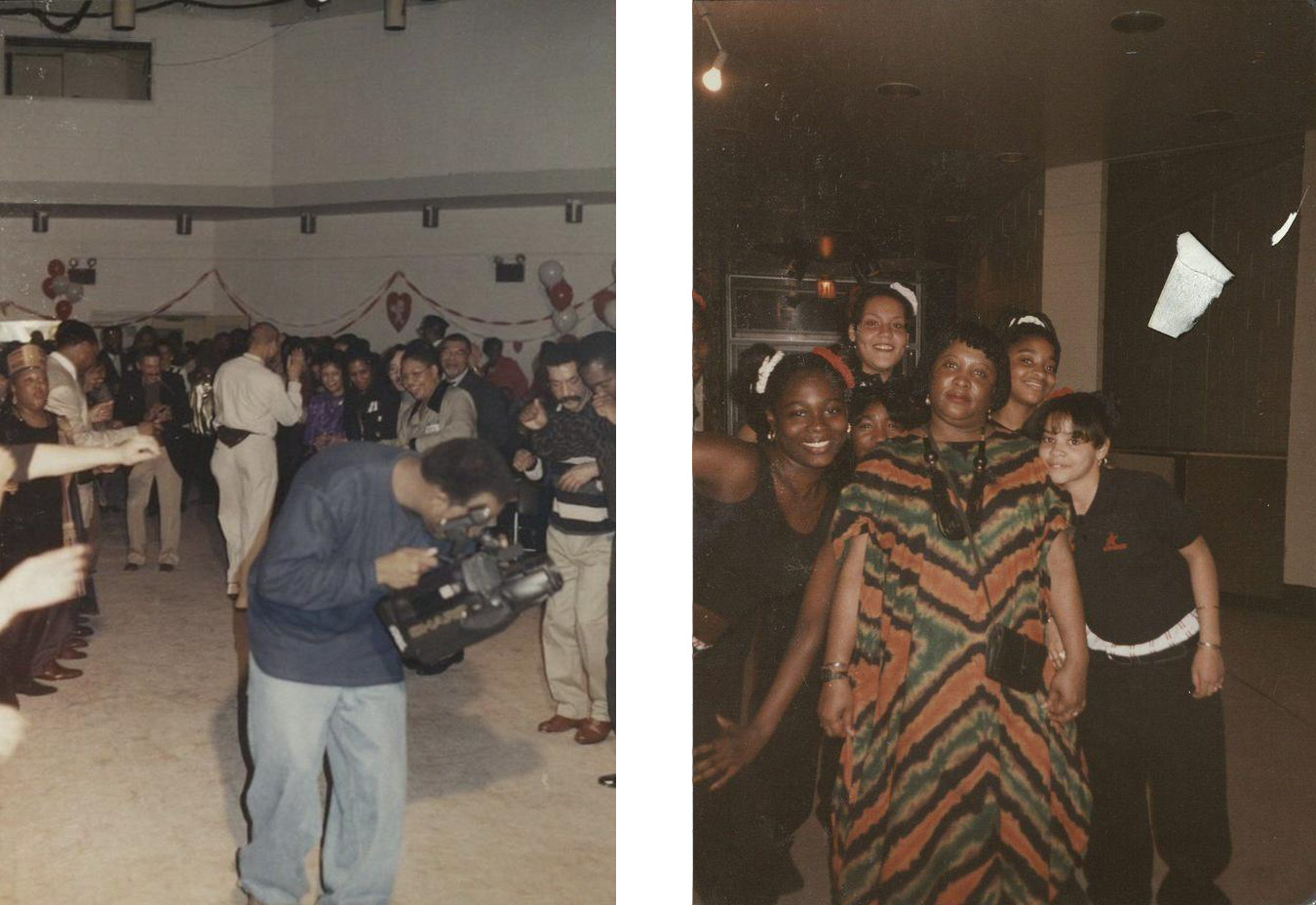
Caption left: a Valentine's Day celebration that was documented. Ms. Pat is on the left, wearing a kufi hat. Caption right: Ms. Pat in the center with her cheerleaders. She helped develop a cheerleading/dance team for the Additions upon request from the young girls at the development.
Mireya: Can you explain how you went about building a relationship with the residents? You found these pictures, and you're laying them out, you're digitizing them, and were people initially pretty responsive and receptive to you? Did they want to tell you these stories - what was their initial response to your presence in the Amsterdam Additions?
Joyce: Originally, people didn't think I'd be there for very long. Everyone thought I would come like two times, then leave and not show up again. There are a lot of projects happening in San Juan Hill because everyone wants to capture their stories, but many fall through because people's commitment to them just wavers. Life gets busy, et cetera all very well-meaning individuals. But, evidently, the residents know this game of academics or creatives coming to try to work with them. Ms. Pat says that she's repeated her stories about 300 times because so many people have asked her. As with a lot of anthropological fieldwork, it's all about time and building friendships. So the longer I was there, the more they got used to the idea of the project, and they felt more inclined and comfortable having conversations with me. A lot of them thought I was moving in. Many of the Chinese residents who don't speak English were very excited that I was moving in, and I had to tell them that I wasn't, and that I couldn't be their translator forever. The step-by-step of how it went was: I originally proposed this project to Ms. Marlene, who's part of the New York Society for Ethical Culture, and she was the one who connected me with Ms. Pat. I still talk to Ms. Marlene, who encouraged me to do this project and to reach out to Fordham to pitch it to people. I first pitched it to a bunch of professors, then to the Center for Community Engaged Learning, which directed me to Professor Kamin. I initially proposed the project in October 2024. The project didn't actually start until June of 2025, because it took so long for everything to go through. I just finished combing through the initial 3,000 photos today. So it's been a very long time of percolating. A bunch of students, actually from Fordham, are gonna be scanning them as part of a class project, and we'll see what happens after that. If there is an exhibition-hopefully there will be the Anthropology Society will definitely have to come and check it out. Combing through the photos involves a lot of technical work and knowledge of how to properly locate, label, and categorize photos using Excel and related tools. That's more like archival work. But yeah. That's the process. It takes a long time, I feel, to try and get any of these community organizing projects together, but it's very worth it.
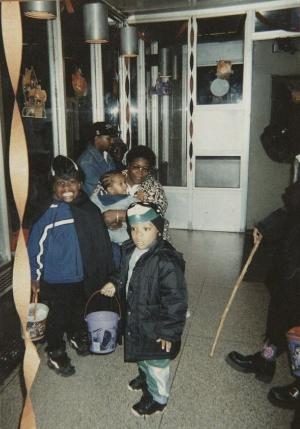
Caption: Halloween at the lobby with decorations that Ms. Pat and residents put up every year.
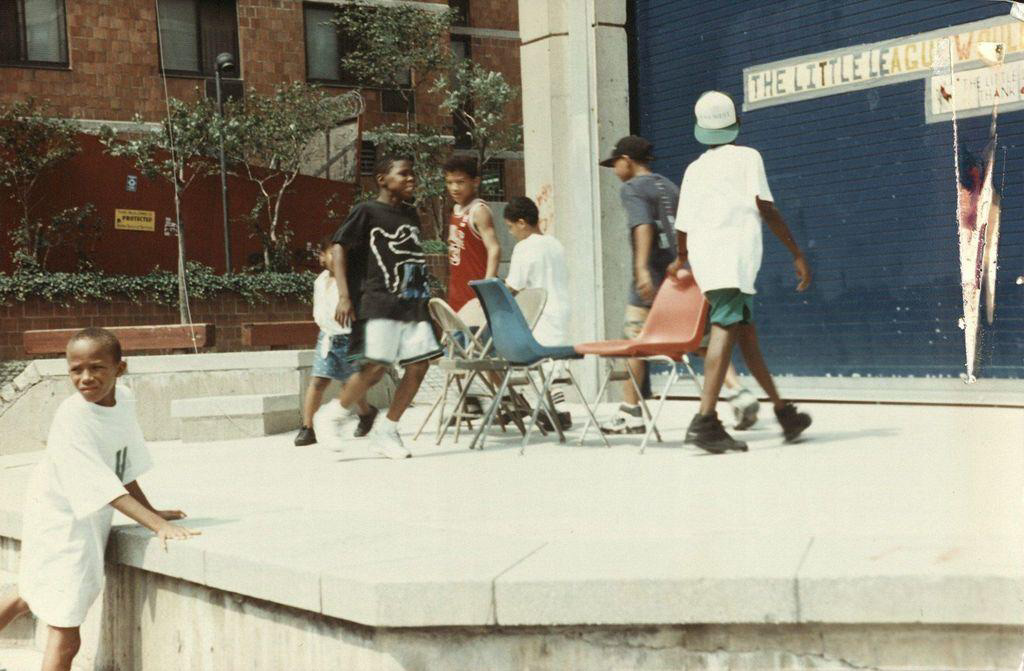
Caption: Children playing musical chairs during an Additions Event. (Sign reads: THE LITTLE LEABUN)
Mireya: Aside from the possibility of an exhibition, which would be really interesting, do you think there's any analysis or anything that could come from these photos and talking to these multi-generational families living in affordable housing? You mentioned earlier that there are residents who have lived there since their grandparents, and even their great-grandparents, lived in the addition. Do you think we could be asking what is keeping multiple generations of families living in public housing?
Joyce: Yes, of course. I am currently working on an ethnographic essay of my time at the Additions and with Ms. Pat, too. I am still searching for the theoretical space to express what I am trying to convey, but it's something along the lines of how the emotions captured through events, facial expressions, and body language-within these photos affect the current viewer's orientation or view of the Additions. I mean, most of the photos were of parties, children playing, and men playing dominoes. Charlie seems to have been keen on having a good time [laughs]. And I really like how the residents react to such captured environments, I mean, some residents would reminisce in an almost world-building sense, how they used to have these parties, how the building's architecture used to look, how great or, at times, dramatic the people were. It contradicts the everyday conversations I hear at the elevator bank; I mean, NYCHA isn't really known for keeping its buildings in the best condition. But when they look at those photos, they really only tell me or at least reminisce about the good things about life here. I'm currently reading the fundamentals of affect theory, Sedgwick, Ahmed, and Stewart, because it seems to be where I am heading, but with more of a focus on visual information rather than language. And in terms of the intergenerationality of public housing, well, not everyone stays. A lot of people end up leaving, which is another reason Ms. Pat hosts Family Days and such, to get everyone together again. But people stay for many reasons, I mean, the additions were only built 70 years ago, that's only one lifetime, so some of its original residents still live there. That's their home. But also it's a good lease to have. I mean, housing prices are a whole other thing; I am sure many of the residents have a lot to talk about. I think about practicality-probably the best factor in explaining why traditions continue, at least in the day-to-day, perhaps not when it comes to traditional festivities. Ultimately, I want this project to serve as a tool for Ms. Pat or future leaders of the Additions so they have a place to look through and pull out these visual codes to celebrate the Additions. And perhaps a place to put ongoing photos-I mean, they are still giving me photos that are happening right now. There are three things I really want to achieve here. First, organize these photos and give them a big album-a concrete place to put community photos. Second, regarding the exhibitions, I want to find a way to make these photos accessible for residents, even if only for a moment or half a day. And third, and maybe not something achieved than selfishly gained, this project has been such an amazing learning experience for me. Not just the practicalities and methodologies of developing such projects and archival work, but also in terms of theoretical inspiration through experience. I mean, just observing how Ms. Pat functions in her day-to-day life, you would at least learn something about social battery [laughs]. I mean, she interacts with like 100 people a day. I am really, really grateful to have done this, and to have had so much support so far.
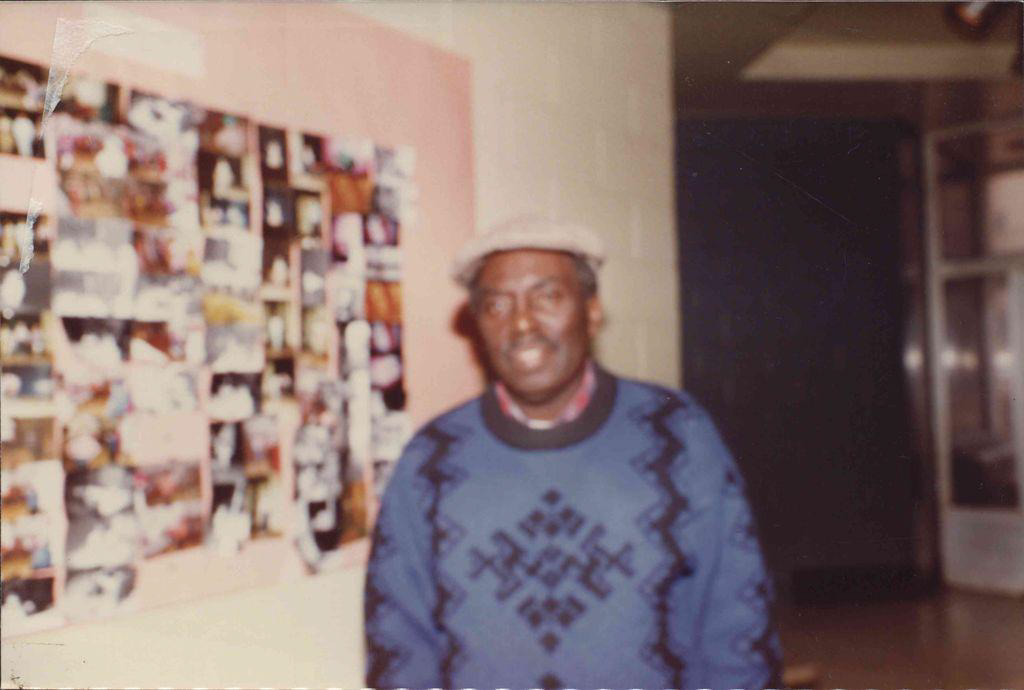
Caption: Charlie- the photographer.
Biographies
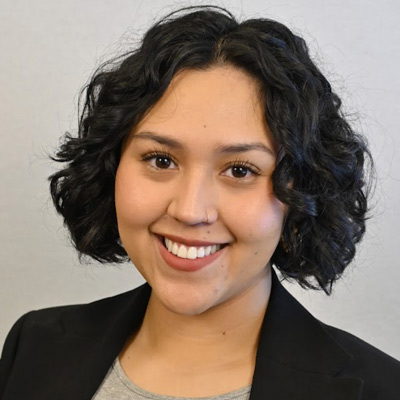
Mireya Galvan: Mireya Galvan is in her third year studying International Political Economy and Anthropology at Fordham University Lincoln Center. She has a focus on immigration justice and advocacy, which has led to her involvement with the Fordham Initiative on Migrants, Migration, and Human Dignity. She is a public health intern at the local nonprofit, LSA Family Health Service, and currently serves as the treasurer of the Anthropology Society.
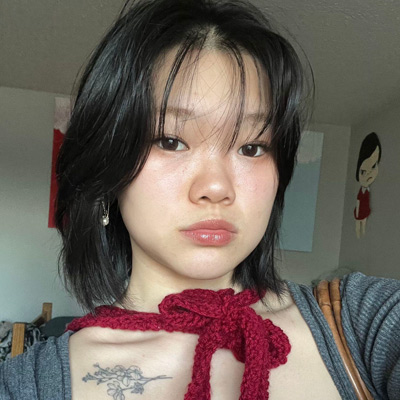
Joyce Chen: Joyce Chen is an anthropologist and archivist from New York. Her research focuses on the political commitments of organized labor. Aside from her work within the Amsterdam Archives, she is also pursuing her Master's in Anthropology from Columbia University.
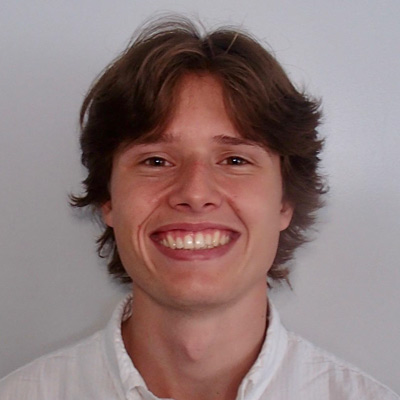
Jack O'Neill: Jack O'Neill is a musician and senior at Fordham University Lincoln Center, graduating with a B.A. in Anthropology. He currently serves as the first president of the Anthropology Society at Lincoln Center and represented Fordham as a delegate at the 2025 National Jesuit Student Leadership Conference. Through both his coursework and involvement with NYC non-profits, he focuses on affordable housing and housing accessibility.