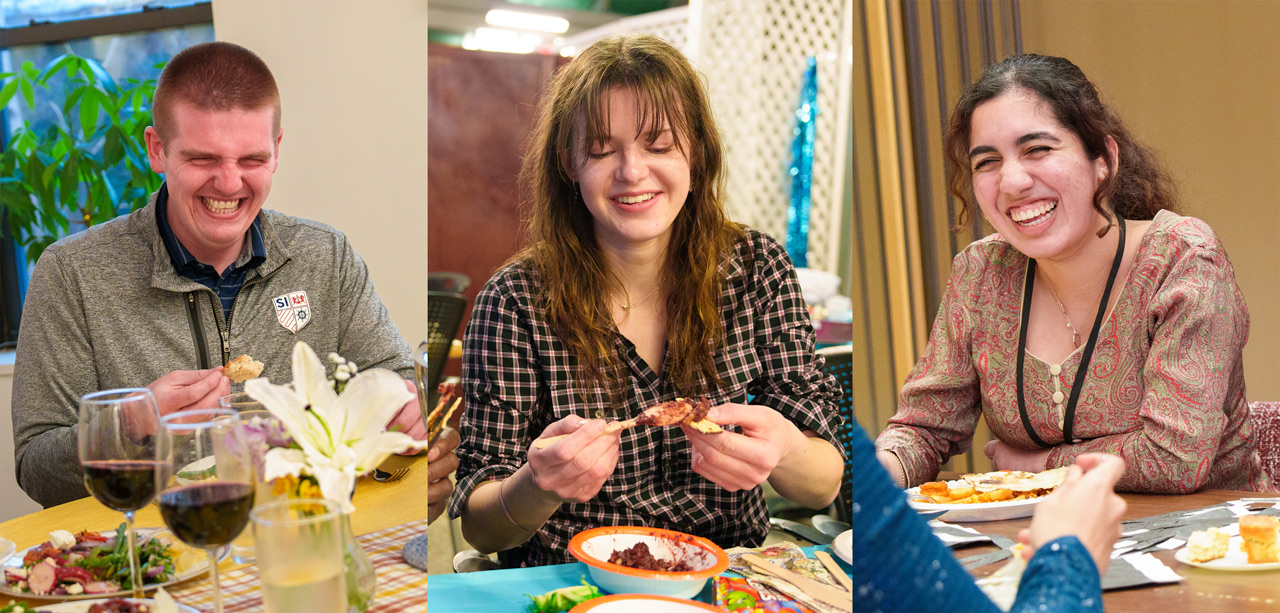
 Students at Easter dinner, a seder, and an iftar on campus. Photos by Taylor Ha
In Christianity, Judaism, and Islam, community comes alive around the table, where festive meals foster connection and belonging. In this photo essay, students honor their traditions while celebrating both the distinctiveness of each faith and the threads that unite them.
Breaking Fast at Iftar
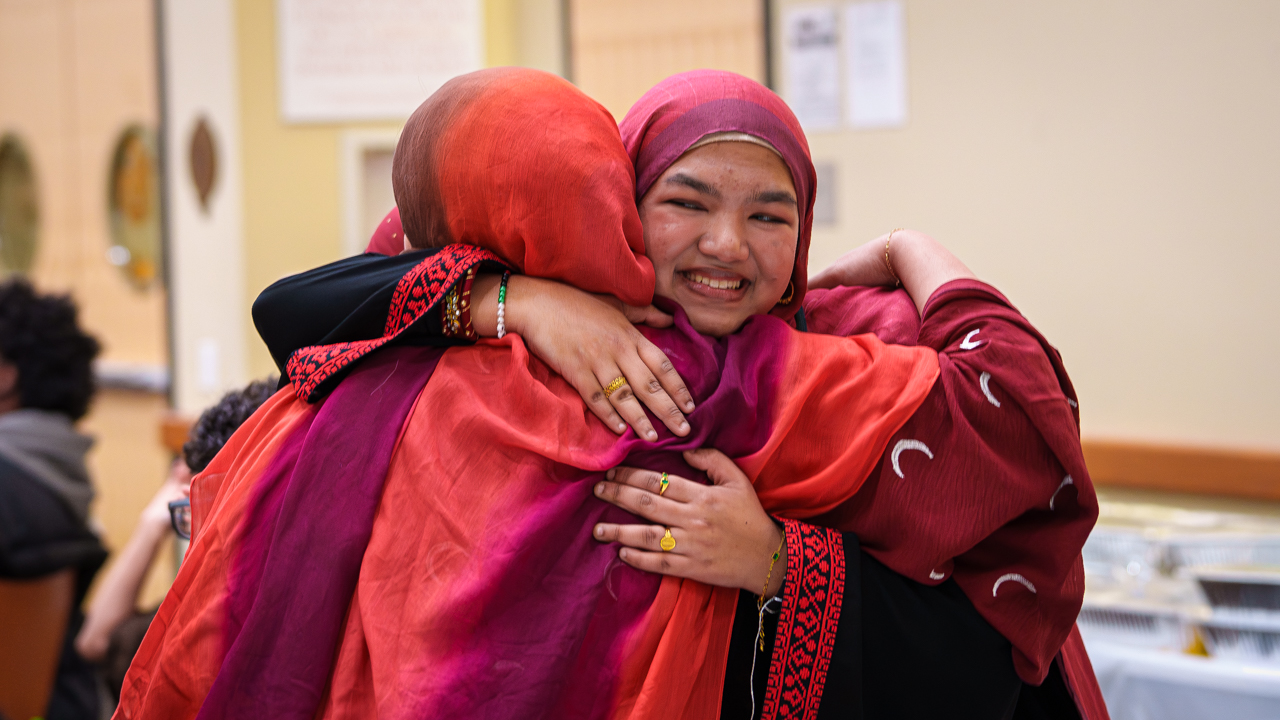
During the holy month of Ramadan, Muslims fast as an act of worship, observing a sacred command for all able-bodied adults to fast for 29 or 30 days. It’s not just about abstaining from food and drink—it’s a deeply spiritual practice that encourages self-discipline, gratitude, and humility. The fast also commemorates the first revelation of the Quran, which began during the final 10 nights of the month on Laylatul Qadr, known as the Night of Power.
Every day at sunset, the Muslim community breaks its fast with an evening meal known as iftar. Members of the Fordham community attended iftar gatherings held at the Rose Hill and Lincoln Center campuses in February.
“It becomes this beautiful mosaic of different people coming together,” said Fordham’s imam and director of Muslim life, Ammar Abdul Rahman.
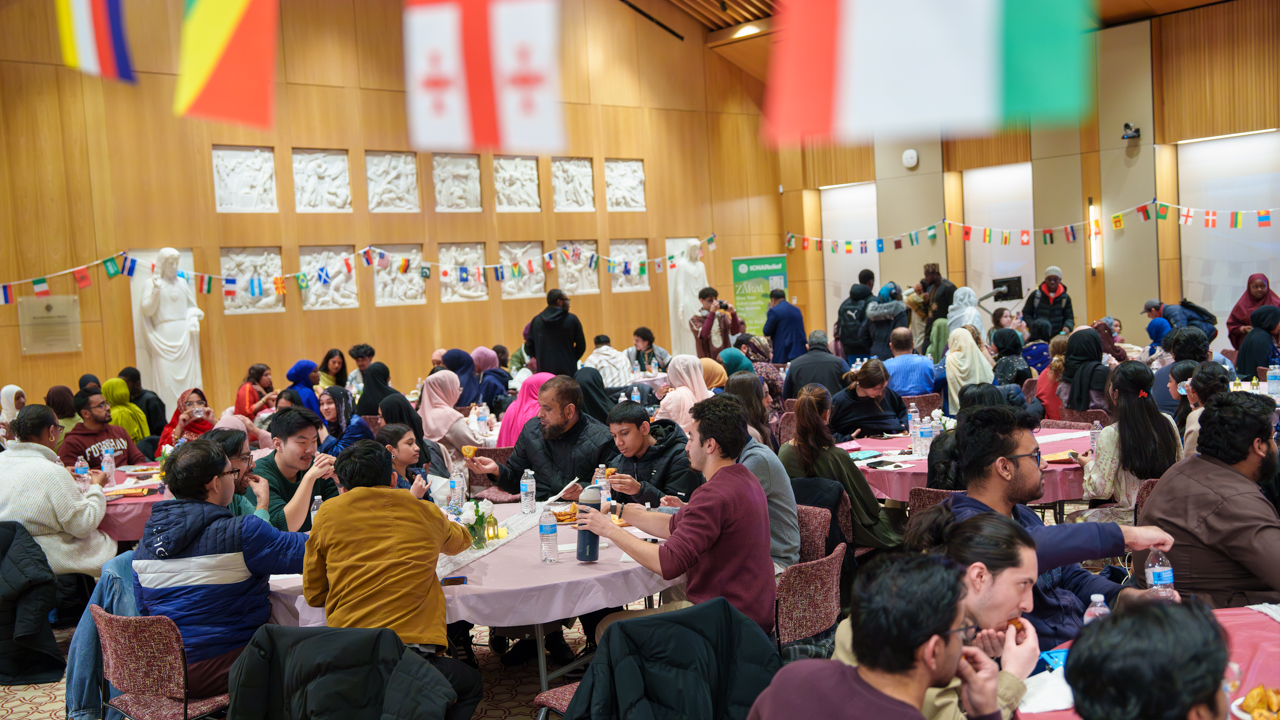
Community members broke their fast over dates, samosas, and water. It is said that the Prophet Muhammad often broke his fast with dates—an energy-rich food that remains a staple of iftars today.
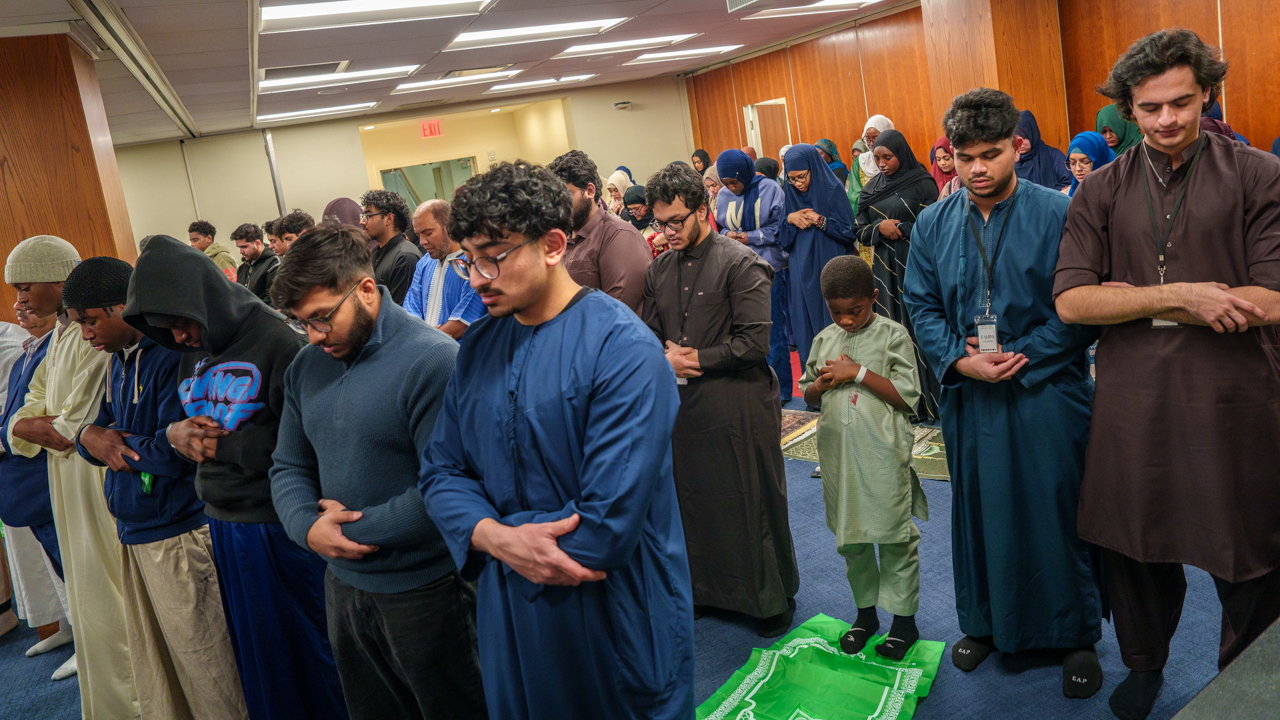
Before gathering for the main meal, attendees paused for prayers led by students and Imam Rahman. During Ramadan, many Muslims pray for several hours at a mosque. They engage in five daily prayers that are part of the core of Islam, as well as a special night prayer known as the Taraweeh.
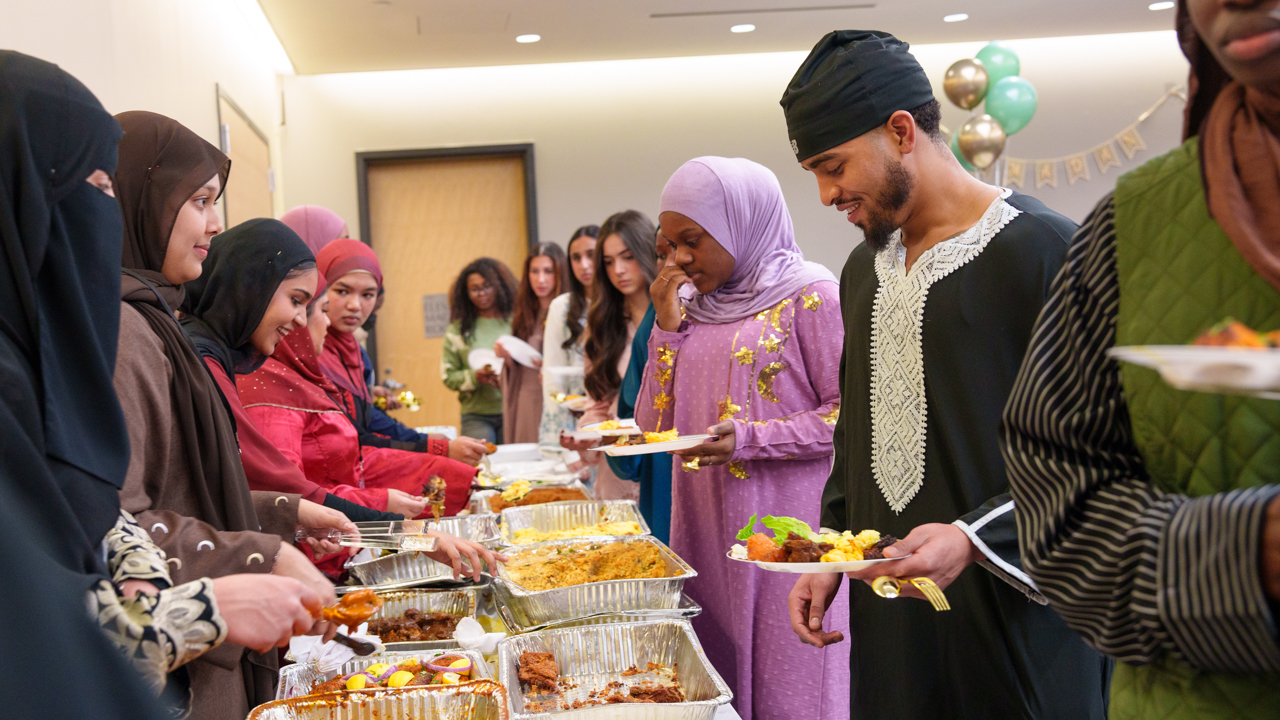
In Lowenstein and the McShane Center, students shared a vibrant spread of Middle Eastern, South Asian, and African dishes rich in flavor and spices, including halal meats, stews, and rice.
Preparing Easter Dinner at Ciszek Hall
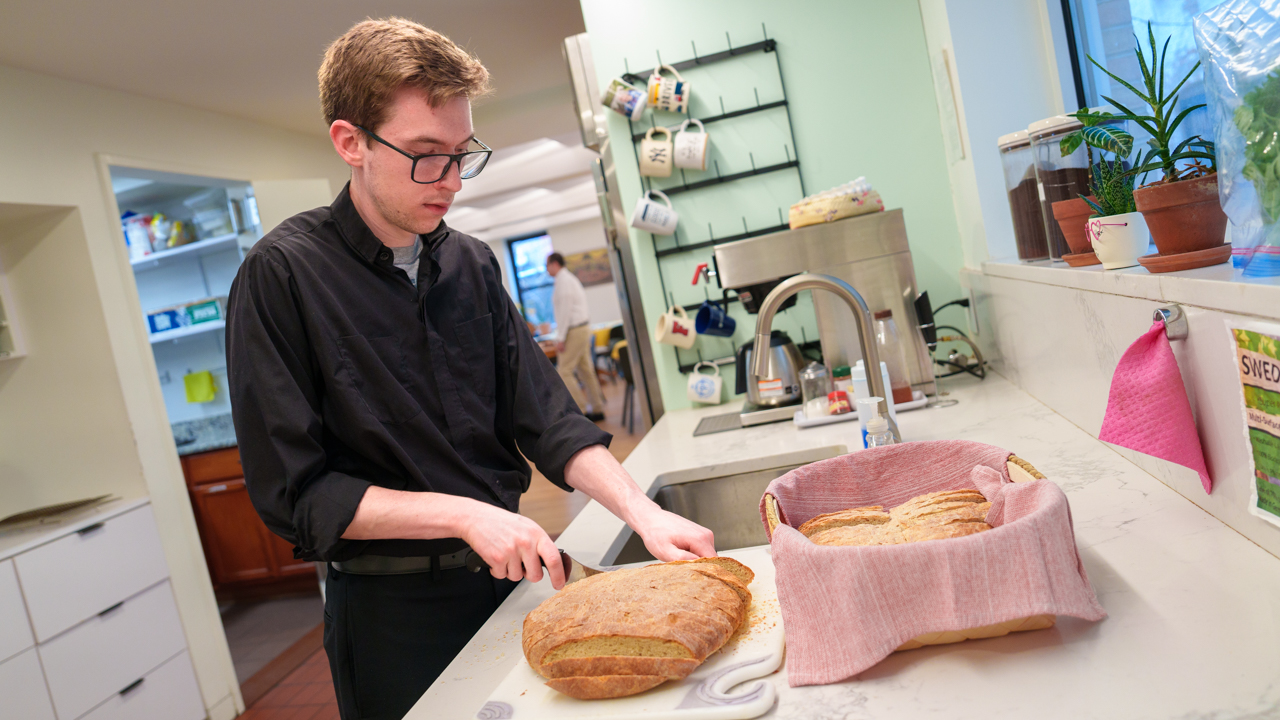
At Ciszek Hall in the Bronx, home to Jesuits in formation, students prepared Easter dinner together. In one corner of the kitchen, a novice sliced bread he baked the day before. Although it is not a traditional Easter loaf, there are different variations of Easter bread that carry deep symbolism, representing abundance of life, new beginnings, and the triumph of light over darkness.
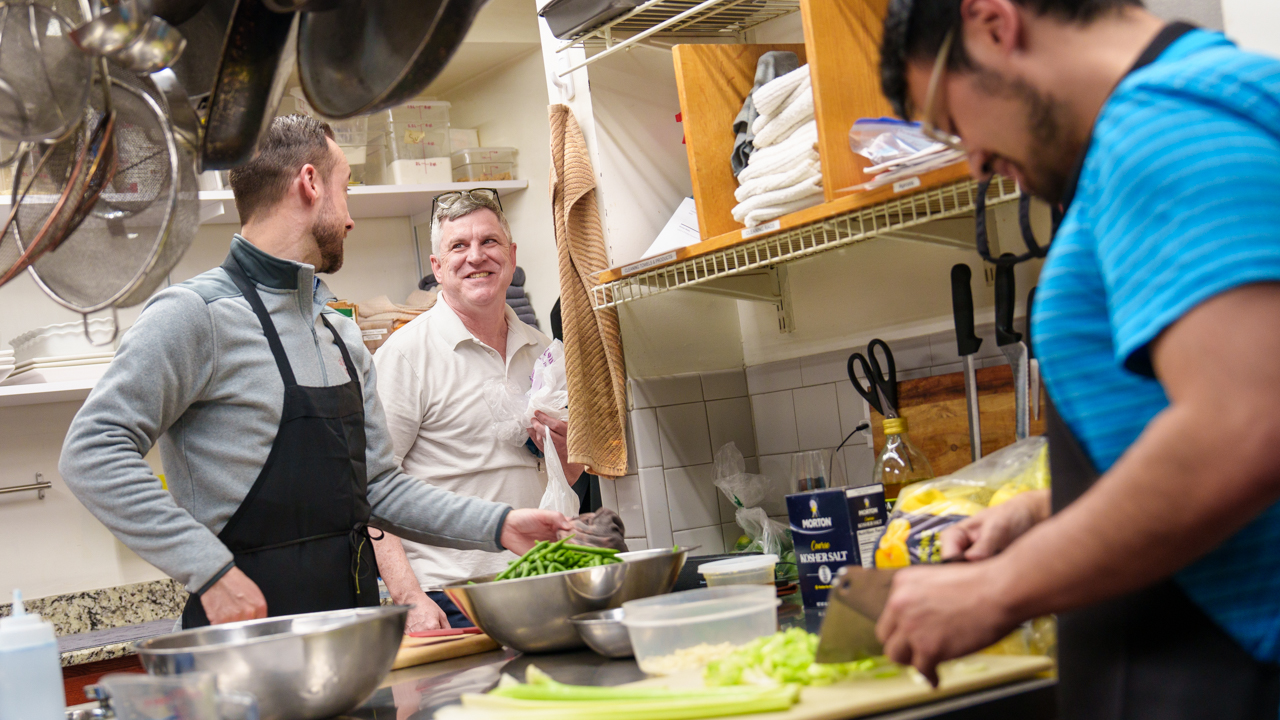
Nearby, others prepared a spread of American fare, including ratatouille, scalloped potatoes, and lemony barley soup. Many of them cooked after a weekend of service in the Bronx community, attending Mass and assisting with liturgies, baptisms, and confirmations welcoming new members into the Catholic Church.
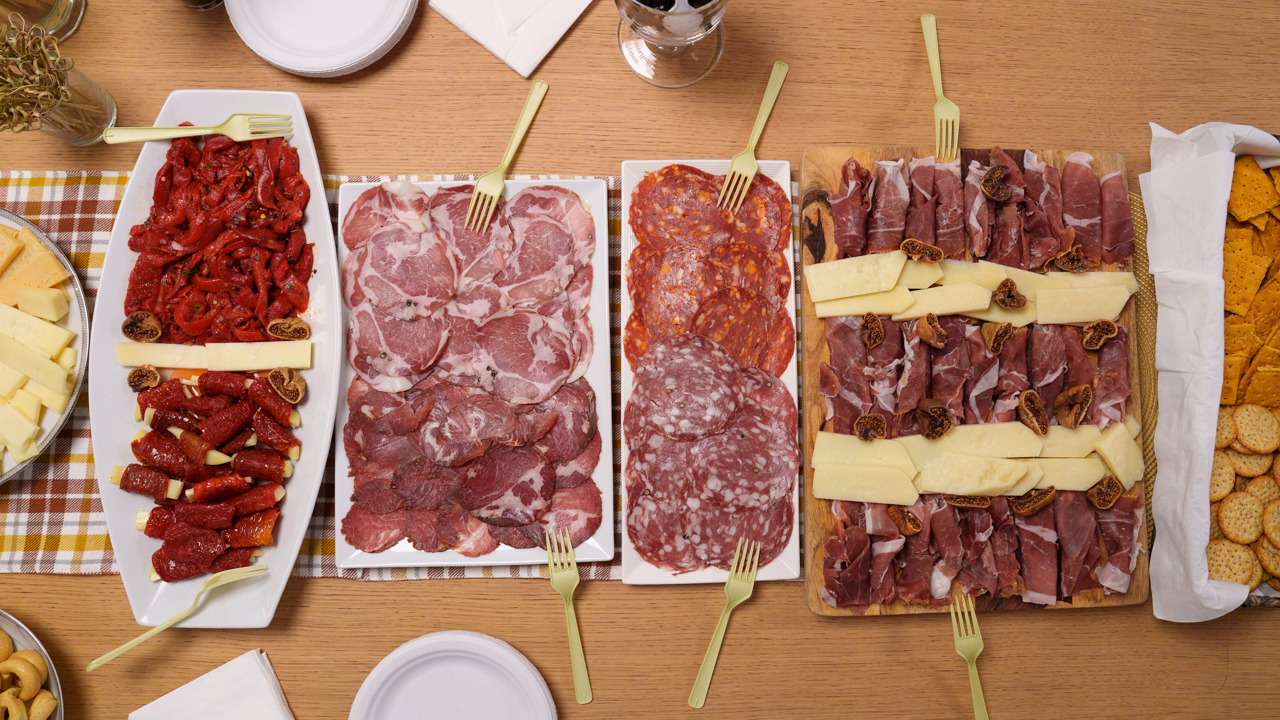
The main meal was complemented by a selection of meats and cheeses from Arthur Avenue, a go-to spot for the Fordham community. Lamb is often the main course at an Easter meal, representing Jesus Christ as the “Lamb of God” who sacrifices himself for the sins of the world. At Ciszek Hall, the brothers prefer the taste of grilled pork tenderloin prepared by their community rector, William Sheahan, SJ.
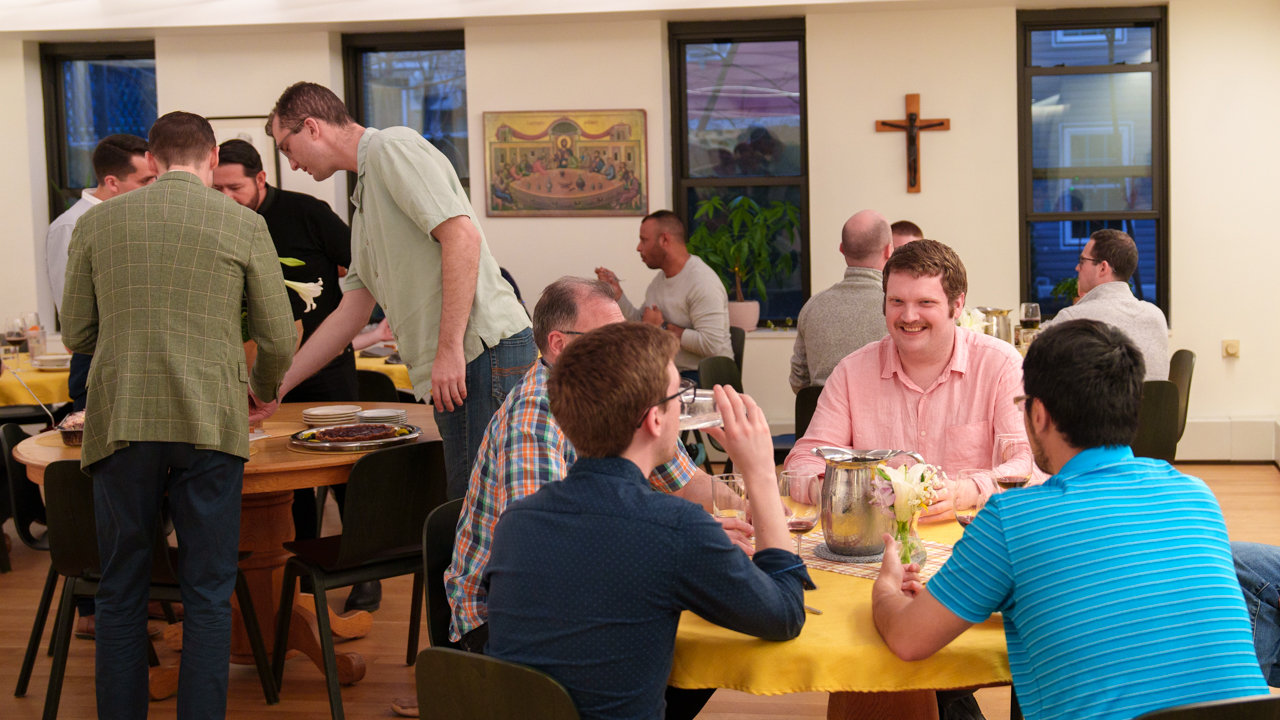
At the center of each table sat a bouquet with a large Easter lily. The distinct trumpet shape of the lily symbolizes Jesus Christ’s triumph over death at the resurrection, while the white of the flower represents rebirth and purity.
Symbolic Foods at Seder
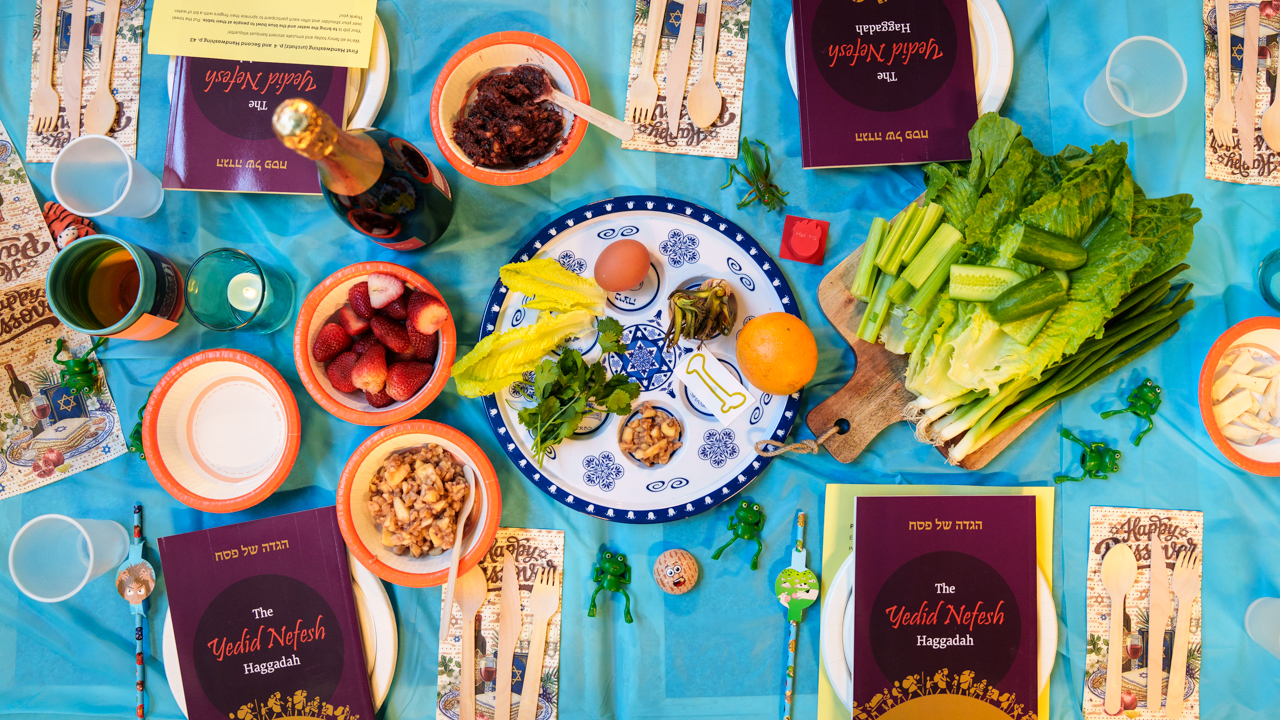
At the beginning of Passover, Jewish communities come together for the Seder—a ritual meal where families and friends retell the story of the Exodus, passing it from one generation to the next. Using a text called the Haggadah, which translates to “telling,” participants pray, sing, and read scripture while eating symbolic foods and drinking wine or grape juice, recognizing God as creator of the fruit of the vine.
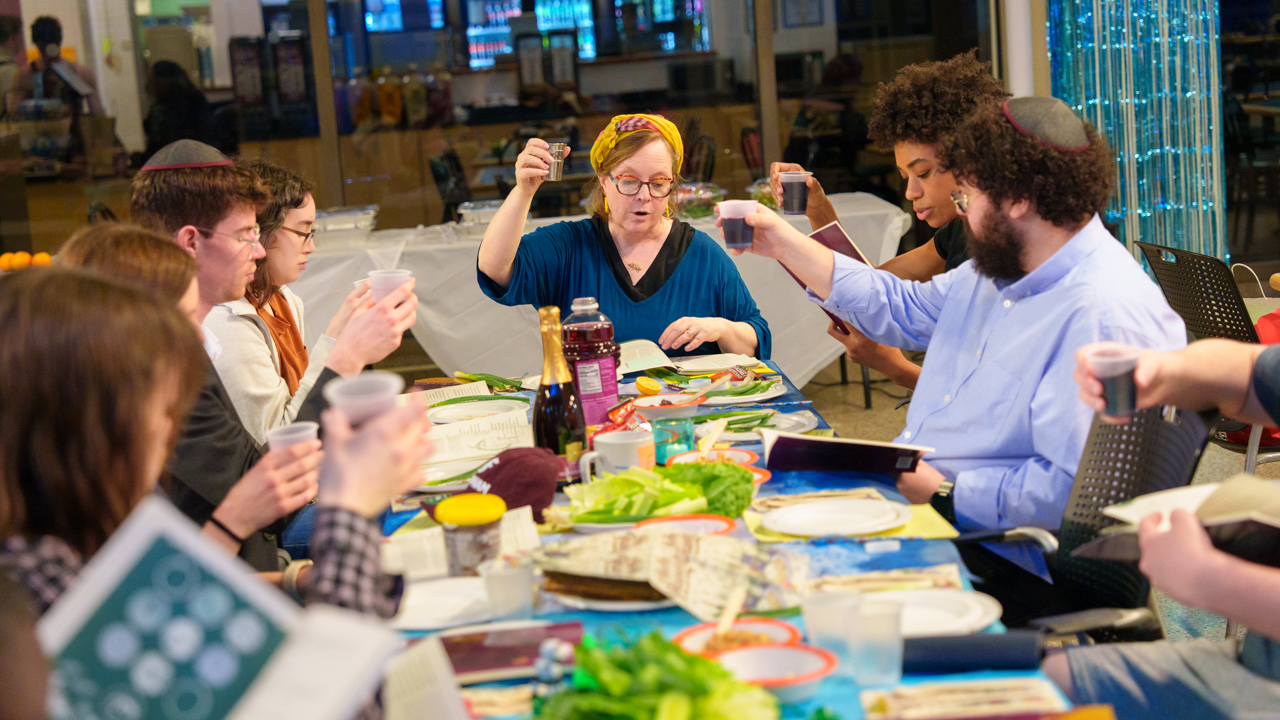
At Fordham, a community Seder was led by Fordham’s Jewish chaplain and director of Jewish life, Rabbi Katja Vehlow, and attended by students from different schools and faiths.
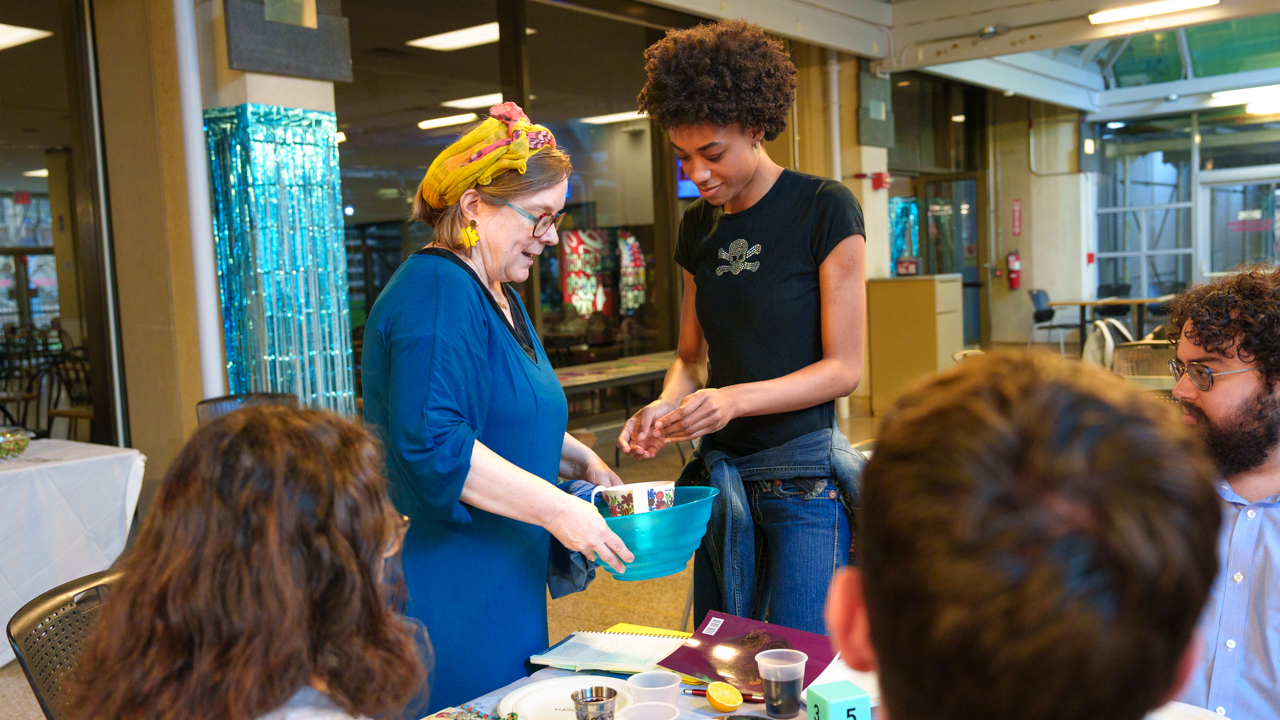
Participants began with a ritual handwashing—a symbolic act of purification—followed by eating a green vegetable dipped in salt water, signifying spring’s rebirth and the tears of Jewish slaves in Egypt. They also ate matzah: unleavened flatbread that commemorates the Exodus from Egypt, when the Israelites fled so quickly that their dough did not have time to rise.
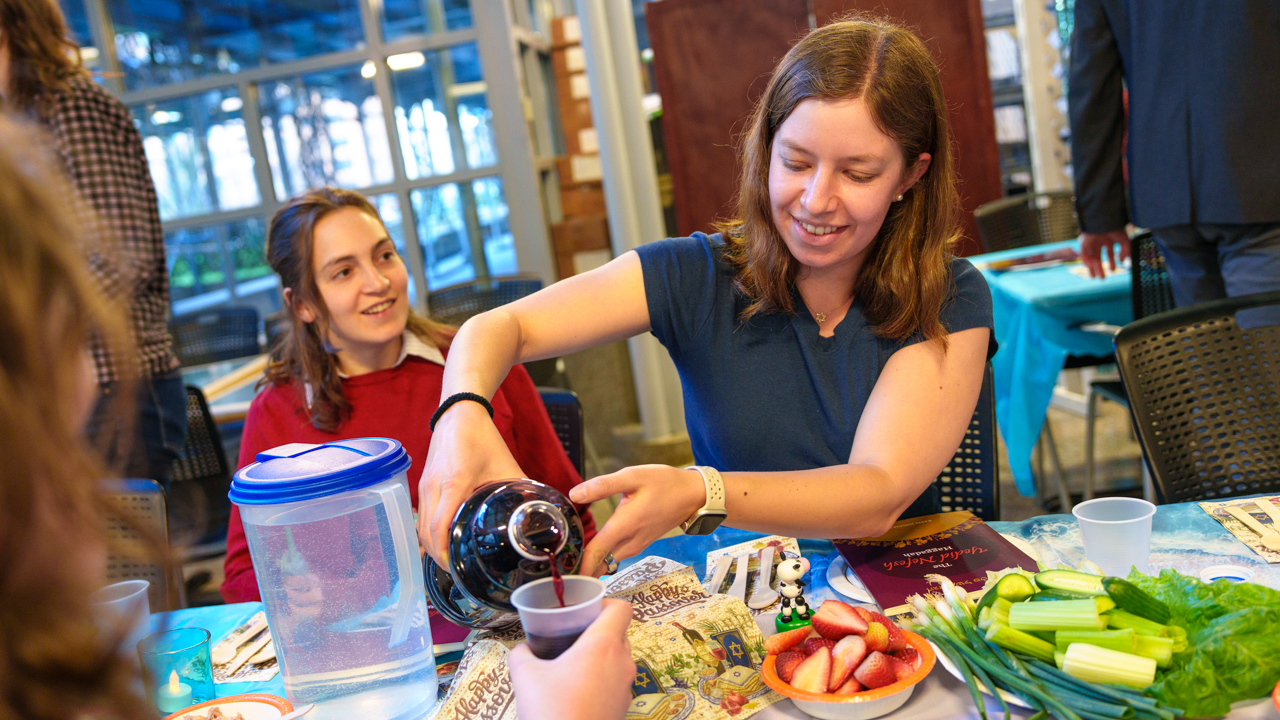
Graduate student Tara Silberg, above on the right, attended both the Seder and iftar at the Lincoln Center campus.
“I was brought up to believe that it’s really important to get to know not only the people within your community, but also in different communities,” said Silberg, a Jewish student who is pursuing her master’s degree in social work at Fordham’s Graduate School of Social Service. “There are a lot of metaphorical and literal borders that can be put up. One of my favorite ways to break through those barriers is to get to know people through food.”