Introduction to Archaeology
July 20-30, 2026 Rose Hill
3 credits
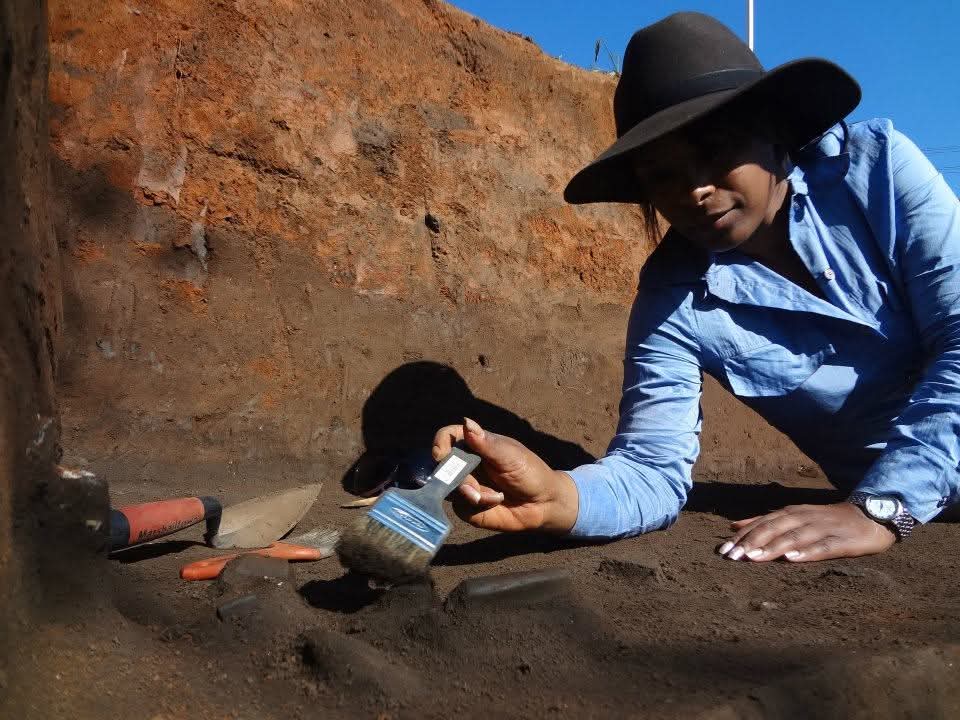
In this 3-credit course, students explore archaeology and the ways artifacts illuminate major cultural developments. Through discussions of current practices and themes, the course provides a foundation in contemporary archaeological approaches.
Students gain a working understanding of material culture, archaeological sites, and the archaeological record. Emphasis is placed on both fieldwork and laboratory techniques, offering insight into the diverse methods, theories, and activities that define the archaeologist’s craft. Visits to the Metropolitan Museum of Art and hands-on activities analyzing artifacts provide opportunities to connect archaeological theory with real-world practice.
Students will:
-
Understand the main concepts in the field of Archaeology and how it was developed.
-
Learn about different methods of fieldwork, analysis, and interpretation used in archaeological research.
-
Apply basic archaeological practices through brief experiences in fieldwork, experimental archaeology, and laboratory analysis.
- Develop and increase critical thinking skills.
Overall Takeaways
Students will learn how to think like archaeologists through the analysis of artifacts, replicas, and documentaries, developing a deeper understanding of the interpretation process of the past and learning to differentiate between scientific research and pseudo-archaeology.
Instructor's Bio
Dr. Maria Ester Venezia is an archaeologist expert in lithic analysis (stone tools). She is fascinated with different cultures, human behavior, and teaching techniques. She likes to spend her free time playing with her kids and enjoying the New York Public Library's audiobook catalog.
Course Schedule
Week 1
Monday
-
Objective, important information and expectations about the course, policies and evaluation method.
-
Brief History of Archaeology, theories, and methods
Tuesday
- Formation of archaeological sites and the importance of context
- Archaeological record and preservation
- Fieldwork activity: How are archaeological sites found?
Wednesday
- Deconstructing with technique: Methods of excavation
- How old is an archaeological site?
- Laboratory activity: Processing, classification, and curation
- Describing, analyzing, and reconstructing the environment
Thursday
- Plants that “talk” - Analyzing botanical remains
- Learning from faunal remains
- What did they eat? Diet data from human remains
- Classroom Activity: Testing your knowledge
Friday
- Material remains and technology
- Laboratory in the classroom - "Unaltered materials": How are stone tools analyzed?
- Experimental Archaeology: Flintknapping demonstration
- How are other "unaltered" materials and textiles analyzed?
Week 2
Monday
- How are synthetic materials analyzed?
- Experimental archaeology: Basics of ceramics hand-building techniques
- Laboratory in the classroom: How is pottery analyzed?
- Classroom Activity: Testing your knowledge
Tuesday
- Visit to the Metropolitan Museum of Art
- Egypt (~5000 - ~2000BP)
- Symbols, power, and representations
- Early knowledge: Language, manufacturing, rituals, and writing
- Measurements, maps, places, and memory
Wednesday
- What can the dead tell us?: Analyzing human remains
- Population, migration, and societies
- Classroom Activity: Testing your knowledge
Thursday
- Final assessment pt. 1: Critical analysis of the documentary Ancient Mass Production: How was the Terracota Army Made?
- Final assessment pt. 2: Questionnaire
Course Details
Intro to Archaeology
July 20- July 30, 2026
9:30 a.m.-3:30 p.m.
Rose Hill Campus
Instructor: Maria Ester Venezia
Course Number: ANTH 1300 RT3
CRN: 17082
Please note that this is a college course and that Fordham students may also be enrolled in this class, which will be a great opportunity for you to learn more about life at Fordham.
Tuition
Residential: $5,039.00
Tuition for the residential program includes the course, course materials, housing, meals, and excursions in and outside of class. Move-in is Sunday afternoon, the day before classes begin. Please click here for a more detailed calendar of important dates.
Commuter: $3,832.00
Tuition for commuters includes the course, course materials, lunches, and excursions in and outside of class. Additional meals are available on a pay-as-you-go basis.
Students may wish to bring funds for incidentals, shopping at the Fordham Bookstore, souvenirs, and any personal items they wish to purchase.
Apply
Application deadlines:
Course and housing: May 1, 2026; course only: May 29, 2026. Please note that admission decisions are rolling until the class is full, and course caps are around 20 students. Apply by April 1, 2026 to be considered for a limited number of need-based discounts. We recommend early application.
Application Requirements: this credit-bearing course is open to rising high school seniors; exceptional rising juniors will also be considered. The course is recommended for those with a 3.0 or better. No prior experience with the subject matter is required.
To apply, you will need:
- a copy of your high school transcript and your fall report card if the grades are not reflected on your transcript.
- a writing sample from one of your high school courses.
- a letter of recommendation from a teacher or guidance counselor if you are a rising junior.
Please make note of the course details above because you will select your course as part of your application.
There is a $75 fee to apply and a $300 deposit to secure your seat. Housing requires a $50 deposit. All payments will be treated as deposits toward your final bill.
Immersion 3 Resident Move-In/Move-Out
| Date | Resident Information |
|---|---|
| June 26 | All medical forms and consents due |
| July 19 | Move-in between 10 a.m. and 2 p.m., all Immersion 2 students |
| July 25 | Move-out between 6 and 9 p.m., Immersion 2 One-Week students |
| July 31 | Move-out before 10 a.m., Immersion 2 Two-Week students |
Courses by Subject Area
-
- BrandUp!: The Superpower of Personal Branding (June 22-26, July 20-24)
- Business Communication in Leadership--3 credits (July 6-16)
- Change Leaders: Impact Innovation (July 20-24)
- Community Consulting for Young Changemakers (June 22-26)
- Entrepreneurial Startups in Real Estate: Innovations and Solutions (July 6-10)
- Future Leaders of AI (June 22-26, July 20-24)
- The Gabelli Plunge: A Ground Floor Experience--3 credits (July 6-16)
- Lead Like Ignatius: Civic Service and Public Speaking (June 22-26, July 20-24)
- Real Estate Development in NYC (June 22-26, July 20-24)
- Sports Communication (June 22-26)
- Writing for Leadership (June 22-26)
-
- Art and the Environment (June 22-26)
- Digital Video Production (July 20-30)
- Invitation to Theatre--3 credits (July 20-30)
- Music Careers in NYC (July 20-24)
- Musical Theatre Workshop (July 6-16)
- New York Exploration of Art History (July 20-30)
- Reading and Writing for Broadway (June 22-26)
- Sports Communication (June 22-26)
- Writing College Life in NYC: A Journey in Reading and Writing--3 credits (July 6-16)
- Writing for Leadership (June 22-26)
-
- Community Consulting for Young Changemakers (June 22-26)
- Law and Argument in the U.S. (July 20-30)
- Lead Like Ignatius: Civic Service and Public Speaking (June 22-26, July 20-24)
- Your Journey to the Bar: Fordham’s Pre-Law Intensive (July 6-16)
-
- Cybersecurity (July 20-30)
- Design, Systems, and Future Thinking: Seeing Beyond the Horizon (July 6-10)
- Future Leaders of AI (June 22-26, July 20-24)
- Introduction to Archaeology (July 20-30)
- Introduction to Clinical Psychology--4 credits (July 6-16)
- Thrive: The Science of Well-Being (July 6-10)
- The White Coat and More: Fordham Pre-Health Intensive (June 22-26, July 20-30)