
Not sure what you want your college major to be?
It turns out you’re not alone. Experts estimate that about 14 percent of students apply to schools undeclared—and many end up changing their major more than once.
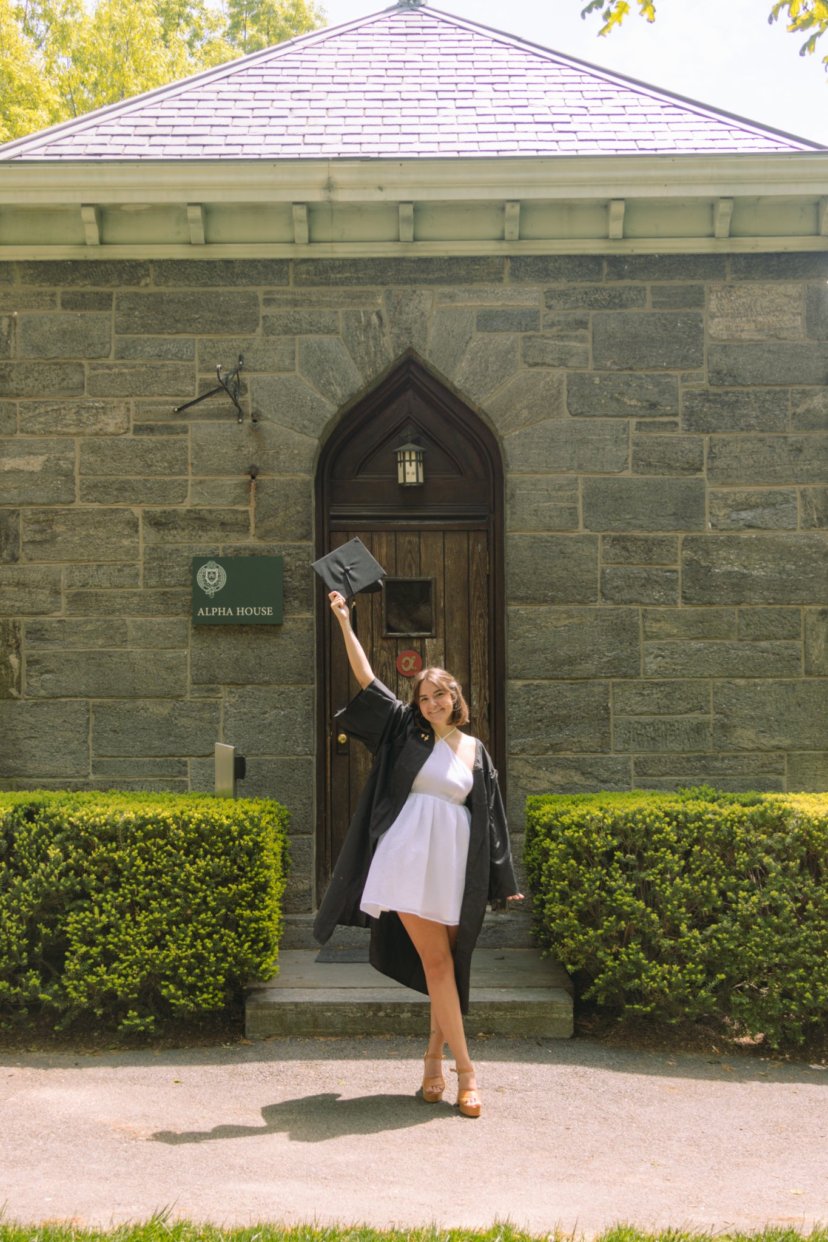
When Pilar Valdes entered Fordham undecided, she was initially worried she was behind. Now, she says she wouldn’t have it any other way.
“Thinking back on being 18 years old, making a decision that’s going to decide the rest of my life, I wasn’t ready for that,” she says. “At Fordham, I felt very supported in not being ready.”
Valdes graduated with a degree in English and now uses her skills as a program assistant for at-risk youth in New York City.
“Being undecided at Fordham helped me be able to approach new situations and experiences with an open mind and ready to learn,” she says, qualities that help her be adaptable in her work with teens.
Big City Energy, Small Campus Feel
Valdes knew she wanted to be on the East Coast but couldn’t decide between a traditional campus or a bustling city. At Fordham—with its green and Gothic Rose Hill campus and Lincoln Center in the heart of Manhattan—she knew she’d be able to maximize her college experience.
“It was this beautiful campus that felt like something out of a TV show or a movie, but then you were able to go and explore New York City,” Valdes says. “With other schools, it felt like it was only ever one or the other, so coming to Fordham felt like such a best of both worlds type of situation. That was really what drew me in.”
Guided by Values and Interests
 Pilar Valdes works with children at a community event in the Bronx
Valdes may not have known what field she wanted to go into right away, but she knew she wanted to make a difference.
“My grandfather was a principal at a Jesuit high school, so those values were really instilled in my house,” she says. “I knew I wanted to do something that was helping people.”
Thanks to Fordham’s core curriculum, Valdes explored a wide range of courses that opened her eyes to new ideas and experiences.
“It felt like my curriculum was mirroring my personal journey,” she says. “Everything felt like it was working together and molding me in this really exciting way. ”
Finding a Support System
Valdes emphasizes that your exploration isn’t done alone.
When a professor approached her about considering an English major based on a paper she submitted, Valdes was skeptical. She had no interest in Shakespeare or publishing.
But after getting to know the department better, Valdes took the leap. She thrived.
“You’re going to be fully supported,” she says.
Developing Essential Skills Employers Need
Still, Valdes worried in the back of her mind that her English degree might have limited value. Then, she began applying for jobs.
“The good thing about a liberal arts education is that you’re receiving critical thinking skills no matter what you’re doing, and that’s going to be applicable to any job you get,” she says. “My current boss told me, ‘When I see a liberal arts school on someone’s application, I do think higher of them.’”
In an age of AI and misinformation, Valdes says the ability to engage with complex topics and big issues—no matter your major—is more important and essential than ever.
“The curriculum is built to make you think and make you think deeply, and make you more aware of the world, your position in it, and what you can do about it—how to take those principles of being a person for others and put it to work in the real world.”