Fadi Skeiker
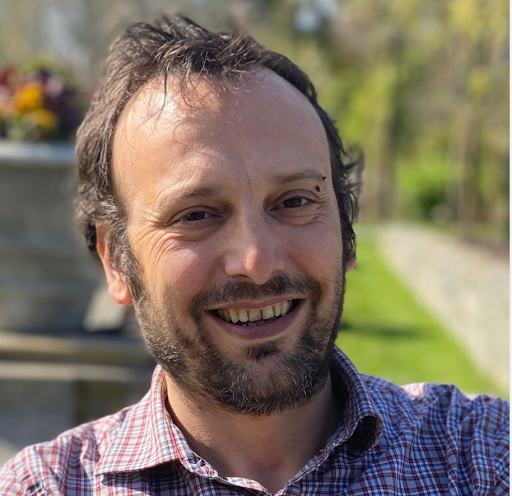
Theatre and Visual Arts Department Chair
Professor
[email protected]
212-636-6303
Lowenstein 423
About
Fadi Skeiker is a Professor of Theatre with over two decades of experience in academia and the arts. Fadi is celebrated for his innovative approach to theater, seamlessly integrating social justice themes and diasporic identities into his academic curriculum and professional practice.
Fadi’s scholarly work focuses on the intersection of theater and social justice, exploring how performance can serve as a powerful tool for advocacy and change. He has directed numerous productions that highlight issues of migration, identity, and human rights, receiving critical acclaim for his thought-provoking and impactful work.
In addition to his teaching and directing, Fadi is an accomplished writer and editor, contributing extensively to academic journals and conferences. His research delves into the role of theater in diasporic communities, examining how the arts can provide a voice for marginalized groups and facilitate cross-cultural understanding.
Fadi Skeiker holds a PhD in Performance as Public Practice from The University of Texas at Austin and a graduate degree from Emerson College in Boston. He has held academic positions at The University of Jordan in Amman, Jordan; Free University of Berlin in Germany, The University of Minho in Portugal, and The University of the Arts in Philadelphia, Pennsylvania and has been a recipient of several prestigious grants and fellowships. His commitment to the arts and social justice continues to inspire students, practitioners, and audiences worldwide.
Classes Taught 2024/25
- Collaboration I
- Advanced Acting Course - Rehearsal Technique
-
My book, Syrian Refugees, Applied Theater, Workshop Facilitation, and Stories: While They Were Waiting
My book, Syrian Refugees, Applied Theater, Workshop Facilitation, and Stories: While They Were Waiting, published by Routledge, grew out of more than a decade of applied-theatre practice with refugee and displaced communities and brings together my identities as an artist, facilitator, researcher, Syrian immigrant, and storyteller. Moving through my work with Syrian refugees in Jordan, Germany, and the United States, the book asks how theatre can create spaces in which people living through displacement can move beyond the identities assigned to them—“refugee,” “victim,” “migrant”—and articulate the complexity of their own experiences, memories, desires, contradictions, and imagined futures. Rather than treating participants’ stories as material to be extracted for an artistic product, I foreground the workshop itself as a creative space: a place for listening and being listened to, imagining alternatives, recovering agency, constructing personal narratives, and creating community while living within the uncertainty of displacement. The book also examines my own position as a Syrian artist working with other Syrians, continually questioning the ethics of facilitation, representation, authority, and care. In this sense, While They Were Waiting articulates the methodology that runs throughout my larger body of work: I use my creative and research skills not primarily to tell marginalized people’s stories for them, but to develop artistic conditions in which refugees, migrants, and displaced communities can discover, shape, and communicate their own narratives—and in doing so reclaim some authorship over how their lives are understood.
- Routledge — official book page.
(Routledge)
Routledge: Syrian Refugees, Applied Theater, Workshop Facilitation, and Stories - Refuge: Canada’s Journal on Refugees — review by Diana P. Garcés-Amaya.
. (Refuge Journals)
Read the review in Refuge: Canada’s Journal on Refugees - Arab Stages — review by Sonja Arsham Kuftinec.
(Segal Center CUNY)
Read the Arab Stages review - Rayya El Zein on the book.
(Bookshop.org)
Book page including Rayya El Zein's assessment
Organizing and Hosting Creativity and Social Justice Symposium at Fordham University
In March 2026, I conceived and hosted the Creativity and Social Justice Symposium at Fordham University, a day-long gathering that brought artists, scholars, students, and community practitioners together to explore how creative practice can respond to injustice and strengthen collective life. The symposium extended a principle that has guided my work with refugees, migrants, people of color, and other marginalized communities for years: rather than using art to speak for people, I am interested in creating spaces where people can articulate their own experiences, exchange knowledge, and imagine possibilities collectively. I brought together practitioners whose work engages racial injustice, immigration, Palestine, underground theatre in Iran, environmental justice, community organizing, and the histories of race embedded in medical technology, and structured the day around dialogue, storytelling, embodied practice, performance, and collective creation. My role was not simply that of an academic conference organizer but of an artist-facilitator: designing a creative environment in which lived experience, research, artistic practice, and community knowledge could meet on equal terms. The symposium demonstrates a central evolution in my practice—from creating theatre with marginalized communities to also building platforms through which artists and communities confronting marginalization can tell their stories, share their methods, encounter one another, and generate new forms of solidarity and collective action.
Fordham Theatre — “Artists and Scholars Gather at Fordham for Creativity and Social Justice Symposium.” Fordham's Theatre
My Drama Therapy work with Afghan Refugees in Portugal and my Libretto 18Months
18 Months grew out of my sustained work with refugees in Portugal and represents the intersection of my practices as an applied theatre practitioner, researcher, interviewer, and writer. The project began with drama-therapy and applied-theatre workshops I led with teenage refugees from Afghanistan, creating a space in which young people could explore displacement, memory, belonging, and hope through creative practice. I later conducted interviews with refugees from Ukraine, gathering additional testimonies about leaving home, surviving war, crossing borders, and attempting to construct a life in an unfamiliar country. Rather than treating these encounters simply as research material, I approached listening itself as an artistic and ethical practice, allowing the experiences and language shared with me to shape the libretto I subsequently wrote for 18 Months. Set to music by Dimitris Andrikopoulos and directed by acclaimed Portuguese theatre director Nuno M. Cardoso, the resulting multimedia chamber opera premiered at the Casa das Artes de Vila Nova de Famalicão in February 2025 and was subsequently presented at Lisbon's Centro Cultural de Belém. Moving refugee testimony from intimate workshops and conversations onto the operatic stage allowed stories that are frequently reduced to statistics, political rhetoric, or images of crisis to become complex human narratives of memory, fear, resilience, contradiction, and hope. 18 Months embodies the central commitment of my creative practice: to use my skills as an artist, researcher, facilitator, and writer to listen deeply to marginalized communities and then create artistic forms through which their experiences can enter public consciousness with complexity, dignity, and humanity.
- RTP / Agência Lusa — “Ópera ‘18 Months’ estreia-se em Famalicão para mostrar drama de refugiados.” (RTP)
- Jornal de Notícias — “A mortificação dos refugiados em palco.” (JN)
- Centro Cultural de Belém — official production page. (Centro Cultural de Belém)
- Quarteto Contratempus — official 18 Months project page. (Quarteto Contra Tempus)
- Lusa coverage of the Lisbon performance. (Correio da Manhã Canadá)
- official teaser/video, (YouTube)
My Drama Therapy Work with Latin X woman in the Bronx
In 2025, I collaborated with Grupo de Mujeres Latinas at Belmont Catholic Community in the Bronx, using applied theatre, storytelling, and drama-therapy-informed practices to create a space where immigrant women could explore memories, emotions, dreams, resilience, and belonging through their own voices. Rather than approaching the women as subjects whose experiences I would interpret, I used my creative and research skills as tools for facilitation and self-representation: through theatre games, movement, collective exercises, and storytelling, the participants developed personal monologues and determined how they wanted those stories to be shared. The process ultimately generated seven video narratives written and performed by the women themselves, transforming an intimate workshop into a public art installation. In September 2025, these videos were presented at Fordham University during the Immigrant Integration Convening, “Supporting Migrants and Refugees: Finding Hope in a Time of Peril,” where I participated in Performing Empathy: Narratives, Spaces, and Testimonies of Everyday Life Among Immigrant Women in NYC. Importantly, the women themselves joined the public conversation, moving from workshop participants to storytellers speaking directly to an audience about community, migration, motherhood, trust, and resilience. This project embodies the central commitment running through my creative practice: to use theatre, research, and facilitation not to speak on behalf of marginalized people, but to build conditions in which refugees, migrants, women, and communities of color can author their own narratives, determine how those narratives circulate, and occupy public spaces as producers of knowledge and culture.
- Fordham Now — “Drama as Therapy: Professor Leads Theater Workshops to Benefit Immigrants.” (Fordham Now)
- Fordham Initiative on Migrants, Migration & Human Dignity — “Performing Empathy: Healing in the Belmont Community.” (Fordham Migration Initiative)
- Center for Migration Studies — 2025 Immigrant Integration Convening. (CMS)
- Official conference agenda — Center for Migration Studies. (CMS)
- Video of the Convening panel. (Fordham Migration Initiative)
Directing KISS in Regional Theatre
In 2023, I directed Guillermo Calderón’s KISS at the Wilma Theater in Philadelphia, bringing my work with Syrian refugees, diasporic communities, and applied theatre into conversation with a major professional theatre production. The play interrogates what happens when artists attempt to represent lives and cultures they do not fully understand, following American actors performing a Syrian story whose assumptions about Syria are gradually exposed. As a Syrian artist and researcher whose work has long centered on displacement and migration, I approached the production as more than an act of interpretation: I used my creative practice, research, and lived knowledge to question who has the right to tell a story, whose voices are absent from our stages, and how theatre might make those absences visible. I worked to surround the production with Middle Eastern voices and perspectives and, in partnership with the Wilma, extended the conversation beyond the stage through engagement with organizations serving immigrant and refugee communities. KISS exemplifies a central thread across my work: using the tools of theatre, research, and socially engaged practice to create spaces in which refugees, migrants, people of color, and other marginalized communities can complicate dominant representations and reclaim the ways their stories are seen, heard, and understood.
- The Wilma Theater — Production page: (Wilma Theater -)
- The Wilma Theater — “A Note from KISS Director Fadi Skeiker”: (Wilma Theater -)
- The Philadelphia Inquirer — Interview/profile: (Inquirer.com)
- Broad Street Review — Production review: (Broad Street Review)
- Theatre Philadelphia — KISS:(Theatre Philadelphia)
- Wilma KISS Program:(Wilma Theater -)
- The Theatre Times — KISS at the Wilma: (The Theatre Times)
My work with HIAS and The Refugee Monologue Project
My work with HIAS Pennsylvania in Philadelphia grew from the same question that has guided much of my practice: how can theatre create a space in which refugees are encountered not as statistics, victims, or political abstractions, but as individuals capable of narrating the complexity of their own lives? Working directly with refugee communities, I used applied-theatre exercises, conversation, and storytelling to create conditions for participants to reflect on displacement, home, family, memory, loss, resilience, and the difficult process of constructing a new life. The stories I encountered through this work did not remain confined to the workshop room. They became part of The Refugee Monologue Project, through which I gathered and curated monologues based on Syrian refugee narratives and developed them into a theatrical and eventually digital form, including The Refugee Monologue Podcast. By moving these individual narratives into an accessible audio platform, the project allowed intimate refugee testimony to travel beyond the communities in which it originated and encounter listeners who might otherwise know refugees primarily through news reports and political discourse. Across both the HIAS workshops and the podcast, my role remains deliberately consistent: I use my skills as a theatre artist, researcher, listener, and facilitator to create a bridge between marginalized people and a wider public—not by replacing their voices with my interpretation, but by creating artistic structures through which the specificity, humanity, and complexity of their stories can be heard.
- The Refugee Monologue Podcast — Spotify. (Spotify)
- Independent audio-drama documentation. (The Cambridge Geek)
Directing I WANT A COUNTRY
In 2021, I directed Andreas Flourakis’s I Want a Country at the University of the Arts in Philadelphia, radically adapting the Greek play to center the experience of the Syrian diaspora. With the playwright’s permission, I removed references that located the story specifically in Greece and introduced material that shifted the production toward Syrians searching for safety, home, and belonging. The adaptation was deeply informed by my years of applied-theatre and drama-therapy work with Syrian refugees in Jordan, Germany, Portugal, and the United States, particularly the stories I had heard from people who survived dangerous sea crossings from Turkey to Greece. Rather than asking audiences simply to observe displacement from the safety of a conventional auditorium, I collaborated with designers to create an immersive, multisensory environment: audiences moved through refugee-camp spaces alongside the performers and ultimately boarded a theatrical “boat,” surrounded by projection, sound, bodies, and images evoking the uncertainty of a refugee crossing. The production culminated in the image of a child whose transformation into an enormous puppet represented the refugees’ hopes for the next generation. I Want a Country marked an important development in my artistic practice, bringing my community-based work with refugees directly into my work as a director: the testimonies and encounters I carried from refugee workshops became a creative lens through which I reimagined an existing dramatic text, placing marginalized experiences at the center and inviting audiences not merely to witness their stories but to encounter displacement spatially, physically, and collectively.
- The Greek Play Project (Greek Theatre)
- BroadwayWorld (BroadwayWorld)
My Work in Academia and Beyond
At Fordham University, I have worked to build sustained bridges between academia, artistic practice, and communities beyond the university, creating structures through which creative work can move across institutional boundaries and become part of a larger civic conversation. Projects such as Performance, Social Justice, and Human Rights, Producing Through a Social Justice Lens, and the new Creative and Social Design minor are not simply academic initiatives; they are platforms for connecting artists, students, community organizations, and public audiences around questions of justice, representation, migration, belonging, and social change. Through partnerships with organizations including Goddard Riverside and Afrikana in Harlem, creative work developed within the university has entered community spaces, where it is reshaped through dialogue with people whose experiences and perspectives are often absent from academic and cultural institutions. At the same time, the knowledge, concerns, and lived experiences of those communities return to the university and influence how artistic practice is conceived. This reciprocal movement—between university and neighborhood, artist and community, research and public practice—extends the methodology present throughout my work with refugees, migrants, women, and other marginalized communities. My goal is to use the resources of academic institutions not as an endpoint for creative work, but as a bridge: connecting artists with communities, bringing marginalized narratives into wider public conversations, and creating durable structures through which art, scholarship, and civic life can continually inform one another.
- Fordham Now (Fordham Now)
. (Fordham Now) - Fordham University Bulletin — Creative and Social Design Minor. (Fordham University)
- Fordham TEDx (Fordham University)
- Routledge — official book page.