Feerick Center for Social Justice
Feerick Center for Social Justice
The Center’s establishment reflects Fordham Law School’s long tradition of and commitment to legal education in the service of others and builds on Dean Emeritus John D. Feerick’s contributions as Dean of the Law School (1982-2002) and currently as the Sidney C. Norris Professor of Law.
New York City Bar Association
42 W 44th St, New York, NY 10036
Program: 6:00 pm
Reception: 7:15 pm
Upcoming Events
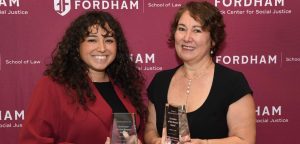
Caroline Garrido ’26 JD and Marciana Popescu ’25 JD Recognized as Extraordinary Immigrant Rights Advocates
Immigrant advocates Caroline “Cara” Garrido ’26 JD and Marciana Popescu ’25 JD were honored with the Feerick Center for Social Justice’s Defender of the Dream Award at the Feerick Center’s …
Read The Full Story

Feerick Center for Social Justice Releases Report Calling for Reforms of New York City’s High School Application Process
Fordham Law School’s Feerick Center for Social Justice and New York Appleseed have released a report recommending a more transparent, better-resourced NYC high school admissions process that improves access to …
Read The Full Story

El Paso Matters: Feerick Center for Social Justice Directors Write Op-ed on Recent Service Trip to Largest U.S. Immigrant Detention Center
Lisa Landau, executive director of Fordham Law’s Feerick Center for Social Justice, and Emerson Argueta, the Center’s associate director, co-authored an op-ed for El Paso Matters, detailing their service trip …
Read The Full Story
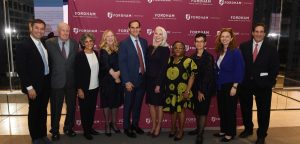
Feerick Center Celebrates 19 Years of Impact at Annual Gala
As Fordham Law School’s Feerick Center for Social Justice celebrated 19 years of advocacy work, Fordham leaders, Law School alumni, and non-profit representatives came together in October for the center’s …
Read The Full Story

Sarya Baladi ’25 and Annie Chen ’09 Recognized as Outstanding Leaders in Immigrant Justice Advocacy
Immigrant advocates Sarya Baladi ’25 and Annie Chen ’09 were honored with the Feerick Center for Social Justice’s Defender of the Dream Award at its 10th Annual FriendRaiser on March …
Read The Full Story

Conference Explores the Persistence of Segregation in Selective Public School Admissions
In a keynote speech weaving his own family history in the civil rights movement with current policy analysis, Dr. Stefan Redding Lallinger illuminated persistent inequities that plague public education systems …
Read The Full Story

Public Service Leaders Honored at 2024 Feerick Center Awards Celebration
The Feerick Center Awards & Benefit Reception celebrates the work of exceptional members of the legal community who have made a difference through their contributions to the public interest. The …
Read The Full Story
A Farewell Message from Dean Matthew Diller
Dear Fordham Law Community, It’s hard to believe that it’s been more than 30 years since I joined Fordham Law as a junior member of the faculty. As I prepare …
Read The Full Story
Dean Matthew Diller Named Senior Counsel at Fordham Law’s Feerick Center for Social Justice
The Feerick Center for Social Justice at Fordham Law School has announced that Dean Matthew Diller will be joining the Center as senior counsel, beginning in fall 2025. Diller, who …
Read The Full Story
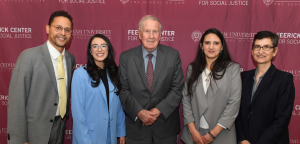
Thanina Haddadi, LL.M. ’24 and Julia Tedesco ’23 Celebrated as Emerging Leaders in Immigrant Justice Advocacy
Thanina (Nina) Haddadi, LL.M. ’24 and Julia K. Tedesco ’23 were each honored with the Feerick Center for Social Justice’s Defender of the Dream Awards at the Center’s 8th Annual …
Read The Full Story
Fordham Law Kicks Off Spring Semester with New Faces, Classes, and Public Service Initiatives
As Fordham Law students return to classes this week, they can look forward to 13 new courses, the addition of two prestigious faculty members, and a semester filled with interesting …
Read The Full Story
As Migrant Crisis Grows, Fordham Law Steps Up to Help Asylum Seekers
They had made their way to the Bronx from Ecuador, Western Sahara, and Ghana. And Fordham University was there to help them. More than a dozen students from across Fordham’s …
Read The Full Story
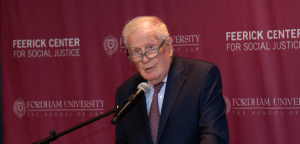
Feerick Center Awards Honor Public Service Leaders
From pro bono counsel to philanthropy to direct legal advocacy on issues including immigration and domestic violence, nine people were honored for their legal work at this year’s Fordham Law’s …
Read The Full Story
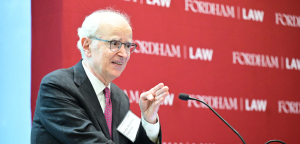
Incarceration and Mental Health: How A Different Approach to Mental Health May Be Key to Closing Rikers
New York City has committed to closing the infamous Rikers Island jail by 2027, but to do so the City will need to cut the jail’s population nearly in half. …
Read The Full Story
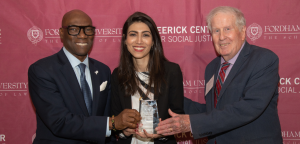
Razeen Zaman ’16 Receives Defender of the Dream Award at 7th Annual Feerick Center FriendRaiser
Razeen Zaman ’16 was honored with the Feerick Center for Social Justice’s Defender of the Dream Award at the Center’s 7th Annual Friendraiser on April 24. At the time, Zaman …
Read The Full Story
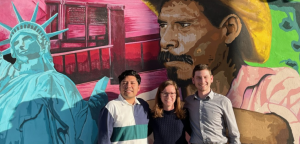
Fordham Law Students Assist Asylum Seekers in Texas with Feerick Center
Fordham Law students Jose Olivares Blanca ’25, Ana Belzunce Crompin ’25, Ross Levin ’25, and Sonia Montejano ’24 traveled to El Paso, Texas, for their spring break with the Feerick …
Read The Full Story
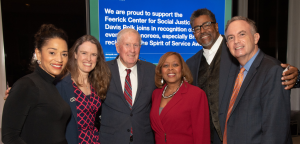
Feerick Center Honors Public Service Leaders at Annual Awards & Benefit Reception
The Feerick Center for Social Justice held its annual Awards & Benefit Reception on Oct. 24 at the headquarters of Mutual of America in New York City. Distinguished guests and …
Read The Full Story

Feerick Center Event Highlights Impact of Asylum and Immigration Policy on Families
The Feerick Center for Social Justice hosted a panel event, “The State of Asylum Processing & U.S. Immigration Policy: The Impact on Families,” on July 12 which discussed recent changes …
Read The Full Story
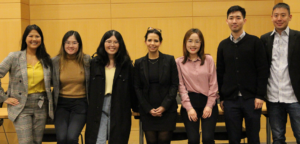
Fordham Law’s APALSA Highlights Importance of AAPI Heritage Month through Events and Collaborations
Though the 2021-2022 academic year officially comes to a close in less than two weeks, Fordham Law’s Asian Pacific American Law Students Association (APALSA) ensured that its members, as well …
Read The Full Story
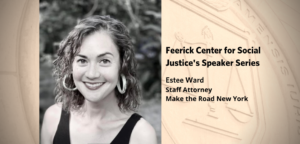
Plight of Essential Workers Highlighted during Feerick Center’s Social Justice Speaker Series
The Feerick Center for Social Justice held its fourth and final Social Justice Speaker Series event of the 2021-2022 academic year on March 24, featuring Estee Ward, a staff attorney …
Read The Full Story