International Diploma in Humanitarian Assistance
.jpg)
Shaping Humanitarian Leaders
The International Diploma in Humanitarian Assistance (IDHA), the flagship program of the Institute of International Humanitarian Affairs at Fordham University, is designed to equip mid-career professionals with essential knowledge and skills needed to navigate the complex landscape of humanitarian aid and to drive the humanitarian sector of the future in a more effective, sustainable, and dignified direction. Students will develop a holistic perspective on global humanitarian issues to propel them to the next level in their careers, helping them create positive social change both in and out of the field. The IDHA focuses on four core learning objectives that guide students in their professional development.
- Humanitarian policy, architecture and Law: understanding the global humanitarian system, the humanitarian environment including key actors and international humanitarian legal frameworks including International Humanitarian Law, Human Rights Law and Refugee Law.
- Humanitarian sectors and standards: gaining knowledge of key humanitarian sectors, such as health, education, shelter and protection while applying international standards and best practices.
- Aid worker’s Leadership, team building and well-being: developing leadership skills essential for humanitarian operations, fostering teamwork in challenging environment and ensuring aid worker’s personal health and mental health in complex operational contexts.
- Humanitarian ethical debates and challenges: engaging with the ethical dilemmas and critical challenges in humanitarian work, including dilemmas of neutrality, access, accountability and long-term impact of aid intervention.
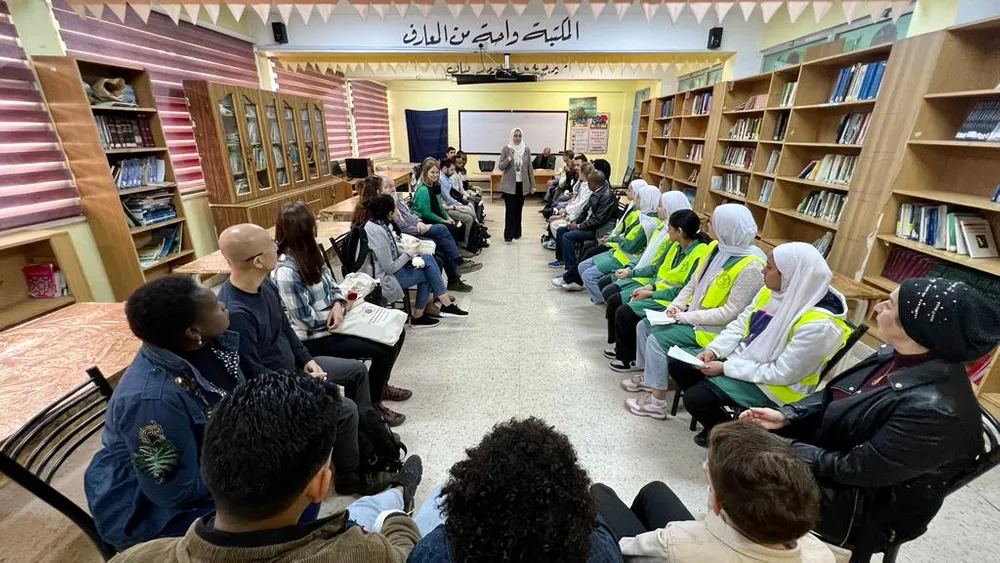
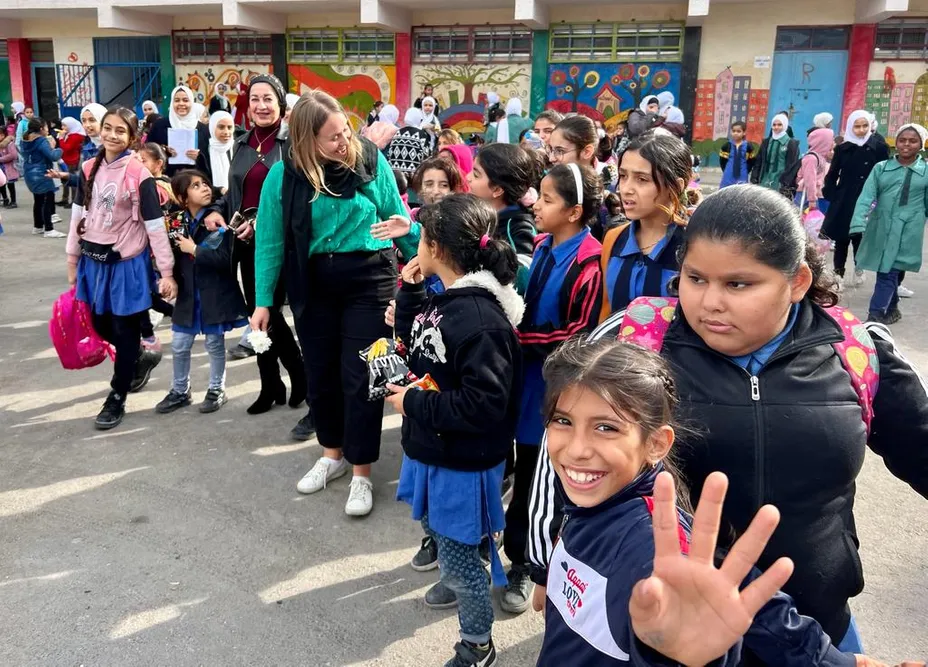
For over 28 years, the intensive, four-week residential training of the International Diploma in Humanitarian Assistance (IDHA) has welcomed thousands of humanitarian workers in cities around the world – from Kathmandu to Amman, New York to Geneva. Unique among other academic training of its kind, the IDHA emphasizes cultural diversity, cooperation, and teamwork. Students join a cohort of diverse and highly qualified aid and development professionals from all over the world.
Directed by alumni practitioners, the IDHA centers around the Ignatian principle of being people for others by enhancing students’ knowledge and skills in complex emergency and protracted crisis intervention. Students are also encouraged to critically examine global humanitarian processes to identify necessary reforms in both the public and private sectors.
Date and Locations | Program Basics, learning goals, sample schedule and more
IDHA 62
| When | May 17 - June 12, 2026 |
| Where |
Pretoria, South Africa |
| Application Deadline | Monday, May 4, 2026 |
Program Basics
-
Certified by the New York State Education Department
- Non-Academic; No Accommodations: $3,000 includes coursework, diploma, weekday lunches, and coffee. Accommodations are the responsibility of the student.
- Non-Academic & Accommodations: $6,121 includes coursework, diploma, weekday meals, coffee, and accommodations.
- *Academic & Accommodations: $6,500 (OFFICIAL TRANSCRIPT REQUIRED) includes coursework, diploma, academic credit, weekday meals, coffee, and accommodations. *Fall, Spring, and Summer for-credit IDHAs are subject to university fees as listed on the Graduate School of Arts and Sciences website.
- IMPORTANT: Students who successfully complete the course requirements will receive a diploma.
-
Transportation costs are not included.
-
In order to secure a place in the program, admitted students must pay a nonrefundable deposit of $500 to the university by the deadline date indicated on your admit letter. The deposit is credited toward the student's course cost.
-
For a list of nearby accommodations please email [email protected].
- Application Requirements: English Proficiency (not tested but expected), Resume/CV, Statement of intent, payment. Apply here.
- Program is not eligible for U.S. federal aid programs
- If you are an MSHS student and are interested in taking the IDHA for credit please email Martine van der Does at [email protected].
The IDHA in Pretoria is run in collaboration with the University of Pretoria.
-
Upon completion of the International Diploma in Humanitarian Assistance (IDHA) program, students will be able to gain:
- extensive insight into the needs of people affected by conflict, disaster, and displacement
- skills in facilitating cooperation and dialogue between international, governmental, and nongovernmental agencies
- awareness and understanding are essential for effective service in emergency and protracted humanitarian crises
- opportunities to collaborate and network with colleagues working for diverse range of international, governmental, and nongovernmental humanitarian agencies
- the tools to evaluate interventions and identify examples of good practices; and methods for anticipating and preventing humanitarian crises
-
- Students receive lectures from world-renowned humanitarian experts
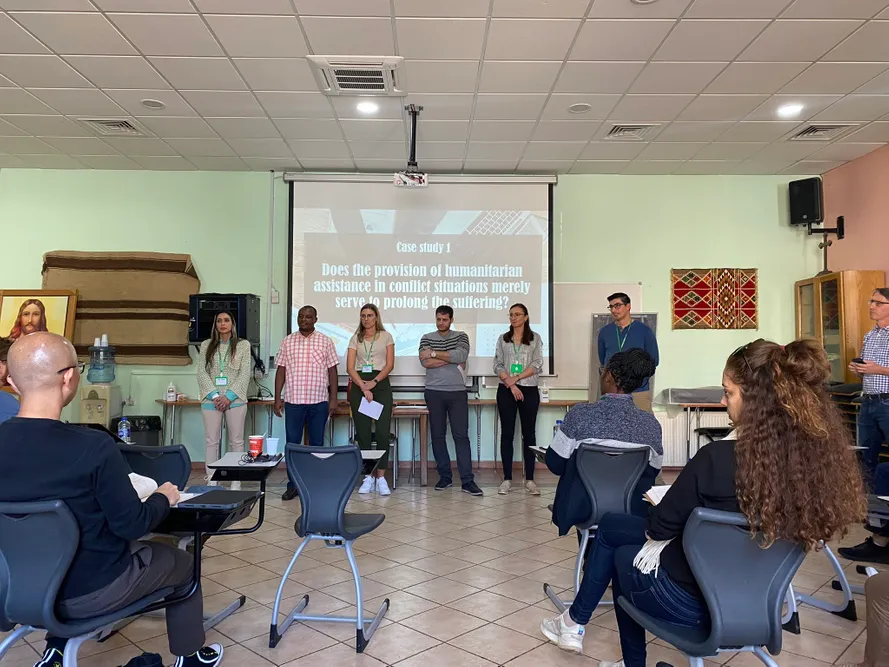
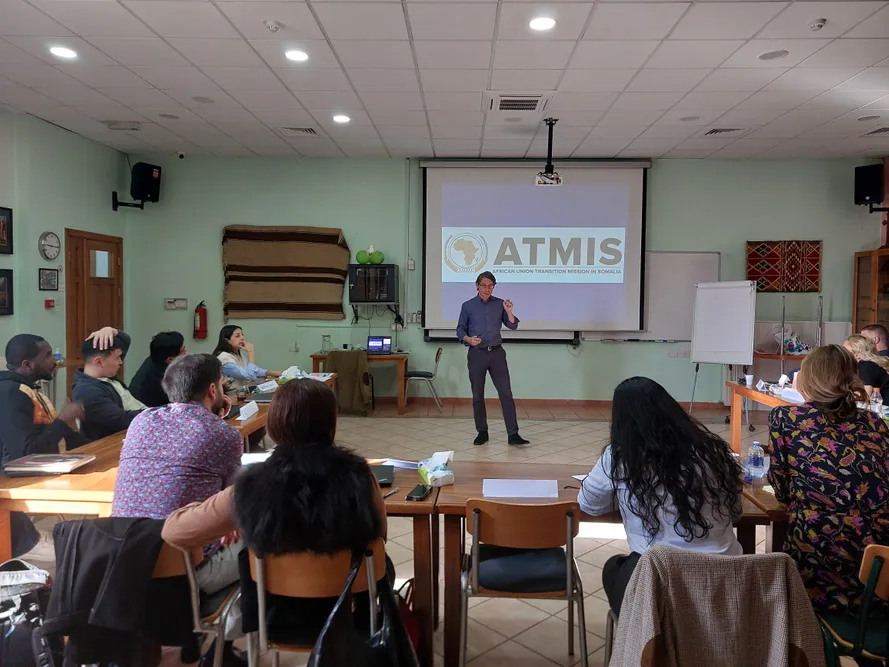
- Presentations, debates, case studies, practical exercises, and scenarios allow for collaborative learning opportunities in a cohort of field-experienced humanitarians
- Covers a full range of disciplines involved in humanitarian response, including: management, logistics, health, psychology, social sciences, anthropology, communication, agriculture, environment, education, conflict resolution, international law, civil/military relations, security, media, politics, and economics
-
To bring participants to the cutting edge of operational humanitarian issues in a month-long, residential, intensive course of lectures, exercises and tests, both individual and in syndicates, with an emphasis on interactive participation.
-
Participants will have the opportunity to meet, listen to and dialogue with United Nations, Military and Non-Governmental officials, as well as political, diplomatic, and academic figures. Most of our faculty are IDHA alumni from previous cohorts.
-
SAMPLE Daily Schedule (Monday - Friday)
When
What
Who
8:30 – 10:30
Education in Emergencies
Humanitarian Lecturer
10:30 – 10:45
Coffee Break
10:45 – 12:30
Water, Sanitation, Hygiene (WASH)
Humanitarian Lecturer
12:30 – 2:00
Lunch
2:00 – 3:30
Nutrition
Humanitarian Lecturer
3:30 – 3:45
Coffee break
3:45 - 5:15
Climate Change: Impact on Vulnerable Populations
Humanitarian Lecturer
5:15 - 6:30 Communicable Diseases
Humanitarian Lecturer 7:00
Dinner
Join the IIHA for 4 weeks