THE IIHA AND FORDHAM'S CAREER CENTER HOST FIRST ANNUAL HUMANITARIAN CAREERS PANEL
FOR IMMEDIATE RELEASE
BRONX, NEW YORK - THE IIHA AND FORDHAM'S CAREER CENTER HOST FIRST ANNUAL HUMANITARIAN CAREERS PANEL
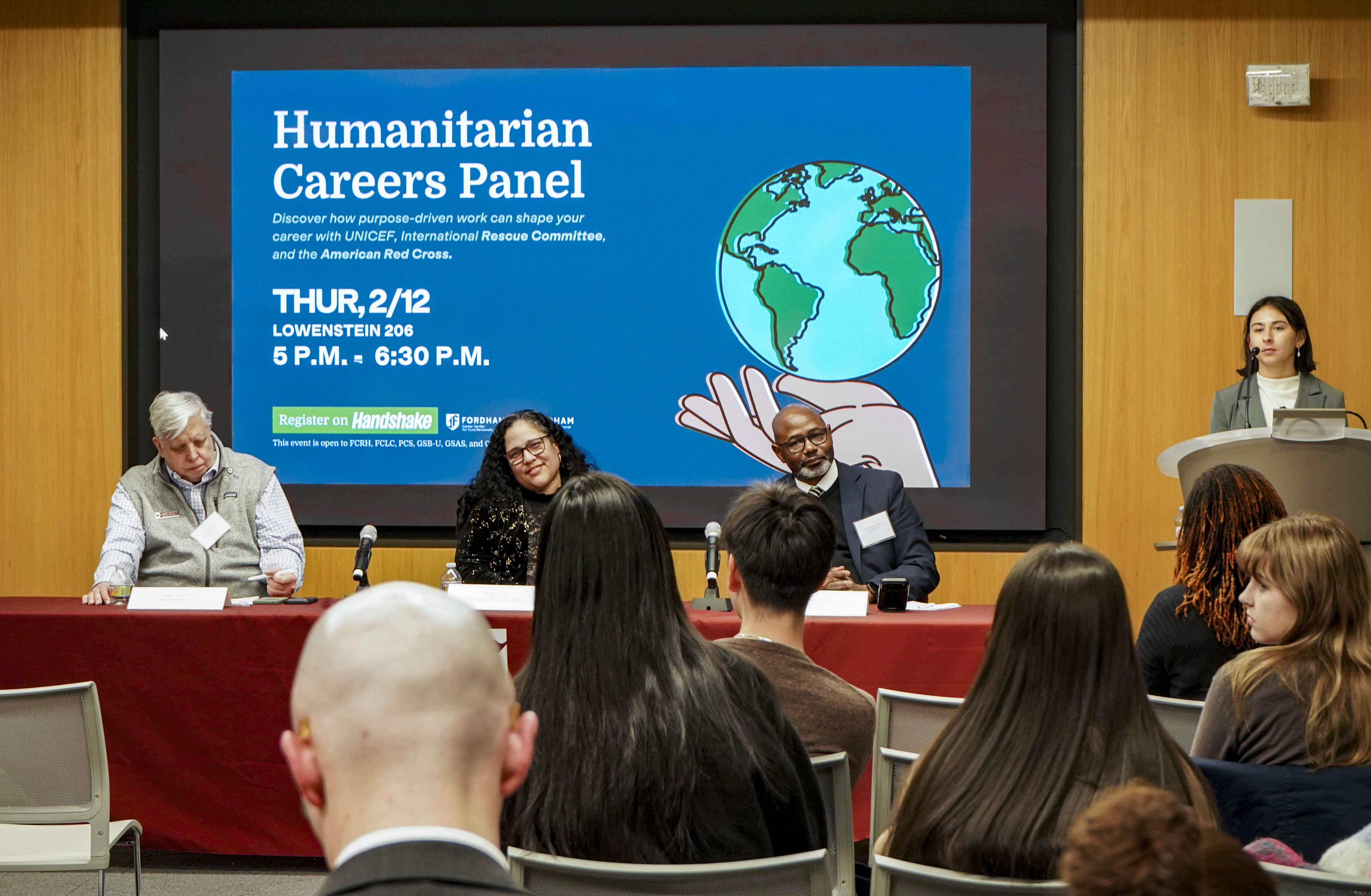
This Thursday, February 12, representatives from the American Red Cross (ARC), the International Rescue Committee (IRC), and the United Nations Children's Fund (UNICEF) joined a Humanitarian Careers Panel at Fordham University's Lincoln Center campus. Each panelist answered questions on attractive professional skills, advice on gaining experience, and personal career journeys from moderator Kayla Espinoza, a sophomore in humanitarian studies and vice president of the Fordham Student Veterans Chapter. In addition to concrete advice and sharing stories, the panelists engaged in live conversation among themselves about careers in the humanitarian sector. Two points each representative drove home were 1) learn an additional language and 2) there are positions open for all majors, whether it be economics, writing, media, or communications, etc.
Souleymane Henikoye, UNICEF, summarized the first and second points for attendees: "one, learning another language gives you the possibility to help as many people as you can." And, two, "The humanitarian domain is accepting of all skill sets. As Fordham students, you have the hard skills, which leaves your value systems or 'your soft skills' like cultural competence, coordination, and flexibility. When considering applying to a job, ask yourself, 'How do I make the world a better place?'"
Students took notes and listened attentively as panelists continued to answer Espinoza's questions. Milagros Cruz from the IRC stressed the importance of experience and accepting internships, even if they are unexpected, " The key is not to turn anything away. Find what you do best and do it. Do it. Do it."
Robert Bernstein of the American Red Cross added, " 90% of the ARC are volunteers and interns. Make connections, schedule lunches with those at your desired organization or similar, and stay in touch with the organizations you intern at. Keep in mind that humanitarian organizations receive hundreds of applicants for a single position, and you want to stand out."
Espinoza closed out the panel by opening the floor for a Q&A. Students were curious about how humanitarian organizations view AI, especially during the application review process and funding processes, likely due to concerns about budget cuts. The panel provided reassurance that with challenge comes opportunity. AI is expected to be used as a tool, but not to replace application materials. Regarding budget cuts, the panelists agreed that there are many humanitarian job vacancies, so students should not be discouraged.
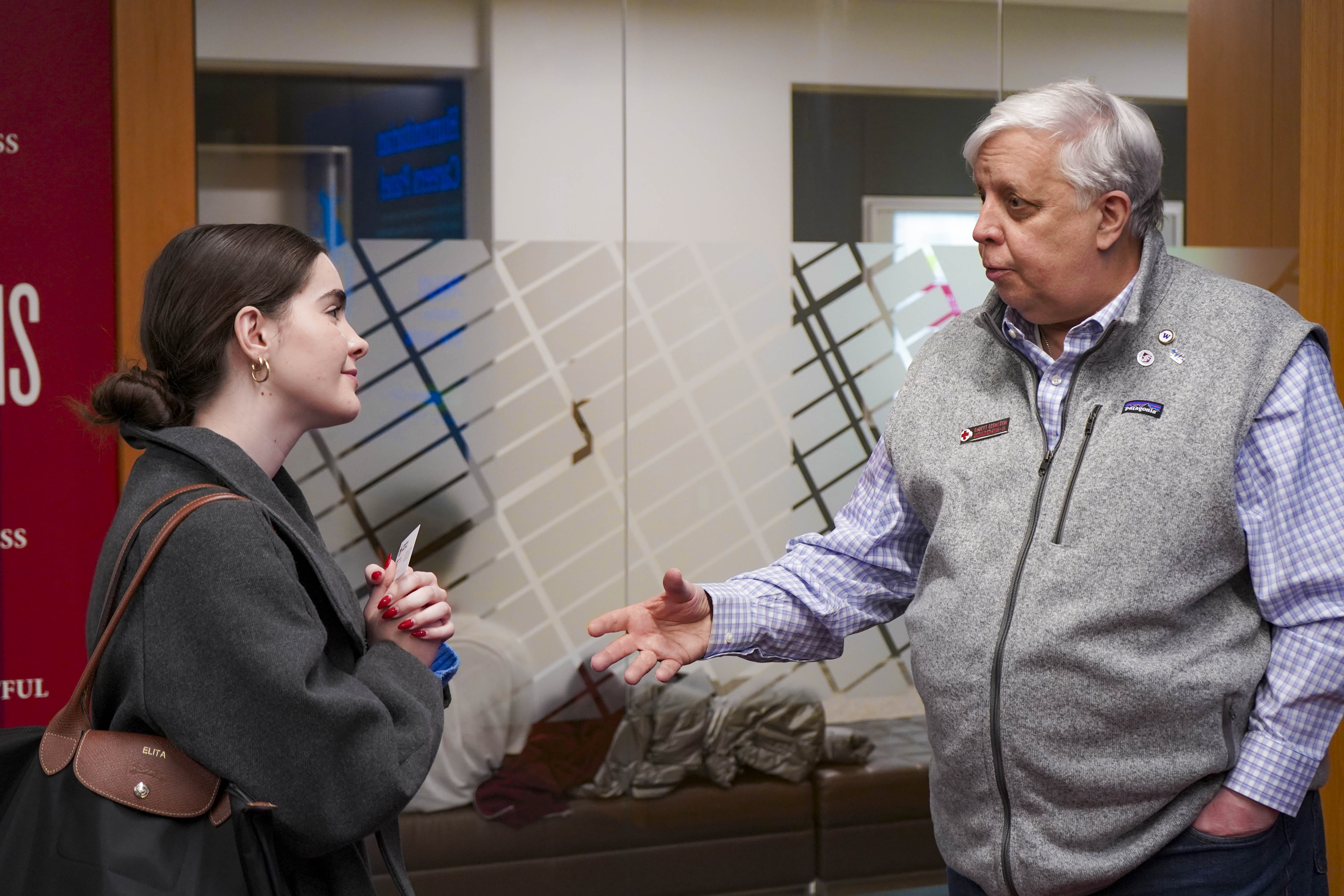
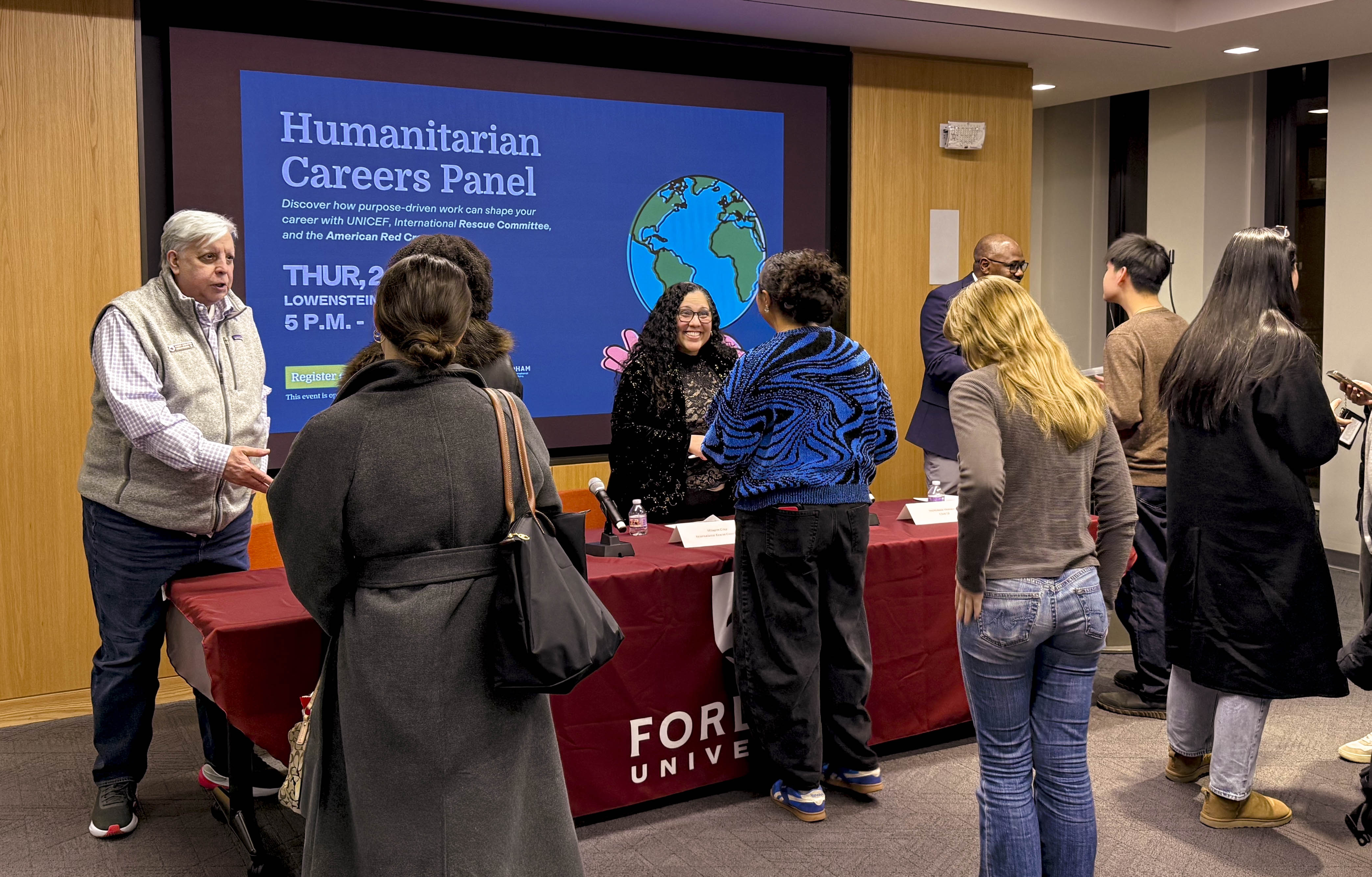
Following the panel, each member of their organizations met exclusively with the 26 student attendees to offer personalized professional advice and exchange information. What may have been a long road of networking, cold emails, and coffee chats was made available to students in less than one hour.
Elita Hoxhaj, a current humanitarian studies graduate student, reflected as an attendee, "I was able to get the business cards and reach out to everyone I spoke to, which felt more impactful for my career."
The Humanitarian Careers panel was part of a series of humanitarian career events hosted by the Institute of International Humanitarian Affairs (IIHA) and Fordham's Career Center. These events are open to all Fordham majors.
 Pictures by Matt Parks, Fordham Career Center photographer
###
The Institute acts as a bridge between the University and humanitarian practice, hosts lectures and symposia on a regular basis, and is the US partner for NOHA, a consortium of 12 European universities offering humanitarian education. The IIHA at 2546 Belmont Ave, Bronx, New York also provides space for undergrad and graduate students to meet and gallery showings. In addition to our courses, the IIHA publishes on a wide range of humanitarian topics, such as A Skein of Thought. Media Inquiries: [email protected].