Co-Designing the Migrant Accompaniment Lab
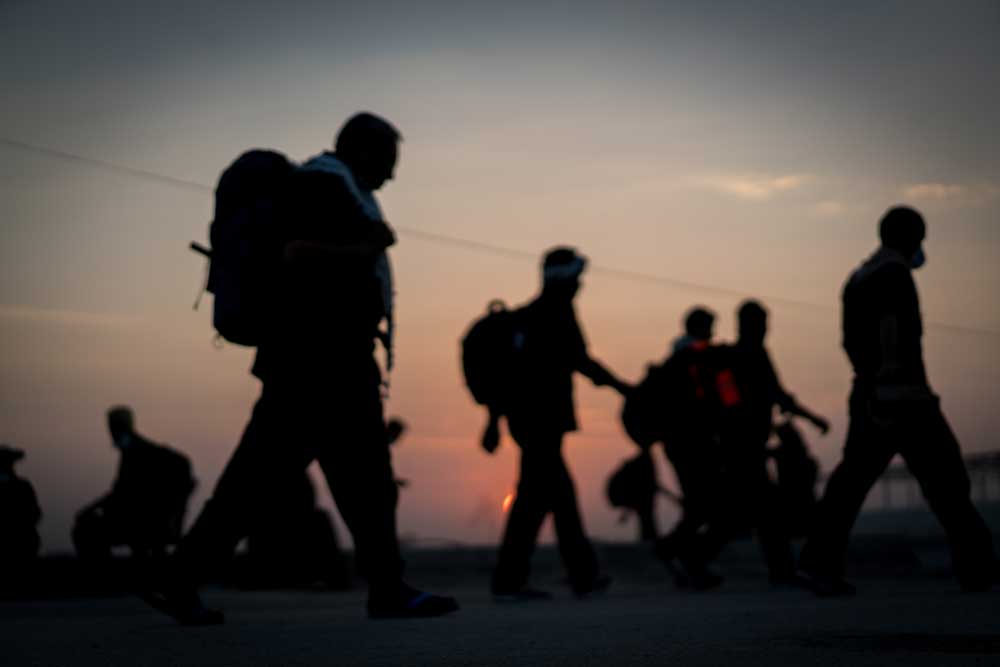
Design a collaborative model for holistic migrant accompaniment and support in partnership with community organizations.
Project Leads
Gregory Donovan, Associate Professor, Department of Communication and Media Studies
Leo Guardado, Associate Professor, Department of Theology
Annika Hinze, Associate Professor, Department of Political Science
Carey Kasten, Professor, Department of Languages and Cultures
Sarah Lockhart, Associate Professor, Department of Political Science
Jim McCartin, Associate Professor, Department of Theology
Alma Rodenas-Ruano, Associate Professor, Department of Natural Sciences/Neuroscience
Project Description
A significant gap often persists between high-level academic research and the practical, on-the ground realities of migrant accompaniment. While scholars possess the resources to study migration, the pressures of academic publication frequently can limit the utility of their findings for practitioners in the field. Accompaniment is a deeply relational practice—encompassing legal, digital, spiritual, and cultural dimensions—yet there are currently few mechanisms to systematically share these specialized capacities across organizations.
The Co-Designing the Migrant Accompaniment Lab project addresses these silos by forming a transdisciplinary team to identify systemic gaps and integrate diverse methodologies. The goal is to develop a formal, non-extractive interface for ongoing research and support between Fordham and Community-Based Organizations (CBOs). This project extends the work of the Initiative on Migrants, Migration, and Human Dignity and is led by an interdisciplinary team of faculty from the Departments of Communication and Media Studies, Theology, Political Science, Languages and Cultures, and Natural Sciences. As such, it builds on a strong foundation of migration accompaniment practices among the faculty involved and in collaboration with our community partners.
The project is structured into three distinct phases surrounding an anticipated two-day workshop at Fordham in May 2027:
Phase 1 (Fall 2026) focuses on asset mapping and needs assessments. This includes surveys of workshop participants and focus groups exploring comparable models at other Jesuit universities worldwide.
Phase 2 (Spring 2027) analyses findings from the first phase to develop thematic, transdisciplinary lectures, activities, and discussions for the spring workshop.
Phase 3 (May – Summer 2027) involves the two-day workshop that will bring together faculty, CBO leaders, and Fordham students to engage in collaborative work. Following the event, the team will synthesize findings to produce academic publications and research-informed funding proposals for the Lab’s realization.