Stomping and Scraping
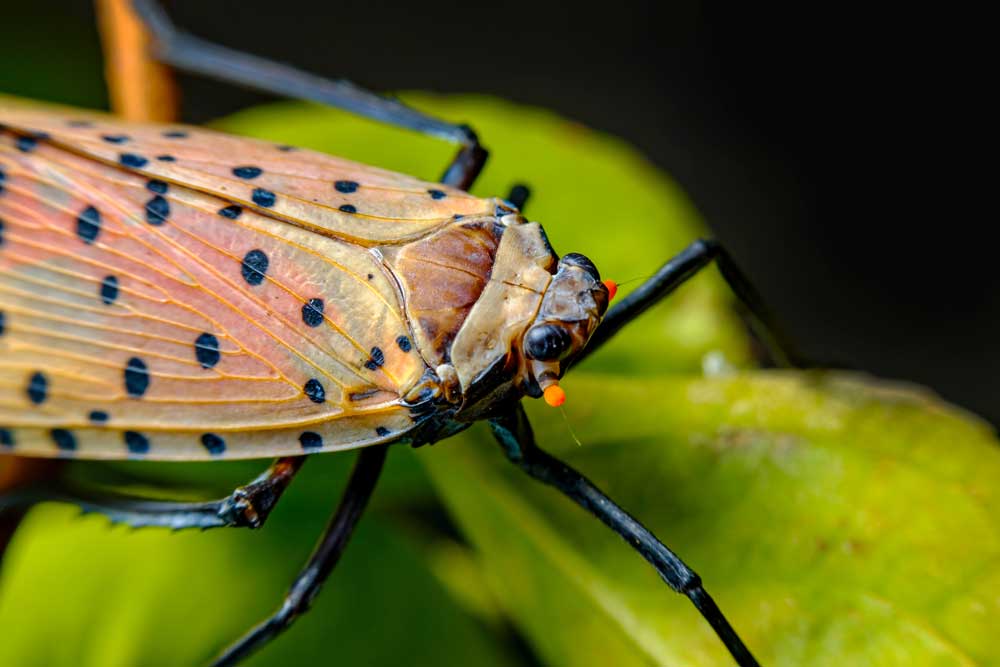
Investigate the media coverage and public perception around invasive species management.
Project Leads
Ellen van Wilgenburg, Assistant Professor, Department of Natural Sciences
Zoey Rosen, Assistant Professor, Communication and Media Studies
Project Description
The media plays an important role in communicating scientific information and can significantly shape public behavior by influencing how people understand issues, assess risks, and decide to act. This project examines how media coverage of the spotted lanternfly has shaped public understanding and behavior.
The spotted lanternfly is an invasive planthopper that was first detected in the United States in 2014 and has since rapidly expanded across the northeastern United States. In the years following its arrival, the spotted lanternfly has become a cultural phenomenon, generating extraordinary media coverage, from front-page newspaper stories to viral TikToks and YouTube tutorials. Few invasive species have achieved this level of public visibility, making it a compelling case for how scientific information travels through media ecosystems and shapes behavior.
Despite the wide reach of public campaigns urging people to stomp on lanternflies and scrape their egg masses, a survey of 485 U.S. adults already conducted by our team revealed a striking disconnect: while 92% of respondents reported stomping on lanternflies, only 16% engaged in egg scraping, the more ecologically effective behavior.
This project investigates how the stomp-and-scrape message has been constructed, circulated, and interpreted across media platforms, and how it might be improved. Through a content analysis of U.S. media coverage paired with our existing survey data, we aim to identify the communication gaps that have allowed a high-visibility campaign to fall short of its ecological goals. Once identified, we will design and test social marketing communication campaigns to see what strategies may be more effective.
The project brings together expertise in invasion biology and science communication, and will involve Fordham undergraduate students at every stage. Ultimately, this research aims to produce evidence-based communication frameworks that can support more effective public engagement with invasive species management and environmental science more broadly.