Physical and Mental Well-Being of Mothers and Children in Adverse Circumstances
The Institute of International Humanitarian Affairs innovates solutions to complex humanitarian challenges through collaborative research and exploration. Visiting Research Fellows, Dr. Lynne Jones and Dr. Asmamaw Yigeremu, have implemented a parenting program for women and men in countries around the world.
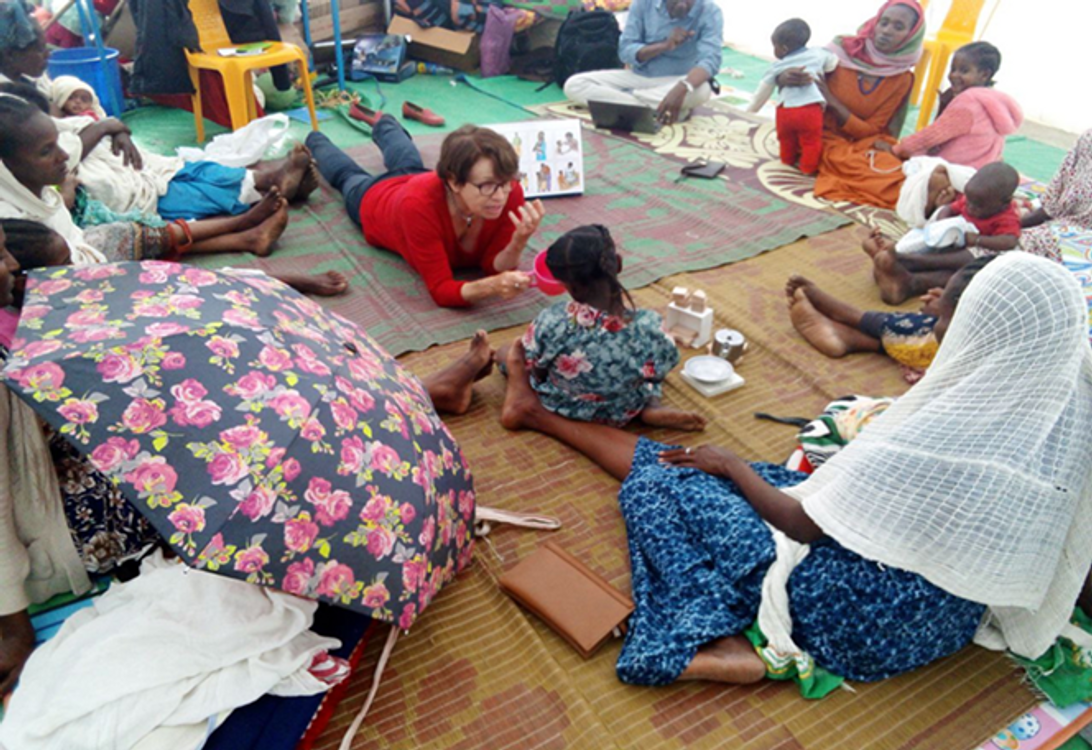
The first iterations of the parenting programme were developed by Lynne Jones and Asmamaw Yigeremu and delivered over Zoom during the COVID-19 lockdown in 2020 to teenage Venezuelan refugee mothers living in Peru. Since then, it has been delivered, with a variety of partners in Northern Bosnia, Northern Ethiopia, Venezuela, Guatemala, and Kenya. This programme came out of years of work with mothers and infants in refugee settings and post-conflict zones, where stress, displacement, and survival pressures affect both early physical and mental development. The core aim has always been to support responsive caregiving and strengthen maternal confidence, even in extremely adverse circumstances.
The purpose of these interventions above all is to enhance the physical and mental health and well-being of mothers and infants. Fathers are also welcome. The trainings have a holistic approach, educating mothers on key physical health as well as mental health issues while recognising their interconnections. For example, breastfeeding is good for nutrition and child health, even as it fosters love and warm communication between mother and child. We hope to improve the well-being of both mother and child by encouraging loving, responsive and healthy parenting.
The programme is delivered through interactive group discussions and play between mothers and their infants and babies under three years of age, in 90-minute sessions. Each session addresses a key theme related to parenting and the physical and mental health of mother and child, and includes discussions with the mother on what she can do herself, and with her family and community, to improve it. In addition, mothers are encouraged to share what they have learned within their own networks.
In the last three years, thanks to support from the IIHA, they have been able to further develop the programme, in collaboration with SOS Childrens Villages in Kenya. One important innovation is the inclusion of education on the health impacts of the climate and nature crises on maternal and child health and active discussion on how to protect themselves (see attached webinar). Secondly, a training model has been developed in which after observing the training, trainee trainers help deliver it at a second training under supervision.
They are then encouraged to roll it out across their local areas. The first cohort of trainers has been trained in Kenya and is in process in Guatemala. The next stage will be to evaluate its effectiveness.
This text is an adapted extract from Integrating Climate and Environmental Health into Parenting Programmes: Improving Maternal and Infant Wellbeing
Lynne Jones OBE, Asmamaw Yigeremu, Henry Bineah
This is a chapter in The Routledge International Handbook of Mental Health and the Climate Crisis: Expanding Horizons, Diverse Knowledges, Collective Action Editors: Judith Anderson and John Jamir Benzon Aruta (in Press)
1 Partners who have supported this work include: Project Hope, UNHCR Peru, UNICEF, International Medical Corps, Majawil Qij, The Maa Trust, SOS Children’s Villages Kenya, TRACE Kenya, and the Rights and
Opportunities Foundation
 Dr. Lynne Jones
We want to show mothers how their own lovely interactions actually foster each area of development: language, loving and responsive communication, physical development, and loving attachment.
- Dr. Lynne Jones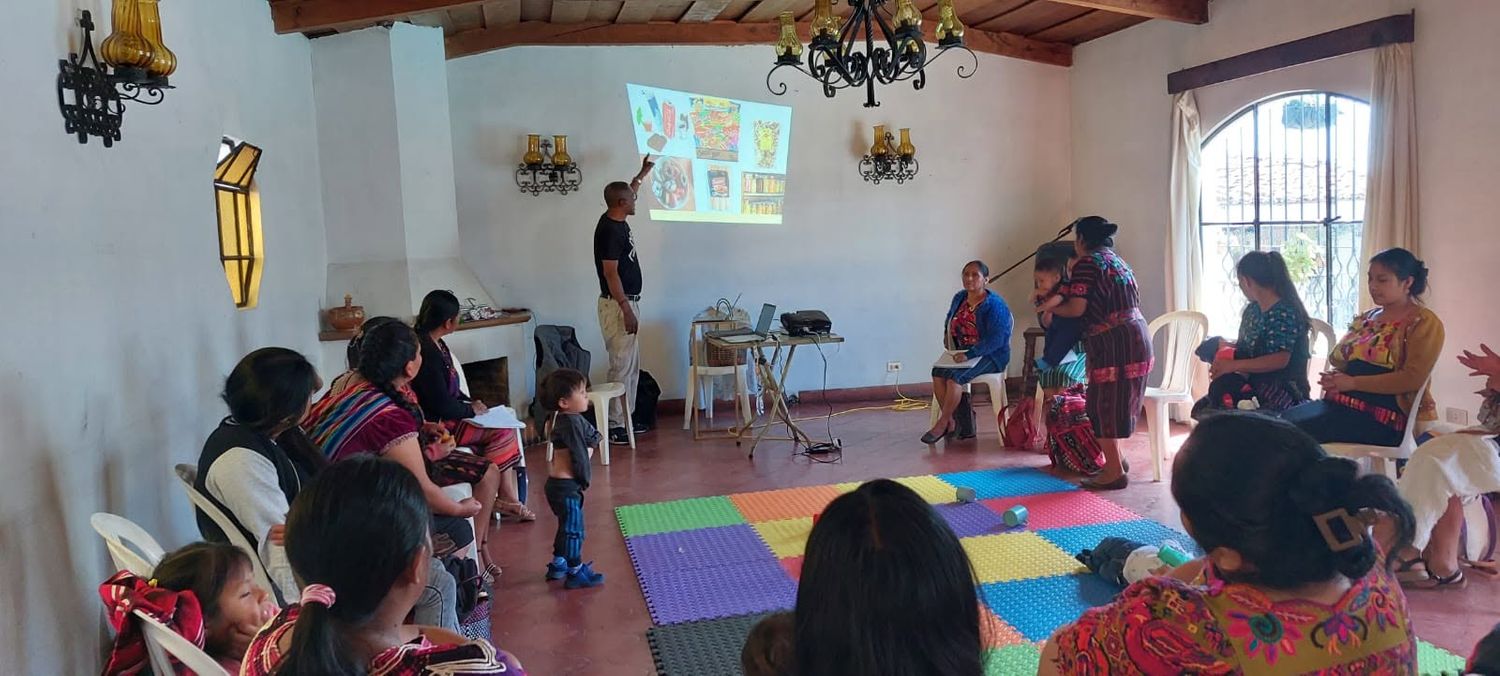 Dr. Asmamaw Yigeremu
Climate change disproportionately impacts women's health by exacerbating existing gender inequalities, poverty, and the risk to reproductive health.
- Dr. Asmamaw YigeremuDr. Lynne Jones, OBE
Dr. Lynne Jones OBE FRCPsych is a child and adolescent psychiatrist, writer, and relief worker, and an honorary associate professor at the London School of Hygiene and Tropical Medicine. For more than 25 years she has established and run mental health programmes in areas of conflict and natural disaster — including the Balkans, East and West Africa, Southeast Asia, the Middle East, Haiti, and Central America — and she consults for the World Health Organization, UNICEF, and UNHCR.
She is a co-founder and course director of the Mental Health in Complex Emergencies programme at the IIHA. Her books include The Migrant Diaries (Refuge Press, 2021), Outside the Asylum: A Memoir of War, Disaster and Humanitarian Psychiatry (2018), and Then They Started Shooting: Children of the Bosnian War and the Adults They Become. She was appointed OBE in 2001 for her mental health work in conflict-affected Central Europe. Learn more about Dr. Lynne Jones.
Dr. Asmamaw Sisay Yigeremu, MD
Dr. Asmamaw Sisay Yigeremu, MD, MAHA, MSc, is a general practitioner with more than 30 years of experience as a clinician, manager, and trainer working with rural and Indigenous communities in low-resource settings — including Ethiopia, Haiti, Mozambique, and Belize. He specialises in building emergency and primary healthcare services from the ground up for refugee and conflict-affected populations, and has volunteered with Doctors of the World UK.
At the IIHA he co-leads the research initiative Enhancing Maternal and Infant Wellbeing in Adversity, Including Families on the Move alongside Dr. Lynne Jones. Learn more about Dr. Asmamaw Yigeremu.