Rudy Zarate, FCLC '26
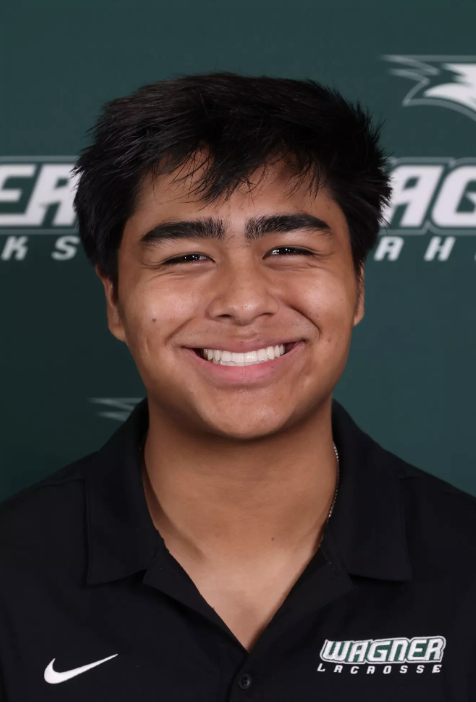
Major: Natural Science
Bio: I am currently a senior at Fordham University and am preparing to graduate in May 2026. I am a Natural Science major on the pre-medical track. I transferred to Fordham University before the Fall 2024 semester from Wagner College, where I played Division I lacrosse. I aspire to attend medical school and earn an M.D. degree.
Toward a Catalytic, Enantioselective Intramolecular Friedel-Crafts Cyclization of N-Benzyl Aziridines

Abstract: This research explores a more efficient and selective way to build complex molecules that are relevant to cancer treatment. Specifically, the project focuses on developing a catalytic, enantioselective intramolecular Friedel–Crafts cyclization of N-benzyl aziridines to form tetrahydroisoquinoline structures. These structures are important because they serve as key intermediates in the synthesis of pancratistatin, a natural product known for its strong anti-cancer activity and ability to selectively target malignant cells.
Previous work in the lab demonstrated that this transformation could be achieved using strong acids in excess, but this approach is not ideal due to limited efficiency and lack of selectivity. The goal of this project was to determine whether the reaction could be performed using catalytic amounts of acid while also introducing enantioselectivity. Initial experiments showed that the reaction can proceed effectively with significantly reduced quantities of methanesulfonic acid, indicating that a catalytic pathway is feasible.
To introduce stereocontrol, both chiral Brønsted acids and chiral Lewis acid systems were investigated. Camphorsulfonic acid successfully promoted the reaction, while other acids were limited by either insufficient strength or poor solubility. In parallel, scandium-based Lewis acids combined with chiral ligands were explored as a strategy to achieve enantioselectivity. Early results confirmed that these systems can drive the reaction, though further analysis is needed to determine the extent of stereochemical control.
Mentor: Dr. Martin Di Grandi, Natural Science
Research Partners: Elliot Brickner and Cooper Razzi