Fordham Tri-State Tick Risk
Tick Index for October 23, 2026
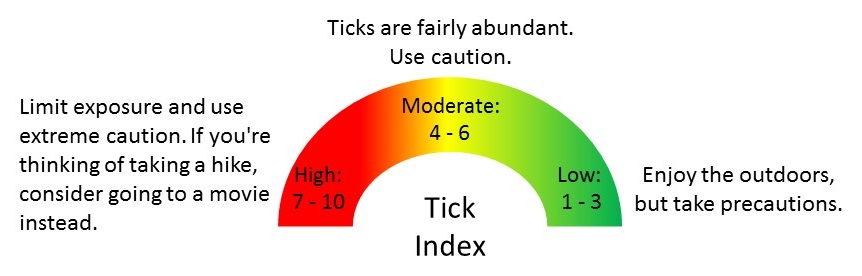
5 out of 10: MODERATE
Tick Fact of the Week
About the Fordham Tick Index
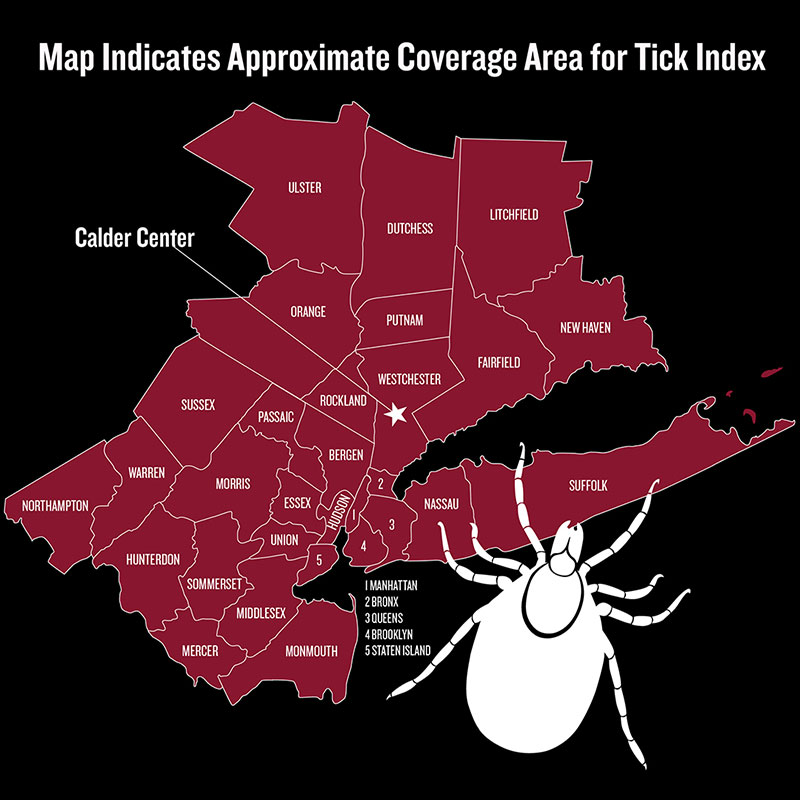
The Fordham Tick Index is an estimate of the risk of being bitten by a nymphal or adult deer tick in the tri-state area, encompassing southern New York, Connecticut, and northern New Jersey. This index measures risk relative to other times of year.
Both the nymph and adult tick are active at this time of year, although the smaller nymph is responsible for many more cases of Lyme disease. For more information about preventing tick bites, controlling ticks, Lyme disease and other illnesses ticks carry, visit the Centers for Disease Control and Prevention.
The Fordham Tick Index is provided as a weekly public service by Fordham University and is based on both current and historical data from the Louis Calder Center, Fordham's Biological Field Station in Westchester County, N.Y. It is an estimate only. Actual risk may vary geographically. Therefore, always take precautions to prevent tick bites when outdoors.
Tick Risk Map