The Author Series
How the NFL Became a Juggernaut with Ken Belson
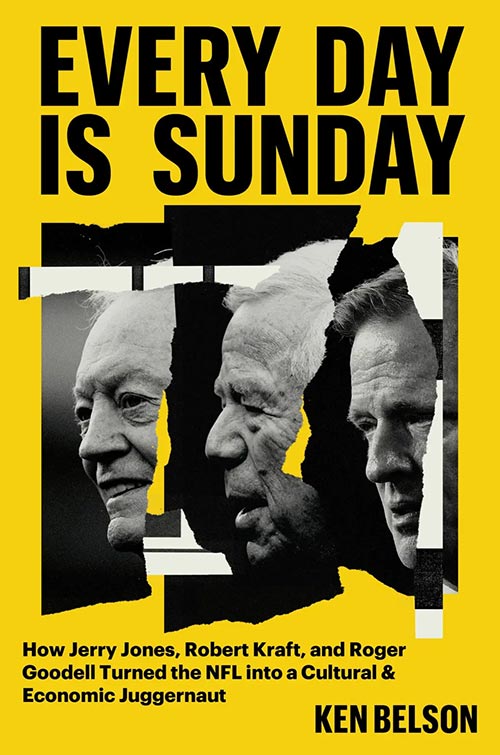
How did the NFL become the envy of the sports world? How did it monetize its product so effectively, and wield such bare-knuckled ruthlessness in dealing with politicians, the media, and even its own partners? Those questions are explored in Every Day is Sunday: How Jerry Jones, Robert Kraft, and Roger Goodell Turned the NFL into a Cultural & Economic Juggernaut, the new book by veteran journalist Ken Belson.
In this episode of the Sports Business Podcast with Prof. C, Ken shares behind-the-scenes stories, insider insights, and lessons from covering the league's most powerful figures, and what the NFL's future might hold.
-
00;00;07;24 - 00;00;42;24
Mark Conrad
Hello and welcome to the Sports Business Podcast with Prof. C, the podcast that explores the world of professional, collegiate, amateur, and Olympic sports. I'm Mark Conrad, or Prof. C, from Fordham University's Gabelli School of Business, where I serve as Professor of Law and Ethics and the Director of the Sports Business Initiative.
The National Football League is an economic and cultural powerhouse whose business has gone from strength to strength.00;00;42;26 - 00;01;18;13
Mark Conrad
NFL games consistently draw huge television audiences. The league is pushing to gain new international markets. Its team values are soaring. Commissioner Roger Goodell is the regent and the owners are the princes and princesses of this kingdom.
How did the NFL become the envy of the sports world? How did the league monetize its product so successfully? How was it able to exercise bare-knuckled ruthlessness in dealing with government, politicians, and media executives?00;01;18;15 - 00;01;48;28
Mark Conrad
How did it become part of our culture? The answers are found in a new book titled Every Day is Sunday: How Jerry Jones, Robert Kraft, and Roger Goodell Turned the NFL into a Cultural & Economic Juggernaut. The author is Ken Belson. Ken writes about the business of sports for the New York Times and joins us for this edition of the Business of Sports with Prof. C.00;01;49;01 - 00;02;20;16
Mark Conrad
Ken started his career at the New York Times as a reporter in Tokyo in the business section. He also worked in the metro section and in 2009, joined the sports section of the Times. In 2023, he rejoined the business section after the Times acquired the Athletic and moved its sports coverage to that journal. One disclosure, Ken and I have known each other for about a decade and Ken has quoted me in some of his stories.00;02;20;18 - 00;02;23;11
Mark Conrad
Ken, welcome to the Sports Business Podcast.00;02;23;13 - 00;02;26;01
Ken Belson
Thanks for having me on, Mark. Appreciate it.00;02;26;03 - 00;02;41;19
Mark Conrad
It's my pleasure. So let's start. Your book focuses on two owners, Jerry Jones of the Dallas Cowboys and Robert Kraft of the New England Patriots. There are many other notable owners, so why did you focus on those two?00;02;41;21 - 00;03;06;12
Ken Belson
Well, one is it's a writing device. You have to limit the number of people you keep in focus and then relegate some other people to the background or occasional characters. That's just to keep it simple. As you can see from the title, you can only fit so many names on there. That's the first answer. The second answer is Jones and Kraft have been the most successful owners since they came into the league.00;03;06;14 - 00;03;28;29
Ken Belson
Jerry in 1989, Robert in 1994. Their teams currently, maybe not right now, but have been over last two decades, the number one and number two most valuable franchises. Jerry won three Super Bowls. Robert has won six and has been to three other or four others. So they have been mainstays of both the NFC and the AFC.00;03;29;01 - 00;03;58;06
Ken Belson
And then their influence within the league, I'm not talking about their teams, but their influence on various committees, the media rights negotiations, the contract talks with the unions, sponsorships, international, even gambling, both of them have had stakes in outfits that later became gambling companies. So they've been so involved in every aspect of the league or building the league over the last 30 plus years.00;03;58;09 - 00;04;16;03
Ken Belson
It's hard to find two other owners who stand out that way.
And then the third thing is, I don't want to short circuit myself here because we'll talk a little more about this. They actually have, although Jerry came from Arkansas and Robert came from Boston, had very similar trajectories as business people before they got to the NFL.00;04;16;05 - 00;04;20;03
Ken Belson
So for all those reasons, it made sense to choose those two.00;04;20;05 - 00;04;40;22
Mark Conrad
And you compare them in the book. You've covered them, spent time with them, as they are two very different personalities with arguably different approaches to business, who somehow teamed up to produce this formidable duo, helping expand the media and marketing of the league. In a sentence or two, how would you describe their personalities?00;04;40;25 - 00;05;04;20
Ken Belson
Well, to people who have been around the NFL, it's old hat, they know about them. But Jerry is this hard driving, lives large. He's such a character. He speaks in non sequiturs. His sentences often even don't make sense at all, especially when I go back to the transcripts. And yet, he's a dreamer. He's constantly coming up with ideas.00;05;04;27 - 00;05;27;19
Ken Belson
He's constantly lobbying other owners to bring them on board.
His vision for the NFL is 2X anybody else's vision among the owners. Robert on the other hand is a little bit more reserved, a bit more of a diplomat. He may not get credit for having generated the ideas, but he certainly gets credit for synthesizing them.00;05;27;20 - 00;05;43;24
Ken Belson
There might be three or four opinions in a room and Robert's usually the guy who can corral everybody around a central idea. So one...in Jerry might come up with the ideas and Robert is very good at executing.00;05;43;27 - 00;06;06;04
Mark Conrad
And you also focus, of course, on NFL Commissioner Roger Goodell and discuss the transition from former Commissioner Paul Tagliabue. Tagliabue was an attorney who litigated cases for the league. Goodell, on the other hand, is not an attorney, but he took the league to a new level. What do you think are some of Goodell's achievements?00;06;06;06 - 00;06;32;23
Ken Belson
Well, Roger's an interesting figure. He's been at the league his entire professional life. It's now going on 45 years. He knows every one of the owners individually. Frankly, some of these owners, he's contemporaries. They were young executive sons of owners who became owners themselves. So Roger, as I point out in the book, is not so much a CEO or what we think of as a commissioner, but he's more like a Senate majority leader.00;06;33;01 - 00;06;53;29
Ken Belson
He's somebody who figures out, he reads the room very well, let's put it that way, and finds again a middle ground. He understands more than most commissioners that he is employed by those owners. And it's really, he may have his own ideas on where the NFL should go, but he generally reserves judgment until he hears from the owners and tries to figure out what they really want.00;06;53;29 - 00;07;05;09
Ken Belson
And of course, with 32 owners, 32 successful people, you know, have sometimes 32 different ideas. But Roger’s very good at reading the room and I'd say that's his mainstream00;07;05;11 - 00;07;14;25
Mark Conrad
Is ruthlessness the middle name of the NFL? And if so, are there any examples from the book that describes how it can steamroll its opponents?00;07;14;28 - 00;07;48;19
Ken Belson
Yeah, it's a question. mean, certainly the popular image of the League is ruthlessness. It's gotten bigger and bigger and bigger. It's tripled in revenue under Roger Goodell's leadership since 2006. And frankly, will only get bigger because their share of the media pie has grown so much. And so in that way, yes, they're ruthless. Leagues, not just the NFL, but other leagues, baseball, basketball, have gotten criticized for putting more and more of their games on paid television services like streaming accounts,00;07;48;21 - 00;08;15;28
Ken Belson
Amazon, Peacock, and so forth. And in that way, they're seen popularly as greedy. And Roger, let's face it, he's very good at leverage. And there's an anecdote in the book with negotiations with NBC back in the day, and Dick Ebersole, you know, essentially calls Roger an SOB. He knows how far he can push these networks because he knows the networks need the NFL.00;08;16;05 - 00;08;37;06
Ken Belson
And one of the lawyers who worked for the NFL for quite a long time, Frank Hawkins, said that. he said, Roger understands leverage better than anybody he knows. He knows his opponent and he knows what he has and he knows what or how far he can push. So I'd say on the media front in particular, that's been his strength.00;08;37;09 - 00;08;56;13
Ken Belson
You may know from watching CNBC and elsewhere he shows up now at the the summits the media summits He's as much a media leader as Bob Iger You know Brian Roberts. He mixes and mingles with them and they need him frankly because the NFL is the hottest product on television.00;08;56;15 - 00;09;31;29
Mark Conrad
You know, it's so many of the top television events, NFL games, you clearly see that utter dependency between the NFL and broadcasters, particularly traditional over the air broadcasters, you know, who have been really having their power reduced over the years because of new media. We're speaking with Ken Belson, the business and sports writer for the New York Times, who is the author of Every Day is Sunday: How Jerry Jones, Robert Kraft, and Roger Goodell Turned the NFL into a Cultural & Economic Juggernaut.00;09;32;02 - 00;10;04;25
Mark Conrad
Your book delves into the team relocations of the 1980s and 90s when a number of franchises such as the Raiders, the Rams, the Browns, the Colts, and the Cardinals moved to different cities. And in doing so, the teams extracted financial support for state-of-the-art facilities from local officials. One that comes to mind was the move by the Rams from St. Louis back to Los Angeles, leaving St. Louis with a stadium that it built for a team, but turned out to be a venue without a tenant.00;10;04;28 - 00;10;07;12
Mark Conrad
Could you tell us what happened?00;10;07;14 - 00;10;30;01
Ken Belson
In that particular instance, that's interesting because Stan Cronke, the owner of the Rams left to build his own stadium in Los Angeles. He actually got very little public support to build in Inglewood, California. But Stan Cronke is also the second or perhaps now the third wealthiest owner. He owned the land in LA and obviously even spending $5 billion for a new stadium there.00;10;30;03 - 00;10;56;07
Ken Belson
The value of his team has exploded because let's face it, LA is a much bigger and more lucrative market than St. Louis. But what St. Louis had done and what Stan Cronke was trying to get out of was they built, back in the early 90s, they built a stadium on spec, which is absurd when you think about it, that a city or a county in their case would put together hundreds of millions of dollars just to build a building without a tenant.00;10;56;10 - 00;11;13;23
Ken Belson
And that's because the Arizona Cardinals, who used to be the St. Louis Cardinals, had left in 1988 and the city was desperate to get another team. So what better way to get a better team? Build a stadium and tell an owner, here it is. Come on, move in. You don't have to worry about construction, financing, whatever.00;11;13;23 - 00;11;33;29
Ken Belson
It's there for you to move right in. They were not the only city to do this. Baltimore did it. And they got the Cleveland Browns to move to town. But it was a pretty extreme example. There's also in baseball, the where the Tampa Bay Rays play, that building was built on spec and actually sat empty for several years without a baseball tenant.00;11;34;01 - 00;11;58;12
Ken Belson
And of course, they ultimately got one. So they're not alone in that Saint Louis, but they built it. Specifically, they bring a team back that turns were pretty darn generous. And the Rams, you know, benefited from all of that. And they won their Super Bowl there, the greatest show on turf. So it paid off. If you're Saint Louis in the And of course they ultimately got one. So they’re not alone in that St. Louis, but they built it specifically to bring a team back. The terms were pretty darn generous and the Rams benefited from all of that. And they won their Super Bowl there, the greatest show on turf. It paid off if you’re... St. Louis in the sense that they got a team back and the team won. But, you know, the building started to get old.00;11;58;15 - 00;12;21;23
Ken Belson
Let's face it, 1995 to about 2013, 2014, it's almost 20 years in stadium terms these days. You know, you got to put a lot more money in it to make it quote unquote modern. And so the Rams started lobbying for ways to leave basically. And they had various opt outs in their contract that the city and county, you know, had a hard time defending.00;12;21;25 - 00;12;42;19
Ken Belson
And so Stan took advantage of it. He did buy the Hollywood, the old Hollywood racetrack in Los Angeles, and that was the land he ultimately built his stadium on. So I think it's a good example in the sense that St. Louis went to extreme measures to get a team and then ended up losing a team because it was very hard to keep them after that.00;12;42;21 - 00;13;05;11
Mark Conrad
And the lease term is fascinating because it said that after a certain period of time, if the stadium was not quote, state of the art, unquote, the team could reach the lease early. Because I think it was originally a 30 year lease or that's usually how long they are. But it was after 15 or 20 years, they could say, well, if the stadium is not up to date, we can leave early.00;13;05;11 - 00;13;25;16
Mark Conrad
And an arbitrator said it was not up to date based on the newest stadiums because there was a spate of stadium construction around the early 2000s, and yes it was an older stadium and they used that to leave. Although to be fair St. Louis sued the team and the NFL and did get a reasonable settlement00;13;25;16 - 00;13;27;09
Mark Conrad
out of that determination.00;13;27;23 - 00;14;02;04
Ken Belson
Yeah. Yeah. It's important to understand that over the eighties or in the eighties, starting in particular with Al Davis going from Oakland to Los Angeles, the the league has had significant issues being accused of, of antitrust violations by trying to prevent teams from exercising their right to move. And so that led to a lot of chaos. And, know, Paul Tagliabue, who's interviewed in the book, you know, noted that when teams started moving and then the league tried to prevent them, and Al Davis turned around and sued and said, you can't prevent me from moving.00;14;02;04 - 00;14;20;27
Ken Belson
It's my team. I can do what I want. It allowed other teams to move too. Bob Ursay moved the Colts to Indianapolis because the league was powerless while the lawsuit was going on. Because if they tried to stop the Colts, they would prove Al Davis correct, and then they would lose that case. So they were in a real bind.00;14;20;27 - 00;14;43;04
Ken Belson
And so you do see handful of moves kind of snowball in a short period of time because lawsuits are in the middle of it. But you know, look, the league doesn't want these things in general. It's very disruptive. You alienate fans. They're expensive. Obviously the legal costs. And it just it's a bad look to be abandoning a market.00;14;43;07 - 00;15;03;20
Ken Belson
But you know, in a decade later, is the NFL happy they’re in Los Angeles over St. Louis? I'd say, yeah, they are.
And I would say also there's sometimes a split in ownership. The owner, the older owners, the roomies and the mares come to mind. you know, they've been in their markets for, since they were started as franchises,00;15;03;22 - 00;15;23;24
Ken Belson
they tend not to like this. They, they tend to see, you know, sort of more traditional view that were there, make the best of it, work with fans. but the newer owners, they see valuations going up. And by the way, when the Rams went from say the 30th most valuable franchise to the second, everybody else's boats rose with them.00;15;23;26 - 00;15;31;09
Ken Belson
So the owners in that sense, to go back to earlier question, the owners do seem very ruthless when it comes to things like relocation.00;15;31;11 - 00;15;56;08
Mark Conrad
And moving on then onto more social issues now, the NFL was criticized in 2016 and 17 when Colin Kaepernick took the knee to protest racism during the Black Lives Matter era. And of course, this incurred the wrath of President Trump during his first term. The book describes how the NFL owners were divided on how to respond.00;15;56;10 - 00;16;00;15
Mark Conrad
Could you describe some of the backroom tension among the owners?00;16;00;18 - 00;16;28;14
Ken Belson
Yeah, there's a, there's a whole chapter, based on a recording I got of the owners discussing with the players how to, address the issue. This is October 2017, just weeks after the president attacked the league, encourage the owners to fire any players who protested and so on. was, it was really kind of existential crisis for the league because although there's been issues like steroids and concussions, those are sort of football.00;16;28;21 - 00;16;49;21
Ken Belson
Those are inward looking issues about the league itself. This is something where, sorry for the pun, but the league itself became a social football. Where where now the rest of America was looking at what the NFL was doing in a very different way. And so they were really struggling. And you can you can hear it on that tape and in, in their comments.00;16;49;23 - 00;17;12;19
Ken Belson
And so you basically had about, 11 owners. Jen, they were mostly the, there was two blocks, basically pretty conservative owners. Bob McNair of the Texans to pick up the bills on one side. And you had some, pretty liberal or progressive owners, Jeffrey Lurie being the most, prominent example of the Eagles.00;17;12;24 - 00;17;32;18
Ken Belson
Steve Ross, who's, put together in his to, to fight racism. And then Robert Kraft was somewhere in the middle between the two sets of them. And then on the other side, you had you had a dozen players. It's very rare for the players to speak in groups to owners like this outside of labor negotiations, and you can feel the tension in the room.00;17;32;20 - 00;17;55;19
Ken Belson
There was a significant group, Malcolm Jenkins and Quinn Bolden, who were part of what's known as the Players Coalition. And they were trying to come up with a solution which included money for grassroots funding. But there were other players, like Eric Reid, who stood up at the meeting and basically said, Where's Kaepernick? I mean, he's the guy that got all this rolling and he can't get a job now.00;17;55;21 - 00;18;17;27
Ken Belson
So, you know, it was a very, very tense meeting. Roger Goodell only started the meeting and basically sat back and let both sides come to an agreement. And ultimately they did. They formed a group called its or a, a program called Inspire Change. But it was a very, very tense moment. And, there were some interesting asides there.00;18;17;27 - 00;18;39;17
Ken Belson
There was one owner who basically, trash the president. They were other owners, like Bob McNair, who said, you know, to the players, why don't you just tell your compadres, tell your friends to just stop kneeling as if these players had any control over, you know, 2000 other players. So it was there were some really goofy moments there.00;18;39;20 - 00;18;54;28
Ken Belson
Steve Ross of the Dolphins even said, you know, what we really need is a march on Washington, similar to the march on Selma, Alabama, in 1965. That one didn't go over particularly well. Just a little bit too offbeat.00;18;55;00 - 00;19;12;17
Mark Conrad
Now, you detail the meeting and the recording, was secretly done. How did you come about or how did the recording come to you? Probably from a source. And what do you think the reaction was on all the parties when you reported on it?00;19;12;20 - 00;19;37;15
Ken Belson
So it's certain things I can't tell you, like who my source was, but I you know, this was, early 2018. The season had ended. Kaepernick was now out of the league for a full year. And I was asked to, you know, continue to follow up. I was told about the tape it took. Oh, it took quite a few weeks, at least more than a month, to, to listen to it.00;19;37;15 - 00;19;55;22
Ken Belson
I was not given it initially. You know, and then there were all sorts of terms and so forth. And then even when I had possession of it and started to listen to it in full, you know, they were, you know, I had to tread carefully on when I could publish it. So, so yeah, that was that was that.00;19;55;25 - 00;20;13;11
Ken Belson
As for the reaction to it, you know, as a reporter, there's no there's no better story you can write than when you have the audio, because there's no way to deny it. I, I knew all these owners. I knew their voices, you know, I didn't know all the players, so I didn't include every single player.00;20;13;18 - 00;20;30;18
Ken Belson
I knew what Goodell sounded like Demaurice Smith. So I had it. You know, I had I had them saying it. And so the morning the story appeared, I wrote to the think. There were eight owners who were cited in the story. I wrote to each of the eight owners, and I said, I have this tape. We're writing a story about it.00;20;30;18 - 00;20;51;02
Ken Belson
Your owner, you or your owner is, quoted as saying this, you know, there's there was really no room for them to say. I never said that because I had the recording. And so, several of the people wrote back and said, thank you for letting me know. It's better to know in advance. And this was, say, an hour in advance of publication.00;20;51;04 - 00;21;09;12
Ken Belson
A couple of people wrote back saying, could you just leave out the quote? And they said, I said, no, I won't, I won't. There was the owner. It's not fair to the PR person in this case, but, the PR person said, you know, you and I know he sounds like this, but it just doesn't sound right.00;21;09;12 - 00;21;29;04
Ken Belson
I said, look, he said it. I know you have to ask me, but we're going to run this quote. And and the person said, no, I appreciate it. I just had to ask and try. But it's it was the most unvarnished you'll ever hear them in a group. Because they did not expect to be recorded. It was a secret recording.00;21;29;06 - 00;21;46;07
Ken Belson
And so there was nobody. It was funny because at the beginning, Roger Goodell even says to the room, let's have this off the record. It's just better if we talk amongst ourselves. So he even knew it would be a sensitive meeting. But somebody in the room taped it.00;21;46;10 - 00;21;49;18
Mark Conrad
And how did the NFL move from that controversy?00;21;49;20 - 00;22;15;25
Ken Belson
So, I note this several times in the book, but the NFL is very good at marketing. And in cases like this and this was not the only example, but in cases like this, they tend to, try and move forward. They acknowledge the issue, in some cases, like domestic violence, bullying. And then they quickly try and figure out how can we turn this into something else.00;22;15;27 - 00;22;49;16
Ken Belson
How can we address it? By, giving money to a nonprofit center? Oh, as they did in the case of, the domestic violence and put together public service, campaigns, commercials. I remember Eli Manning being on one after the Ray rice issue, and that's what they did here. There was already a program that was bubbling up about, that would allow players to give money to grassroots groups, you know, doing work, addressing bail reform and, police brutality and things that the players were interested in.00;22;49;18 - 00;23;12;10
Ken Belson
And so the league came out with a program that was sort of more formal, and it called, Inspire Change, which, in which the owners would match, money that the players put into, various charitable efforts. And that's the way they move forward. And then, as you see, in fact, I think it's usually in October, the players can wear messages on their cleats.00;23;12;12 - 00;23;33;18
Ken Belson
You know, it's expanded over time, certainly after George Floyd, in 2020, there's language at the, ends of the end zones. And racism, all sorts of things like that come together. So there's a lot of messaging that they allow the players, to do around the causes that they care about. The cleats, players can design their own cleats for a variety of causes.00;23;33;18 - 00;23;47;07
Ken Belson
So, yeah, that's how they done. They essentially, the cynics will say they co-opted the players, but, it did give the players more of a voice. And it certainly put more money into, the causes they believed in.00;23;47;10 - 00;24;14;17
Mark Conrad
Now we're in the second Trump administration. And how do you think the league is going to deal with the potential headwinds or the actual headwinds coming from the white House as, the president is certainly very interested in sports and has made a number of comments and executive orders dealing with sports. So what do you think the league has planned in dealing with potential issues coming up right now or in the future?00;24;14;19 - 00;24;16;10
Mark Conrad
Well, I think a.00;24;16;10 - 00;24;23;27
Ken Belson
Little bit unlike the first term, the first term was was different in the sense that the owners were more out front.00;24;24;00 - 00;24;24;28
Mark Conrad
00;24;25;13 - 00;24;48;10
Ken Belson
Yeah, they supported him, I believe. Seven. It could be eight, owners gave, $1 million or more to his inaugural, fundraising effort, around his inauguration in 2017. This time, the owners are much more reluctant to talk about him. Having said that, the NFL's already made outreach to, the president. He was at the Super Bowl, for instance.00;24;48;12 - 00;25;12;05
Ken Belson
And when they announced that, the draft was going to be in Washington in 2027, they did it in the Oval Office. So I think by trying to include him in more, NFL activities, I think that's their way of trying to make sure that they're, have a good relationship with him, in a way that maybe, was less obvious back in, the first term.00;25;12;07 - 00;25;30;27
Ken Belson
But, you know, who knows? It could be something during a football season that catches the president's eye, that leads to, you know, a bunch of tweets or something else. It's it's it's a little it's a little hard to predict sometimes, but I think the NFL to put a bow on this, I think the NFL is trying to be more proactive right now.00;25;30;29 - 00;25;34;20
Mark Conrad
Do you think that they're walking on eggshells with this?00;25;34;23 - 00;25;53;27
Ken Belson
I think everybody is. I think every league, every company, the economy, you know, name the topic. The president seems to shoot from the hip sometimes. And, you know, companies have to try and get out ahead of it and anticipate it. But at the end of the day, he's the president. He can issue an executive order.00;25;53;27 - 00;26;18;07
Ken Belson
There's a lot of things he can do to disrupt things. Having said that, he loves sports. I mean, he was at the US open final, the other day. He was at Yankee Stadium on Thursday night here in New York on 911. So, you know, it's it's it's a comfort area for him. And as much as the NFL can make him feel welcome, I think that probably will insulate them to a certain degree.00;26;18;10 - 00;26;45;04
Mark Conrad
In the book, you quote an NFL staffer as saying, quote, Roger Goodell does not view the other leagues as competition. He wants to be mentioned with Disney and the Vatican, these massive institutions, unquote. Do you think this is hyperbole or do you think that the NFL has become a cultural, quasi religion entertainment center under his leadership?00;26;45;07 - 00;27;11;16
Ken Belson
This is one of my favorite quotes in the book. I think it it puts the league in perspective, and it puts Roger in perspective in a way that, you know, the average fan doesn't quite see. And this is a business book. So, so keep in mind, I'm looking at it through that lens. You know, the, the average fan would look at Adam Silver of the NBA and Rob Manfred and, and Roger Goodell as commissioners, but that's a silo.00;27;11;16 - 00;27;36;13
Ken Belson
And that's or a sports bubble. But Roger Goodell I think, and the owners know they have something, that's much bigger than that. As we alluded to, more than 70 of the top, most watched programs were football games last year. The Super Bowl is the essentially a national holiday. They're expanding overseas. They're the most gambled on sport by far.00;27;36;15 - 00;28;01;24
Ken Belson
College football included. So, you know, the the interest level is head and shoulders above all the other leagues. Not fan by fan or market by market, but in aggregate and so, Roger Goodell isn't necessarily seeing himself as just another sports league. And by Disney, I think he that quote is signaling that he sees the NFL as a media company that happens to produce a product known as football.00;28;01;27 - 00;28;24;06
Ken Belson
And the Vatican, I thought was really clever. And it kind of alluded to the idea that football or the NFL has become an institution. You know, I noted in the, in the chapter on Super Bowls that, Super Bowl Sunday is the worst day to get married. You'll never get anybody to come to your wedding. You know, they're it's the most, the most food consumed on a single day outside of Thanksgiving.00;28;24;09 - 00;28;51;13
Ken Belson
You know, there's it, you know, and that happened organically. The NFL didn't try to do that. It's just a very captivating product. It's probably because of the halftime show. It's often the only football game many Americans will watch. You know, outside of the actual football fans. So and then of course, international, my wife was in Japan last year during the Superbowl, and she got one of the game passes for $0.99, and she watched the Super Bowl because Taylor Swift was going to be there.00;28;51;13 - 00;29;05;03
Ken Belson
Was this two years ago already. You know, so the stories just are way beyond the NFL at a certain point. And then you have to get back and remind yourself, or you're right, there's a football game being played. There's no other sport that does that.00;29;05;05 - 00;29;35;28
Mark Conrad
We continue our conversation with Ken Belson, business and sports writer for The New York Times, who's the author of every Day is Sunday how Jerry Jones, Robert Kraft, and Roger Goodell Turn the NFL into a Cultural and Economic juggernaut. On the issue of the halftime show, you do mention in the book that the reason it's started is because in the early years, the halftime show was more of a marching band, more of a, college sports ish kind of situation.00;29;35;28 - 00;29;52;02
Mark Conrad
And the NFL noted the ratings went down during that portion of the broadcast. So the idea was to make the entertainment segment more of a part of the, event. And certainly it has worked, I think, beyond anybody's expectations.00;29;52;05 - 00;30;15;29
Ken Belson
Yeah. There's an interesting story of that. Yes. The first bunch of years they were marching bands, Grambling and and, all sorts of college bands. And then in the, in the 80s, you may remember, we're old enough to remember up with the people, this sort of youth celebration, lots of singers on the field. And that was a pet project of Don Weis, who ran that Super Bowl, for many years.00;30;16;01 - 00;30;37;01
Ken Belson
But in 1992, Fox, which was a relatively new network at that time, ran Counter-programming, against the halftime show. And many fans changed the channel to watch, I don't believe it was in Living Color or The Simpsons, but they ran some, some comedy show. And so for a half a half an hour, people tuned out.00;30;37;01 - 00;30;59;07
Ken Belson
And that scared the living daylights out of the NFL owners. And they realized they were meeting, you know, prime real estate in the TV world. Because remember these ads embedded in all of this and the price of those ads is based on viewership. And if if the Coca-Cola's and the pizza companies of the world know that people were changing the channel, the ad prices are going to rise as fast.00;30;59;10 - 00;31;17;27
Ken Belson
So the following year they had to make a big splash. And that's when they got Michael Jackson and that was in Pasadena. And it was also the first time they they had a naming sponsor, to help pay for it. I believe it was Doritos. PepsiCo, was the sponsor which helped pay for the Michael Jackson Act to come out.00;31;17;27 - 00;31;44;16
Ken Belson
And he really hit a home run. And so really, starting in 1993, the level of talent rose exponentially, exponentially. They went for the biggest pop stars, biggest rock stars. And of course, we see this now within every genre that they bring out, whether it's rap music or country music. And then of course, they had the the wardrobe malfunction, but, in Jacksonville and and that led or maybe it was Houston, excuse me.00;31;44;16 - 00;32;10;23
Ken Belson
And then it, it led to a real reappraisal of who was running it because the NFL was outsourcing some of this. And, so starting in the year after that, the Janet Jackson Super Bowl, they started to get more predictable, you know, mainstream acts, Paul McCartney, Bruce Springsteen, who, you know, sort of the, the baby boomer, groups, and then they, they had much more editorial control over the content at that point.00;32;10;25 - 00;32;33;24
Mark Conrad
Right. MTV did that one under contract. For those of you young enough, like my students may not remember this, but for those of you above a certain age, you probably do remember, the so-called wardrobe malfunction as it was put, when, there was, about half a second of, frontal nudity at the very end of that show.00;32;33;24 - 00;32;56;02
Mark Conrad
And I saw it, my wife saw it. And it was just for half a second we said something happened there and then went right to a commercial. But the half a second was enough to cause a kind of national outrage. And, Tagliabue was brought to Congress and had to testify. And I guess the NFL realized that they better not do this again.00;32;56;04 - 00;33;20;22
Mark Conrad
You also state in the book that Goodell quote is not paid just to make money for the owners. He's also paid to deflect criticism and solve problems. And one of those problems involve players who are engaged in transgressions and his use of a broad and personal conduct policy made for rocky relations between, the owners and, with the public.00;33;20;24 - 00;33;27;19
Mark Conrad
So you discuss the events in the book and Goodell's dilemma. How do you describe how Goodell navigated through this?00;33;27;22 - 00;33;55;19
Ken Belson
Well, it's interesting he, you know, in the years leading up to Goodell becoming commissioner in 2006, Paul Tagliabue really had kind of a hands off, approach to this issue of player, off field problems, not necessarily on field. On field is adjudicated. There's a table of fines and suspensions that you get for certain activities, whether it's taunting or, knocking a quarterback over or spitting on a player or something like that.00;33;55;19 - 00;34;19;11
Ken Belson
That's, that's pretty well established. And, and, and that is in the CBA and the, in the labor deal, it's often spelled out. But the off field stuff, driving drunk, getting in a bar fight, those kinds of things, the number of those high profile cases, had started to rise to the point where the NFL, it was starting to affect the NFL's, public perception or the image of the NFL.00;34;19;14 - 00;34;44;21
Ken Belson
And so when Roger Goodell came in in 2006, he he really kind of said, I'm the new sheriff in town, and I'm going to really police this, more aggressively. And so he used this personal conduct policy, I guess you would say, expanded his use of it, to really come down hard on certain players. Adam Pacman Jones was two of the most notorious early example, you know, and so, but there were many others.00;34;44;24 - 00;35;07;00
Ken Belson
And so it quickly, the players quickly felt like victims in this, that the commissioner was, was doing this arbitrarily, that there was no system to it, unlike, say, steroids, getting caught taking steroids or fighting on the field. There's there's an established criteria first offense, second offense and so forth. This was very much left up to the commissioner.00;35;07;07 - 00;35;39;17
Ken Belson
And so, there was pushback, but, they were between labor deals. And so there really wasn't much they could do except complain. It came up in the 2011, labor deal, but unfortunately, or maybe not, unfortunately. But Roger Goodell was burned several times, by overstepping, you know, his authority. And one of them was in the famous bounty gate, in New Orleans, where some players were found to have been, rewarded for hurting opposing teams.00;35;39;19 - 00;35;59;23
Ken Belson
Players on opposing teams. And so, the problem with the, with the personal conduct policy was it not wasn't just that Roger Goodell had sort of unlimited authority to penalize players, but he also heard the appeals, which, you know, is sort of ridiculous, set up, that no matter if you appeal, he's going to hear it a second time.00;35;59;25 - 00;36;21;05
Ken Belson
And so, there was a ruling where Roger Goodell said, okay, I'll have Paul reboot come in and look at as he brings his old boss back in and his boss actually let the players off the hook. He said the players shouldn't be penalized for this. The coaches who ordered it should be. And so it was, a win for the players, a loss for the coaches.00;36;21;05 - 00;36;36;27
Ken Belson
But it was a bit embarrassing to Goodell. And so over time, he has step back. I should say tiptoed back, and given away some of his authority. But by and large, he still, has ultimate authority over, the personal conduct policy.00;36;36;29 - 00;36;55;24
Mark Conrad
And in many cases, he did when he did win an appeals. And the courts, it's a kind of a de facto arbitration system. And you can try to go to court to vacate an arbitration ruling, which, for those of you on the law side, is really, really tough to do. And he won a lot. You know, he won in the Deflategate case.00;36;55;27 - 00;37;19;00
Mark Conrad
And just as a bit of a story on that case, I went on air, on a certain television network predicting the NFL would lose that case in the court. Well, I have not predicted anything since, so, they didn't because they said this is the provision that was agreed to. It's kind of strange, but basically, at the time, the commissioner was the judge, jury and appeals court.00;37;19;02 - 00;37;38;11
Ken Belson
And that's right, Mark. And because they have a collective bargaining agreement, the judges will often say, look, if the players don't make it, then negotiate next time and, and figure out a way to win back more power or dilute the commissioner's power. And they and that's where the courts generally land the. But Goodell has lost in other cases.00;37;38;11 - 00;38;05;22
Ken Belson
He lost in the Ray rice case because Ray rice had been suspended for two games initially for, punching his fiancée. And then after the second video of him doing this came out, Roger Goodell, suspended him indefinitely. And that was double jeopardy. And so or double indemnity. And so, Ray rice appealed this and and Judge Barbara Jones agreed that you can't penalize the guy two times for the same.00;38;05;27 - 00;38;17;23
Ken Belson
Yeah. For action. So there have been cases where Goodell has lost, but by and large, yes, the courts have upheld his right to, to have this policy because it's in a collectively bargaining agreement.00;38;17;25 - 00;38;55;29
Mark Conrad
Right. And, one of the most moving section of the book was your chapter outlining the NFL's approach to player injuries and the class action lawsuit between former players and the league, regarding neurological damage, from, playing football. And you did interview, former players and their families as part of the story. How difficult was it to see some of the former players who may have been stars are very well known, you know, but whose mental and physical conditions deteriorated after years of playing in the NFL?00;38;56;02 - 00;39;29;00
Ken Belson
It's tough. I'll say that. The reason I'm I ended up covering the NFL. I was a general sports business writer. I was covering baseball and all sorts of other topics and leagues and events. But I started writing about the litigation that you reference to became class action litigation. I had a story I want to say was at the end of 2011, on the growing number of cases that were being filed around the country in state and federal court, by former players who were very frustrated that the league was leaving them out and ignoring them.00;39;29;03 - 00;39;46;14
Ken Belson
So that's really when it started. And that's where my editor said, you know, this is going to be a bigger story. Why don't you just cover the NFL? So it was around around 2012, 2013 that that started. So I've been on this issue for a while now. It's more than a dozen years, 13 years, 14 years.00;39;46;17 - 00;40;09;07
Ken Belson
And unfortunately the stories start to sound the same. Sadly, the players, you know, you know, finish their careers. They sometimes go on to second careers, raise families and eventually you have this, the the neurological and cognitive problems start to encroach. Families don't know how to deal with it. They're left on their own.00;40;09;07 - 00;40;29;08
Ken Belson
There's no early diagnosis for losing your keys or forgetting where you're driving or having outrage or those kinds of things. So, so it's really hard on the families in particular, as much of this as the players. They don't really know what's going on. It's a hard thing to, to sort of diagnose if you break your leg or you have need a hip replacement, it's obvious.00;40;29;08 - 00;40;46;29
Ken Belson
But when it has, when the brain's involved, it's very different. And it's hard to know how much of this is just aging and how much of this is being accelerated. And so when you meet a 45 year old player who's got the cognitive skills of a 65 year old, you start to wonder. But it's hard to see when you're living it.00;40;46;29 - 00;41;13;10
Ken Belson
Right. And so, that's been the most heart wrenching part is, is the players and their particularly their families, how they've had to kind of pick up and hey, you know, usually the players were the with the breadwinners where the, the rock of the family and now the roles were reversed. And I've said, unfortunately, you know, sad in many living rooms with, with families who've just cried, junior say, how's family?00;41;13;13 - 00;41;22;23
Ken Belson
Demaryius Thomas, his family. There are many players, unfortunately, who died and were later found with CTE. It's a really hard thing to watch.00;41;22;26 - 00;41;45;23
Mark Conrad
Yeah. And I just want to clarify one thing that the NFL and its settlement, did not contest the causal element, the connection between playing and the injury. So hence that's why, we noted that there was that connection list because it was admitted as part of that settlement. Had it been litigated, that would have potentially been defense.00;41;45;23 - 00;41;48;23
Mark Conrad
How do you know it came from playing in the NFL?00;41;48;25 - 00;42;09;24
Ken Belson
Yeah, this this causal relationship, is one of the reasons why I think the plaintiffs lawyers encourage the players to settle, because if you had to go to court and say, I got this concussion on this day in 1980 and this led to blah, blah, blah, it's almost impossible to do that. I mean, diagnosed concussions were really diagnosed the same way medical records are gone.00;42;09;27 - 00;42;29;19
Ken Belson
And so the, lawyer said, look, if the NFL is not going to say what caused this, and you can just say, I have ALS or I have Parkinson's or and then don't worry about how it happened. Well, that's that's as much of a sort of tacit acknowledgment, without you having to go through the rigmarole of trying to prove it.00;42;29;21 - 00;42;34;13
Ken Belson
And, so in that way, it was groundbreaking as a settlement.00;42;34;16 - 00;42;51;05
Mark Conrad
Yeah, indeed. Although, flawed in certain ways, as you noted in the book, in one portion, you compare the owners meetings to a high school cafeteria. How do you explain how billionaire owners can act like high school kids?00;42;51;07 - 00;43;14;05
Ken Belson
Well, that was an allusion to two sort of the pettiness of where they sit and and this sort of crazy system they had, they don't have it anymore. But for many years they there were no assigned seats. But like every classroom you've ever been in, kids tend to sit in the same seats every time, and they sort of naturally end up in this row or in the back or in the front or something like that.00;43;14;13 - 00;43;35;26
Ken Belson
And that's kind of how it went, except the owners being, you know, controlling and wanting to sit in certain places with certain other owners, would send their underlings down to the meeting rooms at 5 a.m. to squat, basically to to put paper and bags all over where because this is where Al Davis likes to sit and and gosh darn it, he better get that seat.00;43;35;28 - 00;43;54;29
Ken Belson
And sure enough, there were little clicks. They were, you know, alixpartners for the Chargers and Al Davis were good friends. They always used to sit together. In fact, to this day, the Chargers and Raiders kind of hang out together, even though that the principals are now, the sons are now in charge of both teams, the Rooneys in the marriage, so forth.00;43;55;02 - 00;44;16;00
Ken Belson
Robert Kraft, still sits in the very first row, right in front of the dais. Jerry Jones for many years sat with Dan Snyder. So there are these little pockets around the room of, owners that were friendly with each other for various reasons. Some of them dated back to the AFL days. The Broncos and the Chiefs, for instance.00;44;16;02 - 00;44;39;00
Ken Belson
New owners came in. There's a funny anecdote in there from Shad Khan of the Jaguars, and he told me that he said that, Wayne Weaver, who sold the team to him, really gave him no advice, on how to be an owner, except, after he was approved at a meeting in Dallas in 2011, they came out of the meeting room, and Wayne Weaver said only one thing.00;44;39;03 - 00;45;00;19
Ken Belson
Keep the seat. And as it turns out, the Jaguars sat across from Robert Kraft in the very front of the room, and Jerry Jones sat a couple of seats down. To to the left. And and and he never explained why, except Chad's only thought was, you know, the Jaguars are not the most prominent team. They don't carry a lot of weight in the league.00;45;00;24 - 00;45;22;02
Ken Belson
They're in a small market. But the the proximity to Jerry and Robert was really important. That'll add stature and you'll learn a lot from them by being near them. And so in a way, Wayne Weaver made a very good suggestion. And, and Chad took it to heart. And he has become friendly with both Jerry and Robert and watched how they worked.00;45;22;04 - 00;45;46;26
Mark Conrad
And you write about the relations between Goodell and the now former players union executive director Demaurice Smith, and note that they were frosty, which differed from the prior relations between Commissioner Tagliabue and the then union head, Gene Upshaw. Why do you think the interactions between Goodell and Smith were more adversarial than the predecessors?00;45;46;29 - 00;46;11;21
Ken Belson
There's a couple reasons. You know, by the time Tagliabue became commissioner in 1989, he had been around the league for 20 years as their counsel, their outside counsel. And so he was very familiar with all the key players, before he even became commissioner, including Gene Upshaw. So there was some history there. Gene Upshaw was a very different union leader.00;46;11;27 - 00;46;33;05
Ken Belson
He was a former player, and a well respected, both player and union leader. And he was very sure of himself. And if you wanted anything done, you had to start with Gene. It's a very different dynamic when when Demaurice Smith comes in. Gene Upshaw died of pancreatic cancer in 2008, quite suddenly. There's a search.00;46;33;08 - 00;47;02;23
Ken Belson
A dmorris takes over in March of, 2009. And so he's now thrust in this. First of all, it would have been hard in a normal situation, but now he's taking over for a legend. The guy who'd been there for 25 years, a Hall of Fame player. You know, it would have been hard under any circumstance. But now Demaurice Smith, who has no experience in the sport, pro sports world, comes in and has to both fill his shoes and fill his shoes at a time when the owners want to opt out of their labor agreement.00;47;02;26 - 00;47;22;02
Ken Belson
So they're heading into battle. So it was a real trial by fire? Demaurice. Smith had to basically prove his muscle. He didn't have the reputation Gene had. He didn't have the relationships. So he kind of had to go in with guns blazing to show the players his own constituents that, hey, I'm going to come out here and fight for you.00;47;22;02 - 00;47;42;23
Ken Belson
I don't have a track record, but I'm your guy. At the same time, signal to Goodell I'm not a pushover. And so that created, you know, for better or for worse, he created a dynamic where he had to be more adversarial when he might have been otherwise. I don't know, he was a prosecutor. So maybe that's part of his instinct is to is to push that envelope.00;47;42;25 - 00;48;00;29
Ken Belson
But yeah, it's set up a very different dynamic. And then they're, they're very different people. I mean, there's a little scene in the book, about, somebody describing, meetings between the two of them, you know, the person said, when Roger has a meeting with Demaurice Smith, you know, he's going to be briefed, he's going to study up.00;48;01;02 - 00;48;24;00
Ken Belson
And if it's at 10:00, he'll be ready at 955. Demaurice Smith it could be 955. It could be ten could be 1015. And he might deliberately even wing it a little bit, to try and get Goodell off off kilter. When I asked George Atallah, who, work for, for de you know, I said, well, what was that all about?00;48;24;00 - 00;48;42;01
Ken Belson
And he said, well, look, I think Deth felt like the real power in the room was the owners, and Goodell was just a functionary. So why should I pay deference to Goodell when I really have to do battle with Jerry Richardson, Jerry Jones, Robert Kraft? And so it was a very different approach. I'd say, you know, in some ways it worked.00;48;42;01 - 00;48;44;11
Ken Belson
In some ways it didn't.00;48;44;14 - 00;48;59;22
Mark Conrad
Well, in the book, actually, you focus on, of course, Goodell and Jerry Jones and Kraft, but they're other owners as well. And I would ask very bluntly, which owner do you think was the hardest asked in the NFL?00;48;59;25 - 00;49;25;29
Ken Belson
Well, it depends on, on which, which what you mean by that or in what avenue? I would say Jerry Richardson, the late Jerry Richardson of the Carolina Panthers was considered a real traditionalist, hard ass in other ways. He was in charge of the stadium committee and did a lot of work to, lobby governments to provide hundreds of millions of dollars in subsidies to the owners.00;49;26;01 - 00;49;59;09
Ken Belson
When it came to the labor negotiations, particularly in 2011, he was considered one of the most hardline owners, in the room, there's a there's a scene, recounted there, at a meeting at the Super Bowl in Dallas in February 2011, before the deadline for the contract talks ran out and before the lockout started, where Jerry Richardson was, was presenting to the players and, and the other owners and actually said to Peyton Manning, you know, if you need help with that, reading that spreadsheets, you know, you let me know.00;49;59;09 - 00;50;18;00
Ken Belson
And it was a very derogatory was perceived to be a very derogatory comment. And it pissed the players off. And he was the one who rallied the owners to take a hard line during that period, you know, feeling that the previous labor deal was, was too generous to the players. So he wanted to call all that money back.00;50;18;07 - 00;50;41;04
Ken Belson
I'd say he's one of them. Mike Brown is a very other, very different figure. Very traditional, probably the least, sort of entrepreneurial of all the owners. If there's ever a vote that's 31 to 1, you know, the one is typically Mike Brown. He voted against, allowing private equity funds to invest in NFL teams.00;50;41;04 - 00;51;02;18
Ken Belson
Just to give you a mindset, for him and his father, Paul Brown, the famous coach, it's all about football. Between the lines and everything else is a distraction. It's also why the Bengals are one of the least valued teams I say least. But, you know, still well into the billions. Yeah. So, yeah, I'd say both of those, on different ways are, are pretty hard asked, as you said.00;51;02;21 - 00;51;05;10
Mark Conrad
Okay. Who are the most colorful.00;51;05;13 - 00;51;29;11
Ken Belson
While Jerry's top of the list. It he he might not have been always that way. Because there were many call for a loan move back in the day. Al Davis was always a great quote. Art model, Leonard Tose, of the Eagles, who was a was both a drinker and a gambler, used to bring a reclining chair to NFL meetings like a barcalounger.00;51;29;14 - 00;51;49;06
Ken Belson
You know, there were some real characters back in the day. Carol Rosenblum. But, you know, those days are gone, and and there are many more, people who come into the league having made their fortunes, particularly in the finance area where, they tend to be very conservative with the media. When I say conservative, I mean reluctant to speak in the media.00;51;49;09 - 00;52;08;29
Ken Belson
But Jerry is still out there. You know, he learned very early on. There's a great anecdote in there. Jared Bell of the USA today at USA today, the columnist, he worked for the Cowboys, before and after Jerry took over. And Jerry asked him, he said, you know, the team is one and 15 or 3 and 13, whatever they were that year.00;52;09;02 - 00;52;33;20
Ken Belson
How is it that the general manager gets the benefit of the doubt in the newspaper? And Jared said, well, he's always available, like people can call him at home is, you know, ask him any question you want. They will always answer it. He said. That buys goodwill with with reporters. And so Jerry understood that, oh, if I'm just available, I'll get the benefit of the doubt or at least it'll help me build a relationship with with the media.00;52;33;20 - 00;52;52;28
Ken Belson
And so Jerry took then ran with it. And he also has, he's just fun. I mean, he he cracks jokes. You know, he he does it with a smile. He's got very, thick skin. He gets criticized because he's a general manager. He gets criticized because he an owner, he gets right back up and he'll talk to people.00;52;53;01 - 00;52;59;29
Ken Belson
So, yeah, he by for by, you know, leaps and bounds. He's the most colorful owner.00;53;00;04 - 00;53;26;17
Mark Conrad
We continue our conversation with Ken Belson, business and sports writer for the New York Times and the author of Every Day is Sunday how Jerry Jones, Robert Kraft, and Roger Goodell Turned the NFL into a cultural and Economic juggernaut. You know, and sticking with Jerry Jones that here was an owner that was quite influential at one time and ultimately morphed to a non-entity.00;53;26;19 - 00;53;33;06
Mark Conrad
How did that happen? He owned the Carolina Panthers. But how did he become persona non grata in the NFL?00;53;33;08 - 00;53;56;25
Ken Belson
Yeah, the, when I started writing the book, Jerry Richardson had died. This was in early 23, 2023. And I actually wrote Jerry's obituary for the New York Times. And so I was intrigued about how this powerful owner, this had this large presence, the only, well, the only the second former player to become an owner, the first being George Harris.00;53;56;28 - 00;54;20;00
Ken Belson
You know, how did he just sort of disappear? And there was, of course, this incident and the end of as very powerful Sports Illustrated story in 2017, alleging, that he used racist language and that he was condescending and maybe even too aggressive with women, and that, he basically was going to sell his team, and he basically said, I don't want to stick around for this.00;54;20;03 - 00;54;36;21
Ken Belson
And he sold his team in a relatively short period of the deal, close to about five months later. Six months later. And so and then he was forgotten. I mean, the guy who put a lot on the line, it was the only owner in the league who did not put his team's logo at the 50 yard line.00;54;36;24 - 00;54;56;05
Ken Belson
If you look at NFL stadiums, mostly it's it'll say Giants or Jets or whatever. His was always the NFL shields. His idea was, you know, we're all part of a league. He was on league first owner. But he was a hard ass as you the language used. And yet he was gone. He was sort of forgotten.00;54;56;05 - 00;55;18;27
Ken Belson
Now, Covid may have had something to do with that. So I was intrigued by that. I went to his memorial service to see how many owners showed up and basically Carl Tagliabue was there. Jeff Pash, the general counsel, and there were only three owners that I could count. And I thought, boy, for all the work he put in on behalf of the owners and just on behalf of his own team, only three of them managed to make it.00;55;19;00 - 00;55;38;27
Ken Belson
I thought that was kind of a sad indictment. Now, some of them may have reached out to, Jerry individually or gone to a different service or spoken to his wife, you know, at other times. But it was it was very telling how quickly he was kind of forgotten. After all the work you put him.00;55;38;29 - 00;56;06;18
Mark Conrad
And speaking of interesting owners, he do devote a portion of a chapter to Dan Snyder, who was the former owner of the then Washington Redskins, now the Washington Commanders. Would you say that he was one of the worst, if not the worst, owner you covered, like in a general scope? And if so, what does it say about his $800 million investment resulting in a $6 billion sale price?00;56;06;20 - 00;56;10;09
Mark Conrad
Despite the lack of success of a team?00;56;10;12 - 00;56;39;03
Ken Belson
Yeah, Dan Snyder was a it's complicated, to say the least. Certainly when I came along, he had already owned the club for 12, 13 years and had already whatever antipathy he had with the other, reporters was was well-established, particularly the the Washington media. You know, he got very combative. He stopped talking to the media, winning the comments he would make were sort of off the charts sometimes.00;56;39;05 - 00;57;00;21
Ken Belson
So, I had very little interaction because he basically he would ignore the media and run the other direction. And he had people, would speak for him, in the media. So he was a he was a hard guy to, read. But because, he, unlike Jerry, had very thin skin. He would take offense at, stories about him.00;57;00;23 - 00;57;21;19
Ken Belson
But by the time I came along in 2013, the big issue was, was the name of the team which some Native American groups, really opposed, considered racist. And he doubled down on it. You know, he said, not leave. And they fought it in court, various courts. He lost some decisions. And then one finally, but, yeah.00;57;21;19 - 00;57;45;21
Ken Belson
So he was he just really saw no middle ground, with him. It was a very absolute relationship. And he was just so, abrasive to, people inside and outside the building, that he really lost a lot of friends. And, you know, if you speak to the owners, they don't want to say anything publicly because they all have to live with each other, but quietly, people really just wanted him gone.00;57;45;23 - 00;58;05;23
Ken Belson
And even Jerry Jones, who was probably his biggest ally or strongest ally, you know, even he would sort of hint that, you know, 6 billion is a nice round number. Maybe you want to take this one. And, you know, he was dragging the whole league down by that point. You know, initially he was just an outspoken owner.00;58;05;26 - 00;58;26;20
Ken Belson
He was the first owner, so far as I could tell, to charge opposing teams for parking their team busses at the stadium on game days. And he's also the first owner to charge, fans to attend, pre-season or training camp workouts. It should be noted that the other owners quickly started following Snyder, but it took it took Snyder.00;58;26;27 - 00;58;45;21
Ken Belson
Snyder was the first to do that. And so, you know, he alienated the fans, the team stunned. The stadium was falling apart. It was clear the politicians in Washington were not going to allow him to move back to the district. There were so many strikes against him that by the end, the owners just really were trying to push him out the door.00;58;45;23 - 00;59;07;02
Mark Conrad
And speaking of valuations and team sales, the league has liberalized its rules regarding the use of private equity money to fund purchases of NFL teams. And why did the league change its rules? And what effect do you think that money is having on team sales?00;59;07;04 - 00;59;27;00
Ken Belson
Yeah, it's it's it's a good question. Well, I mean, the NFL was really one of the last me. It was it's not the last major league to allow private equity money in, but, due to their success, at, raising more media money, sponsorships and so forth, the value of these teams now has exploded.00;59;27;00 - 00;59;46;07
Ken Belson
And the, population of owners who can afford teams has really shrunk. And so, you know, they're a victim of their own success if you want to look at it that way. So they decided, well, let's bring in, what's allow private equity to invest as silent investors. They cannot play any role in controlling the team.00;59;46;10 - 01;00;04;27
Ken Belson
And so owners have quickly realized, wow, I can get I can take money off the table, right. If I if my team's worth 6 billion, I can get 600 million. So 10%, I could use that to build a stadium. I could use that to buy out my sister. I could use that to, you know, set up a trust for my kids, buy some land.01;00;04;29 - 01;00;32;14
Ken Belson
You could do 100. Yeah, lots of things with that amount of money. And so they quickly realized it gives them a lot of flexibility. And I suspect over time that that percentage from 10% will be raised, higher. The other leagues, baseball, for example, has 30%. So, now, as to what it does to the league, I think it, you know, I understand the economics of it, but I think it it dilutes the ownership.01;00;32;16 - 01;00;52;13
Ken Belson
I think there's there's a lot to be said about, owners who are losing touch with what fans want. They're, they're more and more insulated from fans themselves. I would say some of the older owners, the Rooneys, again, being a good example, are much more down to earth. They don't have a huge amount of wealth outside the team.01;00;52;16 - 01;01;14;04
Ken Belson
They, they if you meet our Rooney, he just looks like a guy. He would be at a ball game, you know, he he doesn't carry himself like, a wealthy owner, with lots of leather luggage or whatever. But, you know, you introduce private equity, and now you're a little more, diluted, or one more arm's length away from the way the average fan sees the world.01;01;14;04 - 01;01;21;17
Ken Belson
And, I think that could be. That can be kind of damaging. It's it's it's a bit intangible, but I think it's out there. Yeah.01;01;21;19 - 01;01;30;13
Mark Conrad
And given the valuations we've been seeing on teams in sports generally, it's almost nowhere to go but up.01;01;30;15 - 01;01;58;07
Ken Belson
Well it seems that way. I mean there's some you know there's always a question of whether the NFL gets greedy and you know they're doing advance right now where everything is going towards streaming and streaming is Amazon, Netflix. You know, very, very Google and YouTube. You know, these are very wealthy companies that have far more money than the traditional broadcasters like Fox and NBC and CBS.01;01;58;07 - 01;02;20;03
Ken Belson
And so the NFL has to be careful. You know, you don't, you know, one of its magic bullets, if you want to call it that, is that most of their games are still on over-the-air television, you know, channel two in New York, CBS, channel five or Fox, so most fans can watch most games. They're not exclusively on streaming services, but that's where the money is.01;02;20;03 - 01;02;33;06
Ken Belson
And so, the NFL's going to have to try and figure out how many more or how to shift from sort of 90% over the air, 10% streaming and and change that balance without pissing off fans who are their lifeblood.01;02;33;08 - 01;02;52;01
Mark Conrad
And yet there will be media rights negotiations at the end of the decade. And, given that you have the power of Netflix, the power of YouTube as the leading streamers, do you think that's going to force broadcasters to pay even more and incur more losses to continue NFL rights?01;02;52;04 - 01;03;25;15
Ken Belson
I think they don't have a choice. You know, CBS learned this in, in, 1993 when Fox, outbid them for the NFC, game package. And CBS had no football for four years. And this was CBS, the same CBS that had been showing NFL games since 1956. And suddenly all the promotional power of an NFL game, which it's you remember back in the day, would lead into 60 minutes and Murder, She Wrote and all these shows which got free advertising in the NFL broadcast suddenly evaporated.01;03;25;17 - 01;03;47;05
Ken Belson
And and the ratings for all those other programs plummeted. And so and if the CBS folks realize, oh my God, we need to get back into football. And by the way, this is where Jerry's genius was, if you want to call it. That was when he came into the league. You know, art model was single. Art Modell was the broadcast committee, and it was a pretty crazy deal.01;03;47;05 - 01;04;08;04
Ken Belson
They had three windows. They had the AFC package, the NFC package, and Monday night Football, and they had essentially three broadcasters ABC, NBC and CBS. And Jerry said, why don't we get more bidders? We'll drive up the price. And that's where Fox came in. So now they had four bidders for three packages, and it led to, you know, an escalation in the value.01;04;08;04 - 01;04;26;01
Ken Belson
And by the way, this is made in their every other league. Saw this. Wait a second. We need to run more of an auction, an NBA side, MLB, so on. So all the other leagues, you know, realized how quickly the media rights were going to accelerate and, and took advantage of what the NFL had done.01;04;26;03 - 01;04;51;10
Mark Conrad
You know, so not only, CBS lost the NFL for four years, they lost affiliates because of that. On the broadcast side, major city affiliates switched networks because of it. So they were replaced by weaker stations. So this turned out to be a horrible decision, by CBS to bean count. And yet in the long term just lost so much and arguably never really recovered.01;04;51;12 - 01;05;17;16
Mark Conrad
Yeah. Yeah, we can really say so. Indeed. So now, you know, Jerry Jones and Robert Kraft are not youngsters. They're both in their 80s and other long term owners recently past Virginia McCaskey of the Chicago Bears, Pat Bowlen of the Broncos. Once Jones and Kraft passed from the scene, who do you think will be the dominant owners comprising the new generation?01;05;17;16 - 01;05;19;15
Mark Conrad
If you will, of NFL owners?01;05;19;18 - 01;05;40;07
Ken Belson
Well, I'd start with their their children. Jonathan Kraft has been with Robert Kraft from the time they entered the league in 1994. He's already very well established. He's a very different personality than Robert, certainly when it comes to speaking to the media. But he's very smart. And he's very well respected inside the NFL for Jerry Jones.01;05;40;07 - 01;06;03;26
Ken Belson
All three of his kids have been active. Jerry Jr, Steven and Charlotte. I assume Steven, as the oldest son, will be the actual control owner. They're all very different than their dad. They've been very possessive of their dad's, legacy. They all go about business slightly differently. I don't think they have the luster of their dad.01;06;03;26 - 01;06;24;00
Ken Belson
I don't know anybody who would. So I say those two sets of children, will, you know, John Mara is, in his 70s. He'll still be influential. He and Art Rooney. So they've got a while to go. Car cons, I think, is a name people will see. Of course, the Chiefs were kind of on top of the football world the last six, seven years.01;06;24;03 - 01;06;48;23
Ken Belson
He's in his mid 50s. He's on important committees. The finance committee, he was leading the special committee that allowed for a private equity. He's, he's no drama. Some would say he's kind of bland. But, you know, sometimes the NFL on certain issues, likes to have no drama and no histrionics. He doesn't he doesn't, spout off in the media.01;06;48;25 - 01;07;16;19
Ken Belson
You don't really see him out in public on the red carpet, those kind of things. So car hunter named Shad Khan as well, on certain committees, the equity committee, and Greg Penner, a relatively new owner, with the Denver Broncos and Jimmy Haslam, of the Cleveland Browns have both been very active. And then, one last name I'll throw out there is Josh Harris, who, you know, is a co-founder of Apollo, that the giant private equity group.01;07;16;21 - 01;07;36;07
Ken Belson
And he bought the commanders and they've had very good success in a very short period of time. I think nobody misses Dan Snyder, for many reasons. And one of which is Josh is doing a very good job. He's likely to get a stadium, back in Washington, DC, and they're going to get the draft and maybe even a Super Bowl someday.01;07;36;09 - 01;07;47;18
Mark Conrad
And on the international front, of course, more and more games are being played internationally. Do you see the day that the NFL would award a franchise to a non-U.S. city?01;07;47;21 - 01;08;18;29
Ken Belson
I don't see it. People talk about it all the time. One owner, I think it was Carr was saying, you know, until we see supersonic travel, where it's three hours to get from London to New York instead of five or 6 or 7. We're really not going to see a team playing over there. There's so many extra hurdles, you know, logistically, for instance, just even in season, if you're linebacker gets hurt on Sunday in London and you need to go find a linebacker, where do you try them out?01;08;19;01 - 01;08;38;06
Ken Belson
You know, in a in in America you just have you call a seven free free agent, linebackers are hanging out in Texas or Arizona and have them fly to, you know, Chicago to do a workout, two hours, two hour flight, three hour flight, and then either go home that night or you put them up for a night in London.01;08;38;07 - 01;08;56;15
Ken Belson
You got to get a passport. Many players don't even own passports, so you'd have to have a second facility in the States. And that's Tuesday for a workout. And then you got to get them there by Sunday to play the game. I mean, there's so many logistical hurdles. They're legal hurdles. Players may not want to live overseas. Their families may not want to live overseas.01;08;56;15 - 01;09;20;06
Ken Belson
They will then get a situation where the mom or the wife and the kids want to stay at home. There's the schools. Well, that's a whole other issue. Tax issues. So it's very complicated. And, you know, it's been dangled out there. I just don't see it. The other a final point I'll make, which has been made to me by several owners, is that, if it's a new franchise, well, then you're diluting the other 32 shares.01;09;20;08 - 01;09;45;20
Ken Belson
So the value, the entry point for that new franchise is going to have to make up for the dilution of the other owners. So, you're talking about billions of dollars and expansion fees, and that limits who can own a team if it's an existing franchise, name the team. I say the Jets, for argument's sake, move to London while the other teams in a division Dolphins, bills.01;09;45;23 - 01;10;01;16
Ken Belson
You know, Patriots are going to have to fly to London every year. So that's guaranteed they're going to play a game in London, assuming it's London. And then you do the math. Where else they're going to have a team. So you're going to want it to have a team in London and somewhere else in Europe. So there's some natural rivalry also, you know, to have one team.01;10;01;18 - 01;10;19;07
Ken Belson
So really it's so complicated I think so far out, the NFL now just wants to, create a media package first. That's really what they want. They're at, what, eight international games now? They're about to get up to 16, before they ever think about a franchise.01;10;19;10 - 01;10;27;29
Mark Conrad
And a final question, when do you think Roger Goodell will retire? And who do you think could replace him?01;10;28;01 - 01;10;45;26
Ken Belson
You know, it's people have suspected that he was going to retire when he hit 65. He's already there now. I think he doesn't really aspire to be to do much else. He's not going to sit at home. His daughters are grown up. You know, he loves doing what he does. He still has a lot of energy.01;10;45;26 - 01;11;03;15
Ken Belson
He has complained to people, who I spoke to, sort of moaning and saying, yeah, it's getting tiring, but, these people who know him well say. And that's all an act. There's no place he'd rather be. He's good at it. He's at the top of his game. And does he want to be a corporate board advisor?01;11;03;15 - 01;11;25;15
Ken Belson
I mean, I just don't think it provides the same stimulus as to who. And he has a contract which will expire and I suspect will be, renewed. The short answer is the owners are not going to seek to replace him until he's ready to go. He's been bringing them in, bringing in so much money to them that they, you know, would never kill the golden goose, so to speak.01;11;25;18 - 01;11;43;13
Ken Belson
As to replacing him, it's probably going to be somebody from the media world, not from the sports world. Roger is kind of one of one. He spent his entire life at one organization. You're not going to find anybody like that. There's some very talented people at the NFL, whether they have the juice to play outside the NFL.01;11;43;13 - 01;12;01;20
Ken Belson
I don't know, but it doesn't appear to be the case. There may be somebody I'm not aware of. Brian rule out the former head of media was considered to be one of those people, but he left, for the PGA. So, Yeah, that's the there are talented people there, whether they're commissioner material. I kind of doubt it.01;12;01;22 - 01;12;27;04
Mark Conrad
On that note, have to come to the end of our time. On behalf of Fordham University, the Gabelli School of Business, and the Sports Business Initiative, I want to extend my thanks to Ken Belson of the New York Times and the author of Every Day is Sunday: How Jerry Jones, Robert Kraft, and Roger Goodell Turned the NFL into a Cultural and Economic Juggernaut.01;12;27;06 - 01;12;56;18
Mark Conrad
The book has just been published by Grand Central Publishers,
It is available online and in bookstores. It is a fascinating and important read for fans of football, the NFL, sports and national culture. I also want to thank my producer, Victoria Ilano, for her great work in preparing and editing this episode.
And finally, many thanks to all of you for listening. For the Sports Business Podcast at Fordham's Gabelli School of Business,01;12;56;20 - 01;13;01;01
Mark Conrad
I'm Mark Conrad or Prof. C. Have a great day.