Employing the Four C’s of Jesuit Education to Empower the Next Generation of Business Leaders
Jesuit values have always been among the guiding principles at Fordham University’s Gabelli School of Business, helping to shape the transformative education that empowers students to succeed in business while utilizing their expertise to serve the greater good. The Gabelli School’s five-year Strategic Plan reaffirms the importance of the Jesuit tradition as part of the School’s unique value proposition, ensuring these humanistic ideals are consistently embedded into initiatives that foster innovation, community, and impact, while exploring ways to articulate these foundational concepts for the next generation of business leaders.
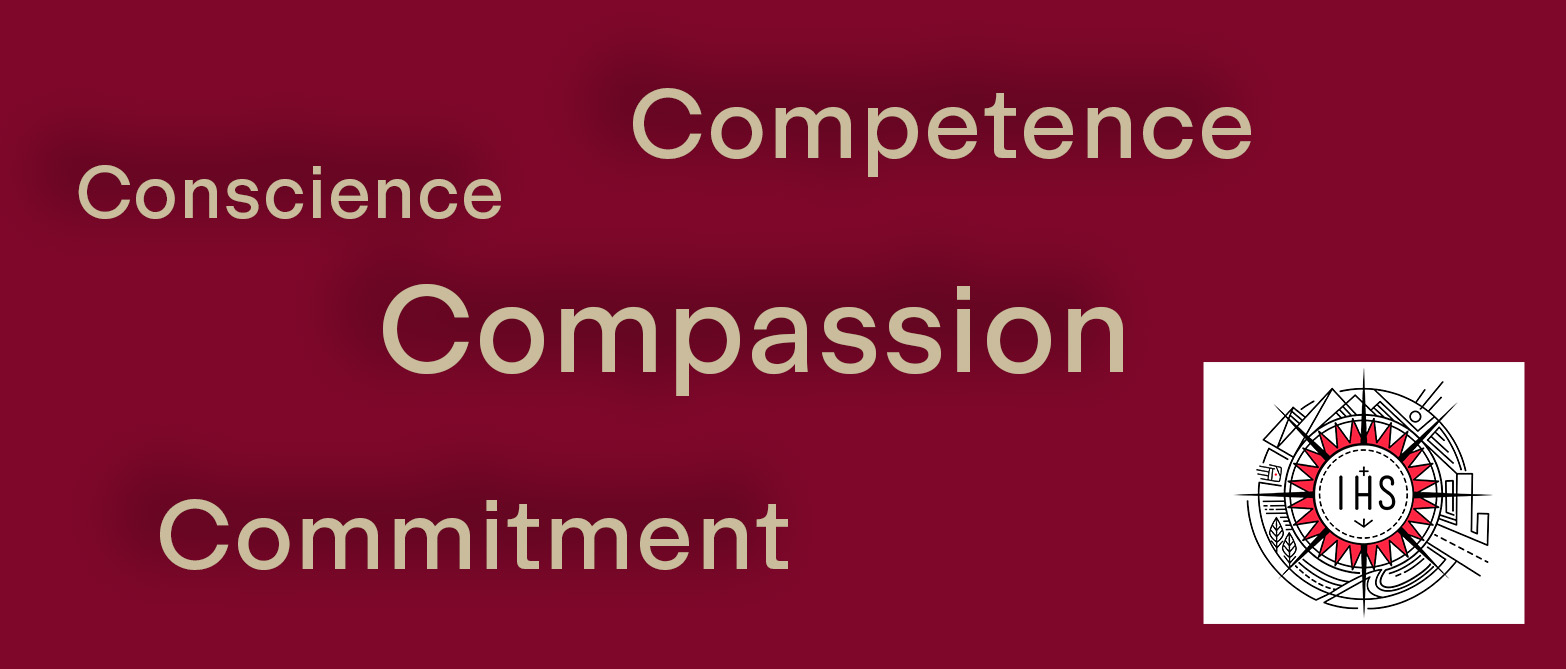
While Ignatian pedagogical pillars such as cura personalis (care of the whole person), magis (more, to a greater extent), and homines pro aliis (men and women for others) remain at the heart of Fordham’s educational mission, additional language has emerged in recent years to convey the spirit of these values in accessible terms. “The Four C’s of Jesuit Education: Conscience, Competence, Compassion, and Commitment,” first introduced in 1993 by Fr. Peter-Hans Kolvenbach, SJ, dovetail with the School’s focus on business with purpose and are being adopted by the Strategic Plan Applicant to Alumni (A to A) project team.
“The Four C’s use words people can relate to and understand,” said Heather Gevertz, executive director of development and alumni relations and co-chair of the A to A project team. “The inclusive nature of the language makes it possible for everyone to connect with these concepts and tap into them throughout their careers. It's not just about words and definitions. It's about how you live your life as an ethical, responsible person and professional.”
To ensure The Four C’s undergird every aspect of the Gabelli School experience, the project team has devised a matrix for success. “We’re creating an infrastructure around these values, reimagining the lifelong learner journey from applicant to alumni in order to promote continuous growth, professional development, and alumni and community engagement,” said Elizabeth Cosenza, JD, associate professor of law and ethics and co-chair of the project team, who also is a Fordham College Rose Hill graduate.
In educational terms, the Four C’s emphasize individualized support addressing the unique needs of each student, coupled with hands-on learning, service-based projects, career development opportunities, and global immersions. These experiences complement a rigorous curriculum designed to prepare students to lead with purpose and integrity during their time at the Gabelli School and beyond. For example, entrepreneurship outreach programs, ranging from the BuildOn Fordham Youth Program in the Bronx to ¡GO! Rwanda, enable students to impact local and global communities while building their skills. Graduates emerge prepared to make ethical decisions; create compassionate workplaces; build organizations grounded in sustainability and shared responsibility; and launch socially conscious ventures on the global stage.
Cosenza believes the Four C’s will help stakeholders understand the Gabelli School’s approach to operationalizing these values. “We hope it crystalizes for our students, parents, alumni, and partners what is truly powerful and transformative about Jesuit education,” she asserted. “It isn’t just about nurturing capable minds; it's also about character—who students are going to become and how they're going to show up in the world. We hope they will approach their work and their communities with a sense of purpose, compassion, and commitment.”
Written by: Kimberly Volpe-Casalino