The Authors Series: “More Than Play” with Dionne Koller
The Authors Series: “More Than Play” with Dionne Koller
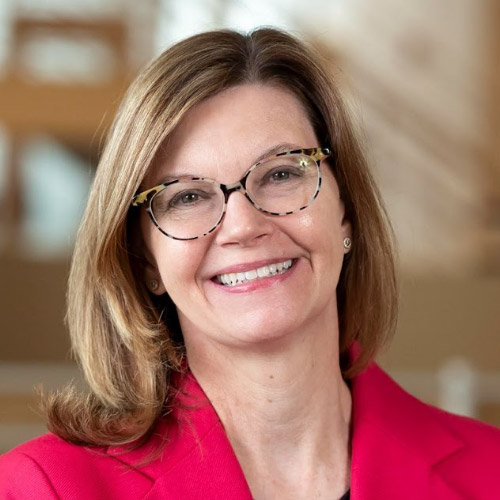
While the benefits of youth sports have often been repeated enough to be a truism, that general notion often skips some warning signs. Is the present system of organized sport the best way to support youth and teen well-being? Are there too many other stakeholders affecting the youth sport experience, including parents, coaches, schools, media, and the college and Olympic sports movements? Should the legal norms and political atmosphere be changed?
Addressing these questions is today's guest, Dionne Koller, professor of law and director of the Center for Sport and the Law at the University of Baltimore Law School. Her book, More Than Play: How Law, Policy and Politics Shape American Youth Sport, has just been published by the University of California Press.
Dionne is the first guest in a new series spotlighting authors of important new books addressing key issues in sports. Tune in for an informative and timely conversation.
-
00;00;00;00 - 00;00;44;10
Mark Conrad
Hello and welcome to the Sports Business Podcast with Prof C, the podcast that explores the world of professional, collegiate, amateur, and Olympic sports. I’m Mark Conrad, or Prof. C, from Fordham University’s Gabelli School of Business, where I serve as Professor of Law and Ethics and the Director of the Sports Business Initiative. Millions of children and teens participate in some kind of organized sport activities. But millions do not.00;00;44;13 - 00;01;22;14
Mark Conrad
Some engage throughout their childhood and teenage years. But others quit by the time they reach adolescence. This poses some serious questions. While the benefits of youth sport have been repeated often enough to be a truism, that mantra often skips some warning signs. Is the present system of organized sport the best way to promote youth and teen well-being? Are there too many other stakeholders that affect the youth sport experience – like parents, coaches, schools, media, and the college and Olympic sport movements.00;01;22;17 - 00;02;05;07
Mark Conrad
Should youth sport incorporate more aspects of unsupervised play rather than the rules and regulations of associations? Should the legal norms and political atmosphere be changed? These questions will be addressed by today’s guest, Dionne Koller, professor of law and director of the Center for Sport and the Law at the University of Baltimore Law School. Dionne is the author of a new book examining youth sport, titled “More Than Play” – How Law, Policy and Politics Shape American Youth Sport,” and it has been published by the University of California Press.00;02;05;09 - 00;02;40;00
Mark Conrad
Dionne is a nationally recognized authority on sport law, particularly in the areas of youth, Olympic, Paralympic, and education-based sports. In 2021, she was appointed to co-chair the Commission on the State of U.S. Olympic and Paralympics, which delivered its final report to Congress in 2024. She is a member of the United States Anti-Doping Agency’s Administrative Review Panel. She has won numerous awards and honors for her scholarship and teaching,00;02;40;02 - 00;03;05;23
Mark Conrad
and prior to entering law teaching, she practiced law at the firm of Akin, Gump, Strauss, Hauer & Feld, in Washington, D.C. Dionne, welcome to the Sports Business Podcast as our first guest in a series of prominent book authors. [Dionne Koller: Mark, thank you so much for having me here.] It's a pleasure. It’s a pleasure. So let’s start with the title of your book – More than Play.00;03;05;25 - 00;03;28;12
Dionne Koller
[Mark Conrad: Can you describe the difference or similarities between “sport” and “play”?] Well, one of the things that really surprised me as I undertook the research for this book is that there is a difference between “play” and “sport”. I think we often sort of mix it up as we discuss these things colloquially. We just assume sport is just kind of a form of play.00;03;28;14 - 00;03;58;12
Dionne Koller
And to some extent it is, but what I found is a very deep literature, a very deep philosophical literature that talks about the definitions of these activities. And they are very different, and the difference is with play, the person engaging in play reaps all the benefits. So all the benefits of play – play is a self-directed activity. When we play, we decide when we start, when we stop, how much we’re going to do, how little we’re going to do, and how that process will flow.00;03;58;20 - 00;04;26;24
Dionne Koller
Whatever benefits come from our play, the benefits flow to us and us only. In sport, that is an activity, quite in contrast, where the benefits flow only to the individual engaging in sport, but benefits can flow to a whole host of others. So when you engage in sport, fans get benefits, coaches can get benefits, administrators can get benefits.00;04;26;24 - 00;04;56;17
Dionne Koller
So there’s a much greater opportunity with sport to benefit many others besides the person engaging with it. And with play, the benefits start and end with the person. [Mark Conrad: And in short, we get to the point of your book. You explain that the present US system is, quote, “dysfunctional at best, broken at worst.” Why is that so?] So that language, that was an assessment given by the Aspen Institute Project Play.00;04;56;17 - 00;05;19;28
Dionne Koller
I found that in my research and I thought it was really important to spotlight that because I think it really captured perfectly what the state of US youth sport is. And so I think the meaning behind that is dysfunctional at best, broken at worst means that we have a system that has not been sort of thought about, conceived of.00;05;19;28 - 00;05;38;19
Dionne Koller
It's not the product of public policy in the sense that anybody in power at the state or federal level has come together and had a process and said, gee, what should the goals be for youth sport? Should we have minimum safety standards? What do we want kids to be able to do? What are we using youth sports for?00;05;38;27 - 00;06;04;22
Dionne Koller
We've done very little of that. And so what we have is a policy choice to let the free market just sort of operate. And of course, that's important too. We are a free market society. We’re a society that sort of emphasizes that. But in so many ways, that free market working with parents and private youth sport providers by and large, of course we know some sports for kids are embedded in schools,00;06;04;25 - 00;06;26;25
Dionne Koller
but that arrangement, that partnership has been dysfunctional, if not in many cases broken because we don't have those guardrails. We don't have those minimum safety standards. We don't have anybody making sure, “Hey, have these coaches had a background check? Is it safe for my child to be around this person?” for instance. So, I think that's one of the issues.00;06;26;25 - 00;06;59;07
Dionne Koller
I think one of the other issues is it's expensive. When you let the free market and parents just sort of dictate what your youth sport experience is gonna be, more is more. And the cost goes up, there's more travel, and that leaves many more kids on the sidelines. So I think there's many, many ways in which the lack of sort of planning, thinking, any structure for what youth sport is, and any real national conversation about what we want for youth sports leaves it to be whatever the market says it is.00;06;59;07 - 00;07;26;12
Dionne Koller
And what we've seen is that that can have a lot of negative consequences. [Mark Conrad: And we'll get to some of the specifics in a bit, but a general question. Do you think it has gotten worse in the last 20 years?] Yes, I think it has gotten worse. It's gotten worse in several ways. I think what we know historically is that there used to be more, for instance, rec leagues and publicly funded sports opportunities at the state and local level,00;07;26;15 - 00;08;09;21
Dionne Koller
certainly. Those have by and large disappeared. And so even public lands now are more often just leased to or given permits for private youth sport providers. And again, that's not to condemn all of that. That can be really great, but it just makes it much, much more expensive for participation. In addition, within the last 20 years, we've seen the rise of something called youth sport tourism, where state and local governments have realized that youth sport tournaments can be a really powerful thing to attract people to come to their area, come to their state and fill hotel rooms and fill restaurants and generate revenue for local governments.00;08;09;21 - 00;08;31;25
Dionne Koller
So I think a lot of the things that drive what are characterized as some of the problems for youth sports have really occurred over the last 20 years. [Mark Conrad: And it also accentuates that division between the traditional play and the organized sport that is really one of the theses of your book.] Exactly, exactly. [Mark Conrad: And let's go to the law]00;08;31;25 - 00;08;56;17
Mark Conrad
and legal policy since you are a law professor and discuss some of the legal and governmental and even societal attitudes that have resulted in this system. So could you give us a specific example of where you think something may have gone off the rails in the last quarter century that's a particular yellow light or red flag00;08;56;20 - 00;09;17;29
Dionne Koller
[Mark Conrad: ...that the public should be aware of.] I think probably, I mean, there are a lot of examples, but I would pick probably youth sport concussions as an issue and our policy response to that. So, as I talk about in the book, the usual kind of reflex of state and local governments is stay out of sports at all levels.00;09;18;02 - 00;09;40;12
Dionne Koller
Of course, as I break down in the book, and Mark, you well know this, the government and law is all over sport in many ways, but we talk about this assumption, well, the government should stay out of sports. What we had, which was interesting within, again, the last 20 or so years, is the concussion issue at all levels of sport became huge.00;09;40;14 - 00;10;15;26
Dionne Koller
We started to better understand the dangers of sports concussions and certainly the dangers of youth sport concussions because children were dying sometimes from a second hit after an unrecognized concussion or they were badly, badly injured. So what we had was a period where all 50 states adopted youth sport concussion legislation, which says that if a child is suspected of suffering a concussion during certain defined sports, youth sports - it can be high school, it can be private youth, depends a little bit, state to state00;10;15;29 - 00;10;42;08
Dionne Koller
- the child must be removed from play and cannot return until cleared by a suitable medical practitioner. So one of the things about those statutes, I think, and I've written about this, Mark, in my scholarship, those statutes can be terrific in terms of sending a message that we now take sports concussions seriously. And certainly those statutes put in the conversation around youth sports,00;10;42;08 - 00;11;07;26
Dionne Koller
hey, we need to be watching out for this. On the other hand, what I think is the tragedy is that those statutes, none of them provide for any kind of liability, cause of action. They're not…they're sort of self-executing, so to speak, in the sense that, you know, if you're a parent or somebody watching sports and believe a child has suffered a concussion, it relies on you to sort of identify it and pull the child out.00;11;07;28 - 00;11;28;14
Dionne Koller
But there's no repercussions if that doesn't happen. And so what public health research has shown is that these statutes are just not effective at all, but what they have done is created kind of an impression or a feeling that some of these games have been made safer, right? There are laws about them. So isn't this a safer experience?00;11;28;21 - 00;11;49;18
Dionne Koller
And I think what public health authorities have concluded is, “not really.” In addition, what we know is that most parents aren't neurologists, Mark. They don't know if their child has suffered a concussion. And so whatever these statutes say about removing a child from play, we don't by and large have trained coaches, and certainly parents, most of them are not trained.00;11;49;24 - 00;12;14;23
Dionne Koller
And so kids are continuing to suffer concussions in play and nothing much is being done about it. [Mark Conrad: And I poll my students in my undergraduate sports law classes and ask how many of them have had concussions. And over the last few years, a surprising number raised their hand in a variety of sports, whether it's lacrosse, whether it's hockey, whether it's football.]00;12;14;26 - 00;12;36;16
Mark Conrad
And I would ask, what were the protocols? And I said, well, yeah, I had to be taken out and rest for a week and the like. And some have had more than one concussion, which, I am not a neurologist, but it can't be good. And you wonder, do you think part of it also is that sometimes the sports are more competitive,00;12;36;16 - 00;12;53;29
Mark Conrad
the students, the kids are bigger, stronger than they were at one time? Do you think that may contribute to the problem too? [Dionne Koller: Well, I mean, certainly I'm not a public health official, so I'm not going to speculate on that. But what we do know about what's happening in youth sports is that we're weeding kids out much earlier.]00;12;54;05 - 00;13;13;19
Dionne Koller
So rather than playing with a cross section of kids who might be all different shapes and sizes because we know kids mature at all different levels, it's very likely that kids today, especially as they move through the ranks of organized youth sport, are playing with kids who are bigger, stronger, faster because we've weeded out the other ones.00;13;13;19 - 00;13;32;04
Dionne Koller
We're not waiting to see if there are any late bloomers in the bunch. That's a failing of our youth sports system if you're interested in finding all the greatest athletes for the higher levels of sport because we're determining who's an athlete or not at much younger ages. But it certainly could have those public health effects as well.00;13;32;07 - 00;14;00;14
Dionne Koller
But I would note, Mark, when you poll your classes, certainly I do the same thing in my classes, have these discussions, most of our students, certainly many of our students, it can vary a little bit law school to law school, have come from some form of privilege. They had parents who could afford youth sports, and so they were parents who were probably a little more able to be sophisticated around, “Wait, what does the law say? How do I get my kid medical care for this?00;14;00;14 - 00;14;23;04
Dionne Koller
Does my child need medical care?” And so a lot of kids, again, are either left on the sidelines or if they're participating, they don't have caregivers that are doctors and able to know, “my kid is hurt.” [Mark Conrad: And that economic divide you think is increasing?] Well, I think it increases as youth sports gets more expensive.00;14;23;06 - 00;14;49;11
Dionne Koller
You know, it's the sort of as inequality in society overall is continuing to grow, youth sport in this way just mirrors what's happening in society. And as the haves continue to have more, they will, I think logically, you can think they’re going to spend more on their children. And that's certainly what I think private equity investors are betting on as they start to invest in youth sports.00;14;49;14 - 00;15;13;25
Mark Conrad
And that's a fascinating and potentially troubling development that you've gotten a stronger business stakeholder in this. You’re transferring it from a fun passion to a business model. [Dionne Koller: Yeah, right. I mean, youth sports really very much as a business model and there's so many kind of adjacent services and products and apps and all kinds of things.]00;15;13;25 - 00;15;36;06
Dionne Koller
So lots of stuff has sprung up around youth sports. So that one of the things I talk about in my book is let's go through who are all the stakeholders? Who are the various actors in our society who have a stake in whether kids take up sport and stick with it? And so when we discuss youth sports and say, gosh, this is all for the kids, this is to benefit kids,00;15;36;08 - 00;15;54;27
Dionne Koller
it may be true sports participation. I was an athlete growing up. I put my kids in sports. I think there can be lots of benefits to sports. But when we talk about it as this is for the kids, what I wanted to do in my book is say, well, it's actually for a longer list than just the kids. [Mark Conrad: And let's break down those stakeholders.]00;15;54;28 - 00;16;17;15
Dionne Koller
[Mark Conrad: Like, if you were to list them, who do you think are the principal stakeholders besides the kids?] Yeah, I mean, you can start at the top, which is, of course, sports sponsors and anybody investing as a sort of youth sport provider that is making money on selling a youth sports experience and selling things that are sort of collateral to or adjacent to that experience.00;16;17;15 - 00;16;55;22
Dionne Koller
You know, you have the hockey programs and then you have the folks that sell hockey sticks, right, to single out a sport that my son played and that we really loved. But so there's that whole sort of billions and billions of dollars just on providing the experience. But then you go from there and you realize, well, sports medicine providers, for instance, this is something that was not immediately apparent to me until I started doing the research. As games have gotten more professionalized, as kids have been more encouraged to specialize in a sport at an early age, that comes with a lot more injuries.00;16;55;24 - 00;17;26;04
Dionne Koller
And guess what? Sports medicine providers are here to provide the care. So, and again, neither bad nor good. I'm glad there are doctors out there that treat children. But as we've created a model that creates injuries, and that's the language of the healthcare community, that's not mine. You know, we have healthcare providers there to step in. As the games have been made and continue to be, some dangerous for kids tackle football, collision sports, ice hockey, and others.00;17;26;07 - 00;17;46;26
Dionne Koller
You need to have athletic trainers, certainly. We don't in most youth sport experiences, but there's been a growing need for athletic trainers to be there because some of the injuries can be quite serious. So that's certainly a stakeholder. State and local governments, as I said, with youth sport tourism, this is an economic driver.00;17;46;26 - 00;18;15;28
Dionne Koller
This is a stimulus idea. Let's bring a softball tournament to our area. And so state and local governments are stakeholders. Certainly professional leagues, the Olympic and Paralympic movement. We make elite athletes at a pretty good rate in this country. And so I talk about how all the higher levels of sport - college sports, Olympic, Paralympic, and the pros rely on a youth sport model that churns out really talented kids.00;18;16;00 - 00;18;38;14
Dionne Koller
The effect of this is that all the way down to the high school level, Mark, and I know you know this, it's even competitive to make a high school team now. And most parents, research shows, aren't just putting their kids into youth sports with the hope of getting a college scholarship or making a college team. They're doing it with the hope that their child can make a high school team, which is really stunning.00;18;38;16 - 00;19;04;05
Mark Conrad
We are speaking with Professor Dionne Koller, discussing her new book, State of Play, How Law, Policy and Politics Shape American Youth Sport. So let's move on more to the legal system and you alluded to this a few minutes ago, but we can be more specific. How does the legal system perpetuate the problems with youth sport? [Dionne Koller: Well, you're right, I alluded to it.]00;19;04;05 - 00;19;33;10
Dionne Koller
I think there's several assumptions, and I talk about these assumptions in the book and kind of unpack them and what they mean for youth sports. One of the assumptions, as I mentioned before, is that the government should not be involved in youth sports, right? The government should take a hands-off approach. So at the state and federal level, we have little to no regulation of the youth sport experience. Which when you compare youth sports to say other products and services that touch children is quite unusual.00;19;33;12 - 00;19;54;29
Dionne Koller
So that's one assumption. I think the other assumption that we see a lot in case law, and I talk about this as well, is that if, for instance, we hold a youth sport provider liable for negligence for a child's injuries or a coach liable for a child's injuries in sports, that will destroy all of youth sports.00;19;55;01 - 00;20;19;07
Dionne Koller
And that's not my hyperbole, Mark, that's the words of court cases which say this could in fact destroy youth sports or youth sports opportunities will disappear. What little research we have on that assumption shows that they won't disappear. And that in fact it could encourage some better youth sport practices. But I think we have some faulty assumptions in youth sports00;20;19;09 - 00;20;51;23
Mark Conrad
[Dionne Koller: and that really gets in the way of reform.] And on the, let's say the court side, the common law side, we have the doctrine of assumption of risk. And that's something that you teach, I teach. And it's a concept that basically says that one risks or injury from the inherent nature of the sport and precludes a lawsuit for negligent in simple terms. Like you really can't sue because you know, you're voluntarily playing the sport or your parents allow you to play the sport. So you get injured;00;20;51;26 - 00;21;20;14
Dionne Koller
[Mark Conrad: in most cases, you really don't have a right to sue, with some exceptions. Do you think that that poses a major problem regarding the system?] I think it can. One thing about assumption of the risk, it means that the use court providers don't have a duty. And so you can't sort of make out a or makes it very difficult to make out kind of that prima facie case for negligence, for recovery.00;21;20;14 - 00;21;38;20
Dionne Koller
And I think a lot of parents are surprised when they learn about assumption of the risk, when there are some catastrophic or other types of serious injuries to their child, they bring a lawsuit. And then the court responds by saying this is just part of the game. So certainly this is basic tort doctrine,00;21;38;20 - 00;22;05;26
Dionne Koller
Mark, as you and I both know, we teach it, it's first year law school stuff. It's not significant from that perspective. What I think is significant, however, is that this is the same doctrine we use at professional level, at the collegiate level, at adult levels of sport. And so what's interesting to me is that we haven't taken any steps at all to sort of make adjustments.00;22;05;29 - 00;22;25;26
Dionne Koller
The idea is this is the game, it's very dangerous. And I've read briefs and cases involving catastrophic hockey injuries, for instance. And it's the same thing, which is this is just a dangerous game and that's too bad. And so the question I ask with my book is, well, why can't we make adjustments to the games,00;22;25;29 - 00;22;55;08
Dionne Koller
for instance, at the children's level? Why does the professional standards of care, professional level, adult level, tort law standards, why don't we adjust them for children? Because we make adjustments, Mark, again, as you well know, we make adjustments in areas of law for children all the time. And so to me, it is quite striking that in this case, we adhere to these kind of grownup standards,00;22;55;08 - 00;23;21;16
Mark Conrad
[Dionne Koller: even when kids are playing sports.] You talk about the idea that, of course, parents had a strong, represented the legal rights of children because they're too young to do it themselves until they reach the legal age of adulthood. And that has an effect on decisions regarding sports. Do you think that that should be changed in some way?00;23;21;18 - 00;23;48;01
Mark Conrad
I'm inferring that…do you think parents always have the best interests of their children when they commit to making decisions regarding participation in sport? [Dionne Koller: Yeah, so this is such a complex issue and it was really interesting to me because I lived this, Mark. I had two kids in sports. And so I sort of saw how my own interests could easily get wrapped up in my own goals for my child, wrapped up in what my kids were doing.]00;23;48;03 - 00;24;07;16
Dionne Koller
So I think the law very rightfully gives parents the primary power to make decisions for their children and deciding whether their kids will be in youth sports or how much. And there's a wide range of decisions that get made. I talk about, you know, redshirting kindergarten, right? That's all left for parents to decide.00;24;07;16 - 00;24;32;17
Dionne Koller
And I think that's good thing that the law does that and defers to parents in most cases. But what we also know is that there are lots of examples where the law says that there's too much of a…of a fear or worry that parents will not necessarily be able to make the right decision for their children or the parents might have a conflict of interest.00;24;32;17 - 00;24;51;16
Dionne Koller
And so the law needs to step in. And so, Mark, one of the things I talk about in the book is, for instance, child labor statutes, right? Parents back in the old days would send their young children into factories to go to work because it helped the family's bottom line. Parents had a conflict of interest00;24;51;16 - 00;25;18;24
Dionne Koller
and so the law says in cases where it could be unsafe, unwise, it could really impact a child's development, the law needs to set some guardrails. Same thing with sort of minimum age for drinking or smoking and accessing tobacco products. There are some things where we say parents don't have the ability to decide that their children can do these things because the law or the state needs to step in and protect kids.00;25;19;01 - 00;25;45;28
Dionne Koller
So I think there's room for that in youth sports. We don't have any of that in youth sports right now. We completely defer to parents. And what the research shows, as I previously mentioned, first of all, we know parents aren't necessarily, most of them, qualified neurologists who can diagnose things like a sports concussion. So parents having the authority to step in in sports is useless when they don't know and can't exercise their authority.00;25;46;01 - 00;26;19;18
Dionne Koller
But in addition, the research is crystal clear, Mark. That, and I certainly again felt this myself, I don't know if you did with youth sports, but parents can become quickly and easily sort of blinded to what's in their children's best interest and push their kids too hard. And it's not just extreme examples, it's rather easy to become sort of caught up in your child's youth sport experience, push them to keep participating and specializing, and that can have long-term effects on their bodies and minds.00;26;19;18 - 00;26;46;07
Dionne Koller
And so I think there is a role for the law to step in and sort of temper parental rights as we've done in so many other areas that touch on children's lives. [Mark Conrad: So, for example, would you say that a law could be passed barring tackle football for anybody under, say, 14?] I think you could. I think politically, we know that movements to ban tackle football have not been successful.00;26;46;09 - 00;27;15;18
Dionne Koller
Football of any game really is something that in some parts of the country has been called almost a religion. So I don't think politically you could do it, but I think the state could certainly would have the power to do it under a parent’s Patria (?) theory, under a sort of just general health and safety powers to say, that we have enough research to know that children tackling each other with their developing brains and bodies is not a good idea and we want to limit that.00;27;15;18 - 00;27;52;04
Dionne Koller
And so the states that have tried it have not succeeded. I think California has some limits on the number of sessions, kind of full contact sessions, but in general, politicians have just stayed away from it. [Mark Conrad: And you made that illusion just now, which I was just going to bring up, that you talked about children as de facto laborers under this system. And under American labor law, if you're under 14, you cannot legally work. And those of us who remember from middle school and high school, if you did work, you had these restrictions at 14, 15, 16,] 17.00;27;52;11 - 00;28;15;25
Mark Conrad
You had these working papers to fill out, things like that. But you don't see that in sports. [Dionne Koller: Right, right, no, there's none of that. And what I talk about is that children's efforts in youth sports can quickly start to look like work and the type of work that we don't acknowledge, the type of work that has gone on in families. For instance, the analogy I make is to women's work in the home.]00;28;15;28 - 00;28;35;13
Dionne Koller
We used to say that women just did all the cooking and cleaning and childcare and all that stuff that makes a household run, that we know can be quantifiable and counted as labor, but we used to just say sort of in a dismissive way, that's not work, that's just a mother's love, right? I think the same thing can be true00;28;35;19 - 00;28;56;06
Unknown
with children. They can quickly start putting in, and the Aspen Institute has talked about this, 10, 20 or more hours a week. And certainly when you talk about traveling and going to tournaments, the hours can pile up, and it can quickly take something that is a recreation or leisure activity and it can look like work.00;28;56;09 - 00;29;22;07
Mark Conrad
Well, speaking of youth sport, I do want to relate a personal anecdote. Most of my colleagues or many of my colleagues in the sport law and business area have played sport on a certain level. And many have been actually athletes that have been rather successful. I must be an exception to that because I was the kind of kid that hated team sport.00;29;22;09 - 00;29;42;17
Mark Conrad
I was the kind of kid that people didn't want on the softball team. I was the kid who struck out at the end of a game. And I remember, you know, I'm 60 some odd years old. I was 12 and we were losing 12 to 11 and I was the last batter and struck out and it was just crushing.00;29;42;19 - 00;30;06;04
Mark Conrad
Crushing. . I mean, it was that and I could hear other kids saying things and you know, what does that do? I didn't want to do sports. Of course. I really retreated. I didn't want to do it. My parents said you gotta do something for your body. And it took a long, long time until I found out my version of play, which was running. And running was just absolutely great,00;30;06;04 - 00;30;27;14
Mark Conrad
although I was much older, because I could do it my own pace. I didn't race against anybody. I raced against myself. And I really got to like it. And I would say to the audience, and people may wonder, but one of the greatest achievements in my life was completing the New York City Marathon in over five hours.00;30;27;14 - 00;30;50;21
Mark Conrad
This is not a great time, folks, as you know, but still, it was an incredible achievement, but it came myself. In other words, I didn't rely on the system because I think the system may have hurt my interest. And I say that because there may be millions of other people like me. And I thought about that in reading the book. Through the book,00;30;50;21 - 00;31;15;14
Mark Conrad
I said, yeah, I was that kind of kid that just hated it, hated gym, couldn't sleep at night before gym class stuff. And what do you say, you know, as a scholar in the area, as a parent to somebody, you know, who is that kid or is a parent of that kid? [Dionne Koller: Well, Mark, I'm just so glad you brought that up.]00;31;15;14 - 00;31;37;29
Dionne Koller
First of all, congratulations on completing the marathon. That's not an achievement I will ever, ever attain. I think, you know, and it's interesting because I was the opposite. I was a kid who was involved in the sport of gymnastics, had some success and really loved it and felt like the system was a good thing for me in many ways.00;31;38;02 - 00;32;19;29
Dionne Koller
But I think your point is the point that we are not dealing with in our policy around youth sports. There are millions of kids who, for whatever reason, their minds, their bodies, they're not born or built to be the next LeBron James or Simone Biles or Michael Phelps. And we have a system that is aimed at finding those kids and elevating those kids and sort of shedding the rest. And that's really turning our back on what the supposed values of youth sport participation are, which is lifelong health, achieving goals, understanding and kind of learning self-discipline,00;32;20;01 - 00;32;40;26
Dionne Koller
working toward these goals. You didn't run a marathon overnight, you had to prepare. And there were some sort of personality characteristics that get kind of honed in that process. And so that's what we want youth sports to be for, but we're delivering youth sports with a model that screens out the Mark Conrads of the world. That's a mistake00;32;40;28 - 00;33;10;12
Dionne Koller
from a public health perspective. It's a mistake as well because, Mark, you know what? Who knows? Maybe you could have been the next Michael Phelps or LeBron James, but you sort of internalized a message early on, sports aren't for me. In addition, we don't provide because we rely so heavily on the private sector, which chases what's already popular as opposed to seeing sort of a range of sports for a range of bodies and minds and personalities.00;33;10;14 - 00;33;32;00
Dionne Koller
Mark, you might’ve been the next great rock climber or skateboarder or any number of things that we know can be sport experiences, but we offer kind of the traditional menu. When a kid doesn't get good at a sport on the traditional menu quickly and early on, they internalize the negative messages and most often they walk away.00;33;32;00 - 00;33;57;11
Dionne Koller
So I'm delighted to hear that you connected, reconnected with sport as an older person. But most of the time kids don't, we just turn them off. And so I think that's a mistake. [Mark Conrad: And let's focus on the present system and girls, girls and young women. Do you think that the system makes it particularly difficult for girls to continue participation when they become teens?]00;33;57;14 - 00;34;20;01
Dionne Koller
It really does. I mean, there's a lot of research on this and it's multifactorial. We know that most kids who are involved in youth sports quit by the age of 13. Lots of reasons why. Primary reasons though are burnout, injuries because of the epidemic, what the medical community calls the epidemic of overuse injuries.00;34;20;04 - 00;34;41;06
Dionne Koller
But what I talk about in the book, what’s particularly, I think, troubling about girls’ participation is we get girls involved in youth sports. Push them hard. We have lots and lots, millions of girls, Mark, who are good at sports. And then they hit a ceiling because the truth is Title IX, it's more than 50 years old at this point, has never been fully enforced.00;34;41;06 - 00;35;06;23
Dionne Koller
High schools and colleges and universities still are not giving girls the number of opportunities that they should have under the law. And so all these girls that get good at youth sports, if they're looking for a high school or a college participation opportunity, very often they're not able to find it. And so we know that there are some growing professional women's sports leagues,00;35;06;26 - 00;35;33;17
Dionne Koller
but because we haven't fully enforced our gender equity laws around sports participation opportunities, girls that are good as children hit a ceiling and there's nowhere for them to go. [Mark Conrad: And let's talk about those who have physical or developmental disabilities. That is something that is not discussed a lot. And what about their opportunities for sport and how important it could be for them?]00;35;33;19 - 00;35;56;17
Mark Conrad
Is there a system in place that deals with kids in those categories? Or do we have to create one that's fair and equitable? [Dionne Koller: Well, I think it depends on what system you're looking at. Certainly we have the Paralympic movement - that's worldwide - and our United States Olympic and Paralympic Committee and governing bodies for Paralympic sport]00;35;56;20 - 00;36;24;17
Dionne Koller
are looking to develop grassroots sports opportunities to get children into the Paralympic pipeline. We're a very successful country in the Paralympics. We have some tremendously successful individual para athletes and so to some extent that pipeline is doing okay. But if you look at the millions of children with various types of disabilities who could benefit from sports, we're not doing okay at all.00;36;24;17 - 00;36;49;24
Dionne Koller
So in high school sports, the Rehabilitation Act, as you know, Mark, would apply and would require schools to provide equitable opportunities for children with disabilities to participate. High schools are doing what they can. They're doing the best they can with tight budgets. But we know children with disabilities again at the high school level in high school sports don't get the number of opportunities that they should.00;36;49;26 - 00;37;20;19
Dionne Koller
You know again, we're always we're seeing growth, but not as much given how long that law has been on the books. Then you look at the category of private youth sports, and I think this here is where there is such an opportunity for growth, we just don't have a lot. And so parents with children with disabilities who need various types of adaptive or para sports experiences have to go drive long distances, look far and wide.00;37;20;19 - 00;37;50;01
Dionne Koller
Sometimes there's specialized equipment that can be very expensive and that is a barrier. So we absolutely need to do more. There are millions of children with disabilities who would benefit tremendously from sports. We have research that shows this would be a fantastic thing and we just aren't doing enough at any level really. [Mark Conrad: And you conclude the book by saying that the hands-off approach to American youth sport serves the power structure.00;37;50;03 - 00;38;11;05
Mark Conrad
But what solutions would you propose or think about for the future? [Dionne Koller: Well, what I really hope comes from this book, Mark, I didn't propose a solution in the sense that I didn't say in the book, there is one right way to do youth sports and here's what that way is. What I want the book to do is to spur policy conversations.]00;38;11;07 - 00;38;33;09
Dionne Koller
We know that sports look different, for instance, in the Deep South than say New England. There are different sports that are popular in different areas, different levels of participation, different types of facilities, and et cetera. So what I want the book to do is for policymakers, first and foremost, to understand that there's a conversation to be had here.00;38;33;12 - 00;38;55;23
Dionne Koller
We often sort of immediately say, “Oh no, we can't quote unquote regulate youth sports. We're not like China, right? We're not gonna sort of pluck kids from their families and send them to youth sport training centers like communist countries do. But there's so much policy space to have conversations about common sense reform, minimum safety standards.00;38;55;25 - 00;39;13;06
Dionne Koller
What are our goals? Can we do more public funding for sports? There are conversations to be had at the state and national level, and I hope that we start having them. Secondarily, I think a lot of parents just assume this is the way it has to be. And so I can't say anything. I can't do anything.00;39;13;12 - 00;39;35;19
Dionne Koller
I think parents need to be empowered. Again, talk to your legislators, talk to your youth sport providers, realize that it doesn't have to be this way. [Mark Conrad: And do you think in a polarized political environment right now, there is that possibility that there could be some kind of bipartisan consensus, at least on a national level, to have some kind of meaningful reform?]00;39;35;21 - 00;40;02;20
Dionne Koller
Well, there is so much political interest in youth sports from the perspective, and I talk about this in the book, from the perspective of promoting it as a wholesome activity. And so I want to believe that where there is such strong bipartisan support for the idea of youth sports participation, that we could find pathways for. And in fact, in the commission report, I co-chaired the Commission on the State of U.S. Olympics and Paralympics,00;40;02;27 - 00;40;47;15
Dionne Koller
one of our recommendations was that there should be kind of national conversations about say minimum safety standards, just some sort of basic minimum guardrails for youth sports. And I would hope that there could be some bipartisan consensus around that. [Mark Conrad: And on that note, we do have to come to an end of our conversation. On behalf of Fordham University, the Gabelli School of Business, and the Sports Business Initiative, I want to extend my thanks to Professor Dionne Koller of the University of Baltimore Law School and the author of More Than Play, How Law, Policy and Politics Shape American Youth Sport, published by the University of California Press.]00;40;47;17 - 00;41;13;25
Mark Conrad
The book, which I strongly recommend, examines an underrated and under-reported issue. It is definitely eye-opening. I also want to acknowledge my producer, Victoria Ilano, for her great work in preparing and editing this episode. And many thanks to all of you for listening in. For the Sports Business Podcast at Fordham’s Gabelli School of Business, I’m Mark Conrad, or Prof. C,00;41;13;27 - 00;41;24;01
Mark Conrad
have a great day.