Barry Rosenfeld
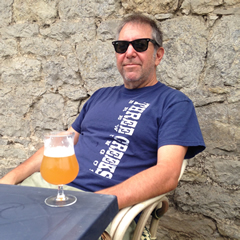
Professor of Psychology
Curriculum Vitae
Email: [email protected]
Rose Hill Campus: Dealy Hall, Room 215
Phone: 718-817-3794
Check CPDP Admissions Information to see if I am taking new doctoral students for next fall.
-
Barry Rosenfeld is a Professor of Psychology and Adjunct Professor of Law at Fordham University. Dr. Rosenfeld received his doctorate in Clinical Psychology from the University of Virginia, and completed a post-doctoral fellowship in bio-ethics and consultation-liaison psychology at Memorial Sloan-Kettering Cancer Center. He worked for several years as the Senior Psychologist for the New York City Forensic Psychiatry Clinic prior to joining the faculty of Fordham University in 2000. He has served as Director of Clinical Training (2006-2012) and Chair of the Department of Psychology (2014-2020). He is the past President of both the American Psychology-Law Society (Division 41 of the American Psychological Association) and the International Association of Forensic Mental Health Services. He is also former Editor-in-Chief of the International Journal of Forensic Mental Health and currently serves as a member of the editorial boards of Law and Human Behavior, Assessment, Psychological Assessment, and the International Journal of Forensic Mental Health.
Dr. Rosenfeld has published more than 200 peer-reviewed articles, book chapters, books and invited publications. His research encompasses a wide range of topics related to forensic and health psychology, including malingering, stalking and violence risk assessment, as well as treatment decision-making, desire for hastened death and refugee mental health. He has been Principal Investigator or Co-Investigator of more than 20 grants, totaling more than $15,000,000, and has served as a research consultant for Memorial Sloan-Kettering Cancer Center, Physicians for Human Rights, the Bellevue Hospital Program for Survivors of Torture, the U.S. Commission on Religious Freedom, and the Law School Admission Council. Dr. Rosenfeld is board certified in forensic psychology and maintains an active forensic/clinical practice, consulting on a wide range of legal matters. His practice involves evaluating individuals charged with a criminal offense or involved in civil litigation, but he has been frequently retained to consult on international matters. He has evaluated individuals detained in the infamous Abu Ghraib prison in Iraq and the Guantanamo Bay military prison, consulted to the U.N. War Tribunal regarding the prosecution of a Serbian war criminal, and evaluated litigants in a class action lawsuit against the government of India.
-
- 1983 BA in Psychology and minor in Philosophy, Boston University
- 1991 MA in Clinical Psychology, University of Virginia
- 1992 PhD in Clinical Psychology, University of Virginia
-
My research focuses on the assessment and treatment of mental health problems in a range of settings, including those related to law and health care. My "forensic" interests currently center on two primary topics: violence risk triage and cross-cultural applications of forensic assessment techniques. My colleagues and I have developed an instrument designed to determine when a thorough violence risk assessment is warranted and have been evaluating this tool in a range of settings. In addition, I have mentored a number of graduate students who are focusing on cross-cultural applications of forensic assessment instruments and the range of cultural influences on the evaluation process more broadly.
A second, but related focus is on assessing and intervening to reduce psychological distress among seriously ill individuals. With colleagues at Memorial Sloan Kettering Cancer Center (link), our research has led to the development of numerous assessment instruments designed to improve the evaluation of distress and suicide risk among terminally ill cancer patients. A related line of research has focused on the development and evaluation of an existential psychotherapy intervention designed to reduce distress in this population. My colleagues and I are currently engaged in several studies intended to improve existing assessment tools and extend this intervention to novel settings and populations.
Finally, a third area of research has focused on the evaluation of distress among immigrants and refugees, and in particular, those who have survived torture. This research has involved the development of assessment techniques that are culturally sensitive and the evaluation of the impact of culture on psychological assessment approaches more generally.
-
- President of the American Psychology-Law Society, 2022-2023
- Past President of the International Association of Forensic Mental Health Services, 2017-2019
- With a group of colleagues who comprised the U.S. Commission on International Religious Freedom’s Expedited Removal Study team, Dr. Rosenfeld was co-recipient of the 2005 Arthur C. Helton Human Rights Award from the American Immigration Lawyers Association for their report on asylum seekers in the expedited removal process.
- In 2005, Dr. Rosenfeld’s book Physician-assisted suicide and the right to die: The interface of law, social science, and medical ethics, received an award from the American Psychology-Law Society/Division 41 of the American Psychological Association for best book in 2003-2004.
- Two-time winner (co-recipient) of the Dorfman Journal Paper Award from the Academy of Psychosomatic Medicine.
-
* denotes student author.
*Aparcero, M., Lee, H., Wijetunga, C., Conley, E. M., Rosenfeld, B., & Cham, H. (2024). Measuring adaptive functioning in a correctional setting: An analysis of the Problems in Everyday Living Test (PEDL). Criminal Justice and Behavior, 51(12), 1838-1858. https://doi.org/10.1177/
00938548241268135 *Ardesia, M., Callahan, P., & Rosenfeld, B. (In press). Do clinicians weight risk factors different in men and women when formulating violence risk judgments? Law and Human Behavior. https://dx.doi.org/10.1037/lhb0000671 (published online July 9. 2026)
Bailey, C., Aparcero, M., Shumaker, N., Barber-Rioja, V., Henderson, C., & Rosenfeld, B. (In press). A Systematic review of recommendations for conducting forensic mental health assessments in immigration proceedings. American Psychologist.
*Callahan, P., & Rosenfeld, B. (2025). Bridging the gap between radical beliefs and violent behavior. Law and Human Behavior, 49(4), 323-337. https://doi.org/10.1037/lhb0000604
Cortvriendt, J., Garcia-López, E., Rosenfeld, B., & Nidjam-Jones, A. (2024). Predictive validity of the Violence Risk Appraisal Guide-Revised in Mexico. Journal of Threat Assessment and Management, 11(4), 248-261. https://dx.doi.org/10.1037/tam0000227.
*Hickman, G., Rosenfeld, B., Ardesia, M., Collins, A., & Foellmi, M. (2026). Utility of the Fordham Risk Screening Tool (FRST) in an alternative-to-incarceration program. International Journal of Forensic Mental Health, 25(1), 51-59. https://doi.org/10.1177/14999013251358273. *Loutzenhiser, L., Arrighi, F., & Rosenfeld, B. (2024). The relationship between pornography use and sexual offending in individuals with a history of sexual offending: A meta-analysis. Aggression and Violent Behavior, 78, 101980. https://doi.org/10.1016/j.avb.2024.101980 Rosenfeld, B., Callahan, P., Carbon-Jimenez, A., Rice, D. B., Nassar, E., Boruff, J. T., Li, K., & Thombs, B. D. (2024). Effectiveness of psychological interventions for incarcerated individuals with depression or posttraumatic stress disorder: A systematic review. International Journal of Forensic Mental Health, 23(4), 468-483. https://doi.org/10.1080/Rosenfeld, B., Weinberger, E., Collins, A., Jimenez, M. C., Leon, M., & Keller, A. (2024). Do reasons for migration impact the elements of asylum applications? An investigation of participants in the 2018 “migrant caravan.” Psychology, Public Policy, and Law, 30(2), 197-205. https://doi.org/10.1037/14999013.2024.2389237 law0000407. Saracino, R., Nelson, C., Park, E., Shuk, E., & Rosenfeld, B. (2026). Considerations for evaluating older adults with cancer for depression: A qualitative survey. Clinical Gerontologist, 49(3), 617-627. https://doi.org/10.1080/07317115.2024.2375321 Schmid, A., Nidjam-Jones, A., Garcia-López, E., & Rosenfeld, B. (In press). Predicting institutional violence: Utility of the Psychopathy Checklist-Revised in a Mexican prison context. Assessment. https://doi.org/10.1177/10731911251368062 (published online October 2, 2025). Tam, W. C. C., Chang, Y-T., & Rosenfeld, B. (2026). A simulation study on the utility of the Structured Interview of Reported Symptoms-Second Edition (SIRS-2) in Taiwan region adults. Psychology, Crime and Law, 32(1), 80-91. https://doi.org/10.1080/1068316X.2023.2222214